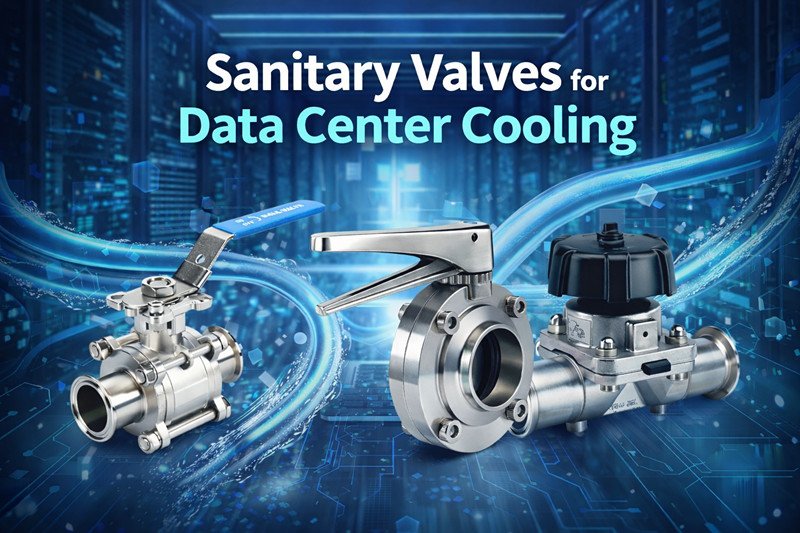
AI servers generate extreme heat, but traditional cooling cannot keep up. This creates efficiency risks and downtime. Liquid cooling solves this problem, but only if pipe connections remain reliable.
Tri-clamp fittings are widely used in AI liquid cooling systems because they provide leak-tight sealing, quick maintenance access, corrosion resistance, and compact connections for high-density cooling loops in modern AI data centers.
As AI infrastructure expands rapidly, cooling systems must become more modular, serviceable, and reliable. Connection design now plays a critical role in keeping GPU clusters running safely.
The Rise of Liquid Cooling for AI Infrastructure?
Air cooling struggles to remove heat from modern GPUs. High-power AI chips generate thermal loads that exceed traditional server cooling limits.
Liquid cooling is rising in AI infrastructure because liquids transfer heat far more efficiently than air, enabling stable operation for dense GPU clusters and hyperscale AI data centers.

Why traditional air cooling no longer works for AI workloads
I have worked with industrial fluid systems for over 15 years, and the same physics always applies: heat must move somewhere.
AI hardware pushes thermal limits in ways typical servers never did.
A single high-end GPU can easily consume:
- 700W – 1000W power
- Large AI clusters exceeding 100 kW per rack
Air cooling struggles because air has low thermal capacity.
Problems appear quickly:
| Cooling Method | Heat Transfer Efficiency | Rack Density Limit |
|---|---|---|
| Air Cooling | Low | ~30 kW |
| Liquid Cooling | Very High | 100+ kW |
Because of this, hyperscale AI data centers are shifting rapidly toward liquid-based cooling architectures.
Direct-to-chip vs immersion cooling
Two major liquid cooling technologies dominate AI infrastructure.
Direct-to-chip cooling
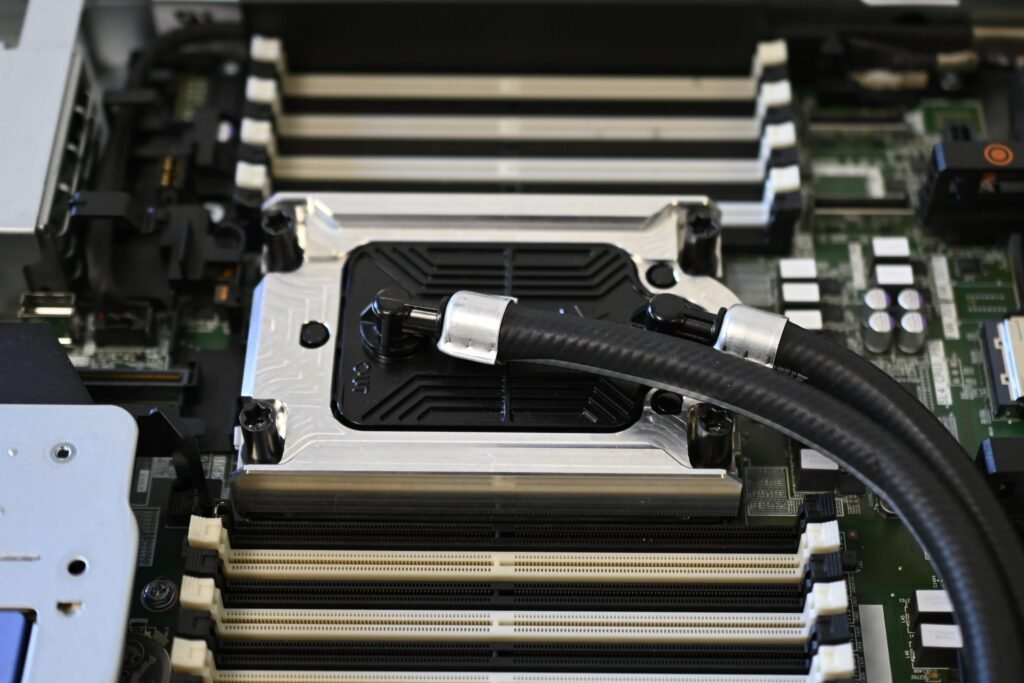
Liquid flows through cold plates mounted directly on GPUs and CPUs.
Typical path:
GPU → Cold Plate → Manifold → Pump → Heat Exchanger
Advantages:
- High efficiency
- Easy integration with servers
- Lower coolant volume
Immersion cooling
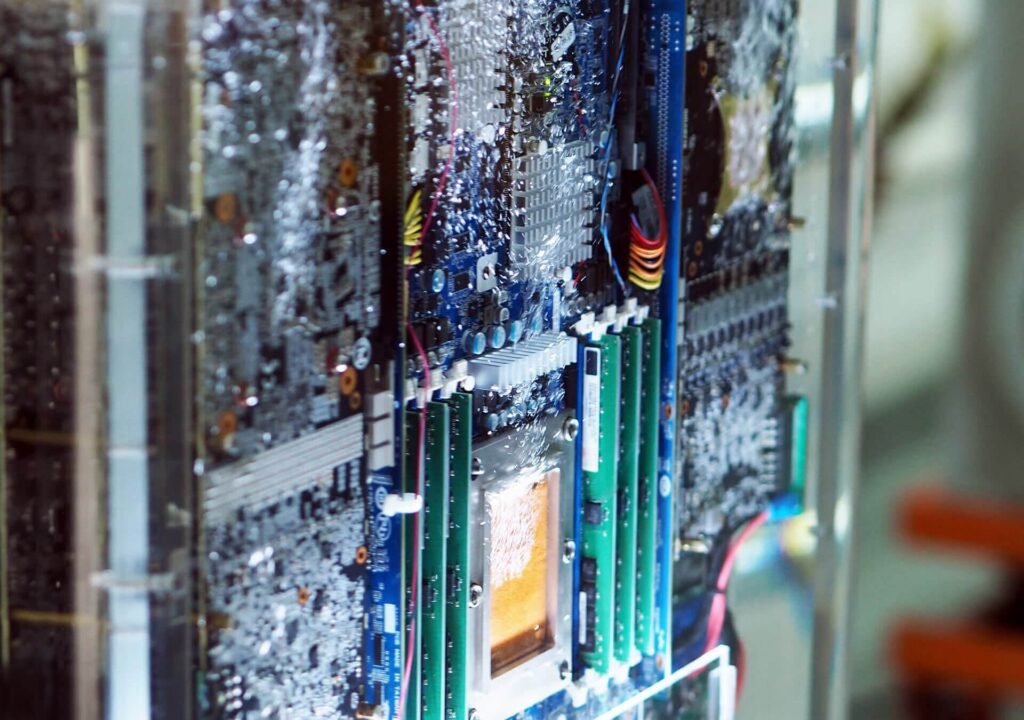
Servers are submerged in dielectric fluid tanks.
Advantages:
- Extreme thermal performance
- Lower airflow requirements
But immersion cooling requires more infrastructure changes.
Most hyperscale deployments currently prefer direct-to-chip cooling loops.
How liquid cooling loops are designed
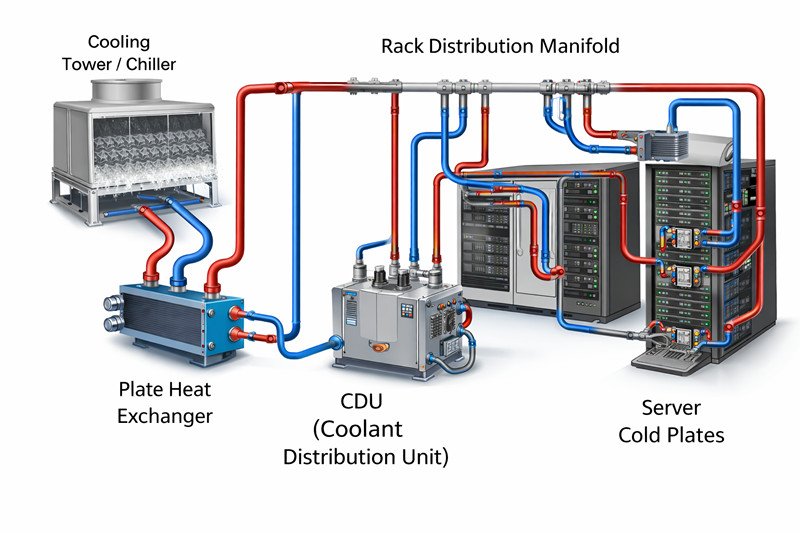
A typical AI cooling loop includes several components.
Key elements:
| Component | Function |
|---|---|
| Cold Plate | Transfers heat from GPU |
| Manifold | Distributes coolant |
| Pump | Circulates liquid |
| Heat Exchanger | Removes heat |
| Piping | Connects system |
This is where connection reliability becomes critical.
Leaks or difficult maintenance points can cause downtime across entire racks.
That is exactly why modular connections like tri-clamp fittings are increasingly used.
What Are Tri-Clamp Fittings?
Many engineers outside food or biotech industries are unfamiliar with tri-clamp connections.
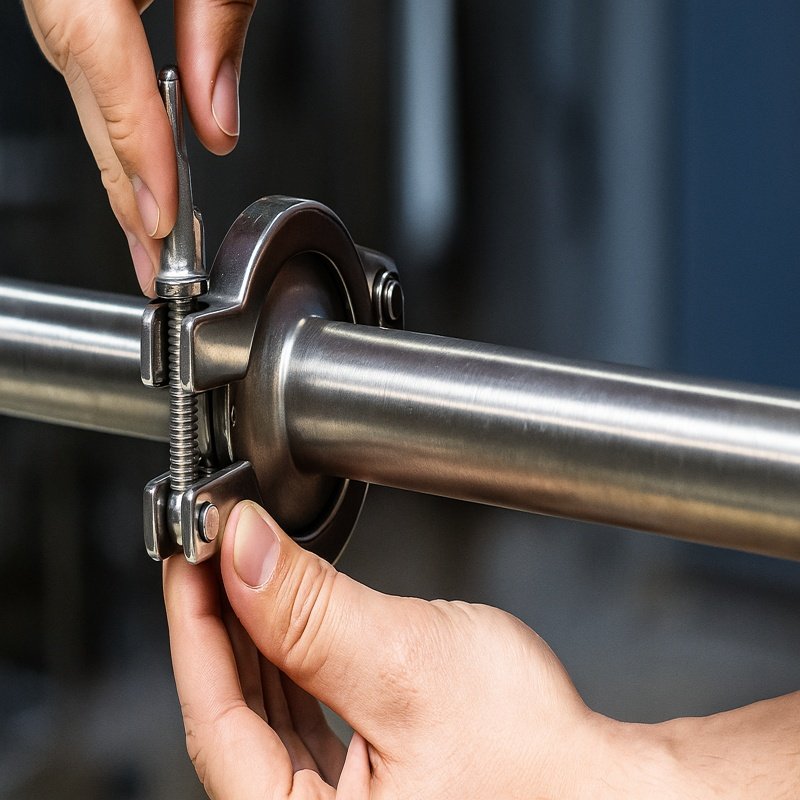
Tri-clamp fittings are sanitary pipe connections that use two ferrules, a gasket, and a clamp to create a leak-tight, easily removable joint without threads or welding.
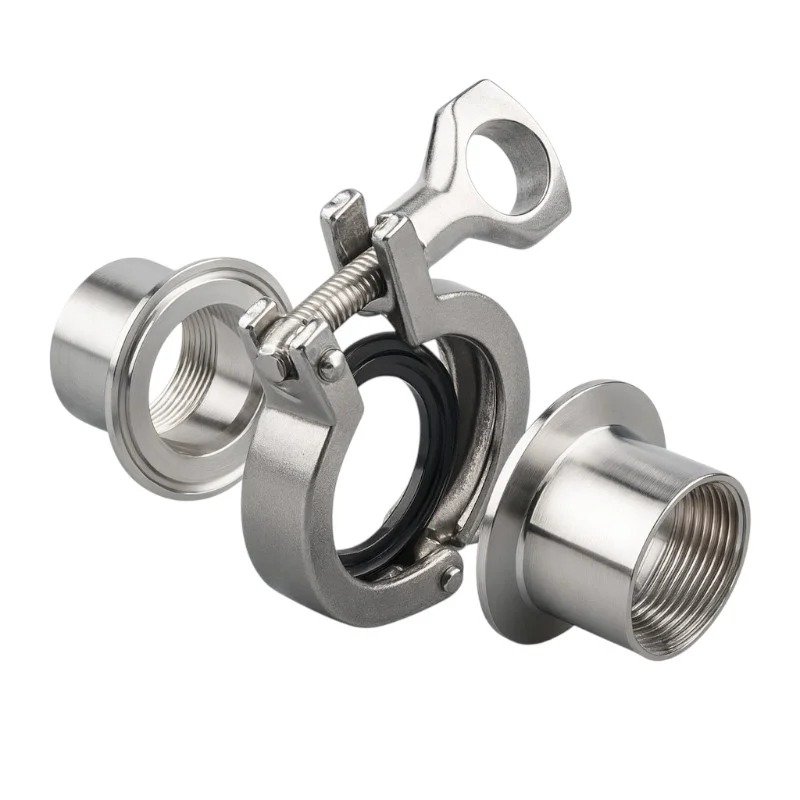
Key components (clamp, ferrule, gasket)
A tri-clamp connection contains three simple parts.
- Ferrules
Ferrules are welded to the pipe ends.
They create a smooth sealing face.
- Gasket
A soft gasket sits between ferrules.
This provides the seal.
- Clamp
A hinged clamp compresses the ferrules together.
The result is a tight seal.
Many sanitary piping systems use this design because it eliminates threaded leakage points.
How tri-clamp connections work
The connection process is very simple.
Steps:
- Place gasket between ferrules
- Align ferrule faces
- Install clamp
- Tighten wing nut
Compression from the clamp seals the gasket.
There is no need for thread sealant or torque control.
This makes installation extremely fast.
Common materials: 304 vs 316 stainless steel
Material selection matters in cooling loops.
Two common stainless steels are used:
| Material | Corrosion Resistance | Cost |
|---|---|---|
| 304 SS | Good | Lower |
| 316 SS | Excellent | Higher |
316 stainless steel includes molybdenum.
This improves resistance to:
- glycol solutions
- corrosion
- oxidation
Most high-reliability cooling loops use 316 stainless steel fittings.
Types of Tri-Clamp Fittings For Data Center Cooling?
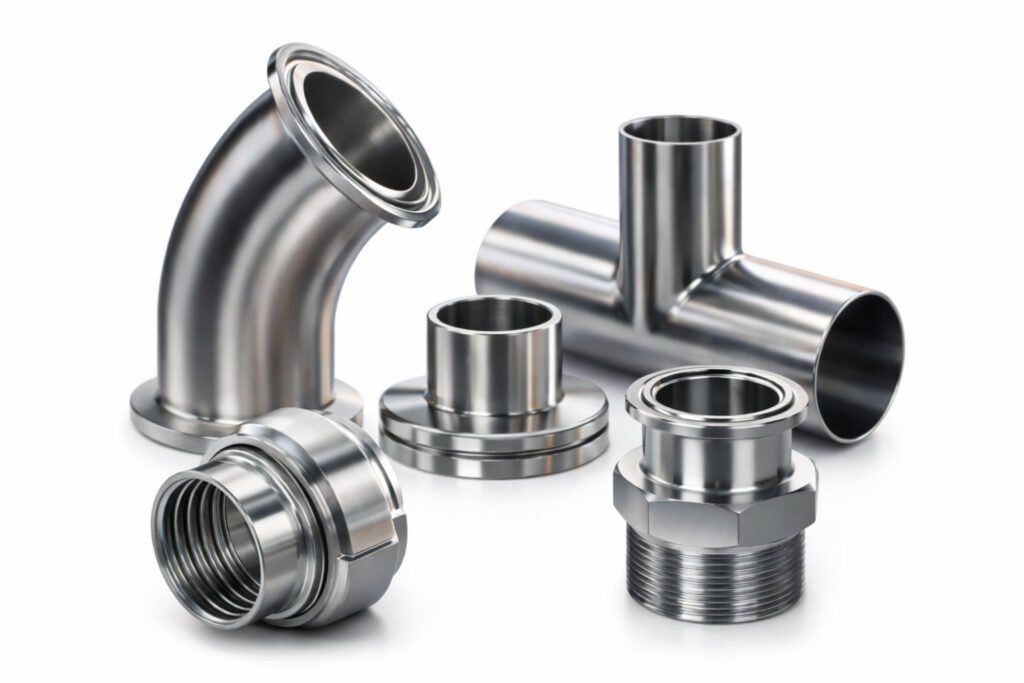
Different sections of an AI cooling loop require different fitting geometries. Choosing the correct tri-clamp fitting type helps maintain smooth flow and simplifies maintenance.
The most common tri-clamp fittings used in data center cooling systems include straight connectors, elbows, tees, reducers, and clamp adapters designed for modular stainless steel piping.
Straight tri-clamp fittings
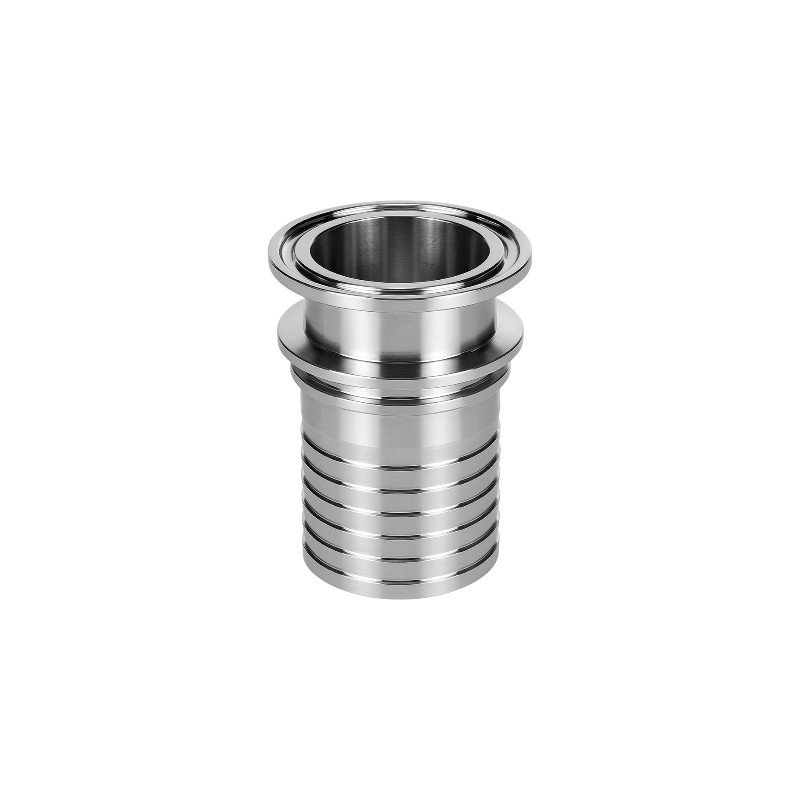
Straight connectors are the most common tri-clamp component.
They connect two pipe sections in a straight line.
Typical applications include:
- main coolant pipelines
- heat exchanger connections
- pump inlet and outlet lines
Straight fittings keep flow resistance low and simplify system layout.
Tri-clamp elbows
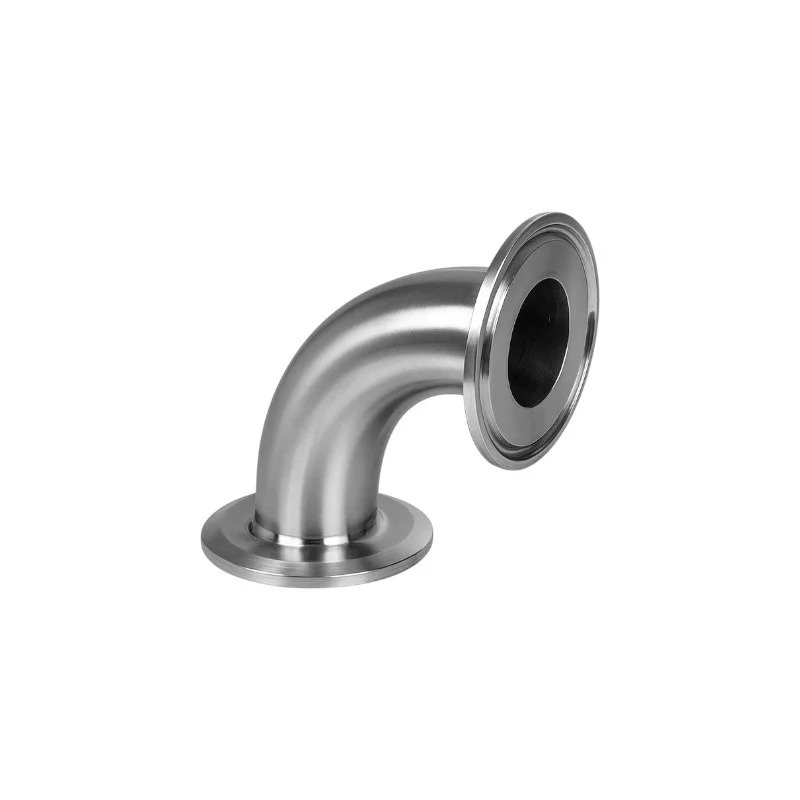
Elbows change the direction of coolant flow.
Common angles include:
- 45° elbows
- 90° elbows
These fittings are used inside rack manifolds where space is limited.
Engineers often choose long-radius elbows because they reduce turbulence and pressure drop.
Tri-clamp tee fittings
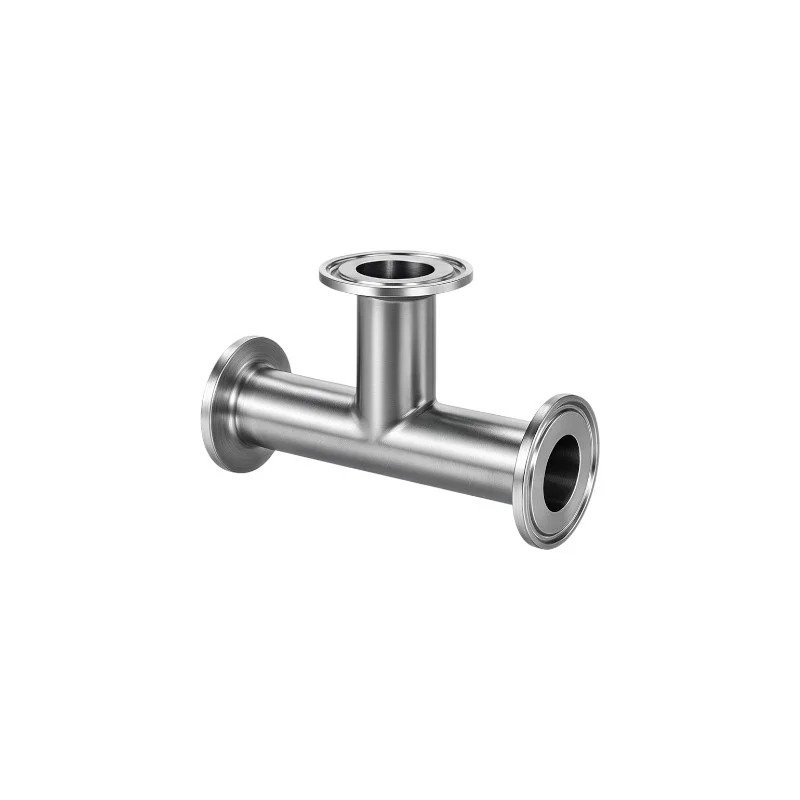
Tee fittings split coolant flow into multiple directions.
They are commonly used in:
- rack distribution manifolds
- coolant branching lines
- LDU distribution piping
A typical rack cooling manifold may use dozens of tee connections to distribute coolant to each GPU server.
Tri-clamp reducers

Reducers connect pipes of different diameters.
These fittings are common in systems where:
- pump outlets use larger pipe sizes
- rack manifolds use smaller lines
Reducers maintain flow efficiency while adapting pipe sizes.
Tri-clamp adapters
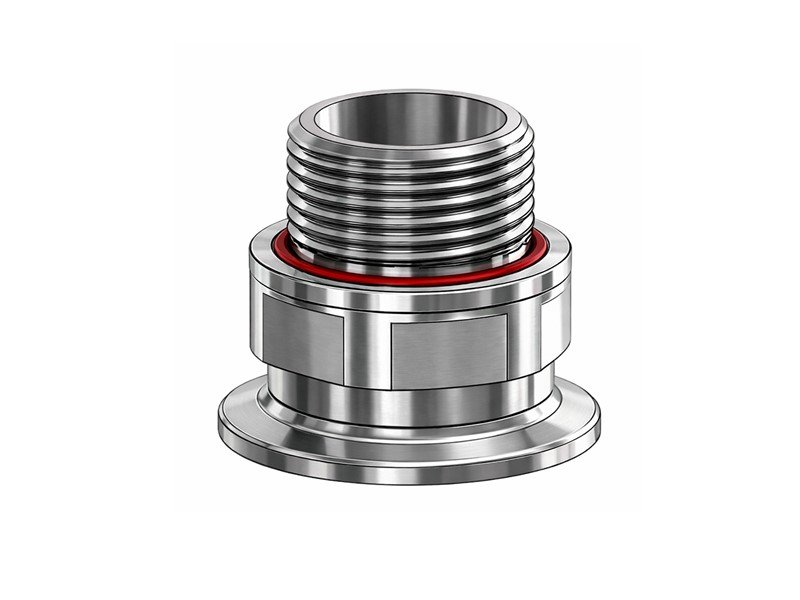
Adapters allow tri-clamp connections to interface with other pipe standards.
Common combinations include:
- tri-clamp to BSP/NPT
- tri-clamp to compression fittings
- tri-clamp to welded pipe
These adapters help integrate modular tri-clamp piping into existing infrastructure.
In many modern cooling architectures, engineers combine several of these fitting types to create modular piping systems that support easy expansion and fast maintenance.
Why Tri-Clamp Fittings Are Ideal for AI Cooling Systems?
Cooling infrastructure must balance reliability, serviceability, and density.
Tri-clamp fittings meet these requirements by providing leak-tight sealing, fast maintenance access, corrosion resistance, and compact installation inside high-density AI racks.
Leak-proof sealing for liquid coolant
Liquid cooling loops circulate fluids continuously.
Typical coolants include:
- water glycol mixtures
- dielectric fluids
- specialty thermal fluids
Even small leaks can cause:
- rack downtime
- electrical damage
- coolant contamination
Tri-clamp systems reduce this risk.
The gasket creates uniform compression across the ferrule surface.
Unlike threaded connections, sealing does not rely on:
- thread tape
- thread torque
- pipe deformation
This improves reliability significantly.
Tool-free assembly for rapid maintenance
AI data centers prioritize uptime.
Maintenance must be extremely fast.
Tri-clamp connections require:
- no wrenches
- no torque measurement
- no pipe rotation
Technicians simply open the clamp.
Pipe sections separate instantly.
This reduces maintenance time dramatically.
Compact design for high-density racks
Modern GPU racks are extremely dense.
Space is limited inside:
- cooling manifolds
- distribution units
- rack piping
Tri-clamp fittings are compact.
They also avoid long threaded engagement lengths.
This makes them easier to install inside tight manifolds.
Corrosion resistance for glycol and dielectric fluids
Cooling fluids are not pure water.
Most systems use glycol mixtures to prevent freezing and corrosion.
Stainless steel tri-clamp fittings provide excellent resistance.
This prevents long-term degradation.
High reliability for mission-critical infrastructure
AI clusters often run:
- financial models
- training workloads
- real-time inference
Downtime can cost millions.
Reliable connections therefore become infrastructure components.
Tri-clamp fittings offer consistent sealing performance across thousands of cycles.
Tri-Clamp vs Other Pipe Connections in Cooling Systems?
Many engineers ask whether tri-clamp fittings are better than traditional connections.
Tri-clamp connections outperform threaded and compression fittings for maintenance speed and leak reliability in many liquid cooling systems.
Connection comparison
| Connection Type | Pros | Cons | Best Use |
|---|---|---|---|
| Tri-Clamp | Quick installation, easy maintenance, hygienic design | Moderate pressure limits | Cooling loops |
| Threaded | Low cost, widely available | Leak risk, slower maintenance | Small piping |
| Flanged | Very strong, high pressure | Bulky, heavy | Large pipelines |
| Compression | Excellent sealing | Requires tools | Instrument tubing |
Tri-clamp vs threaded fittings

Threaded fittings are common in piping systems.
However they create problems:
- thread sealant required
- risk of overtightening
- difficult removal
Cooling system maintenance becomes slower.
Tri-clamp vs flanged connections
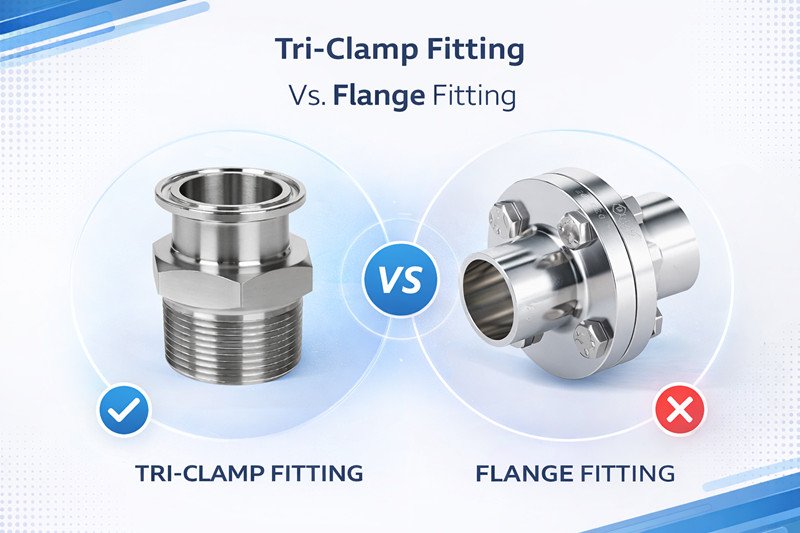
Flanges are strong but bulky.
In high-density racks they consume too much space.
Tri-clamp fittings are smaller and lighter.
Tri-clamp vs compression fittings

Compression fittings provide excellent sealing for tubing.
However they require tools and precise installation torque.
Tri-clamp fittings are faster for modular pipe sections.
Where Tri-Clamp Fittings Are Used in AI Cooling Infrastructure?
AI cooling systems use modular piping across multiple subsystems.
Tri-clamp fittings commonly appear in manifolds, coolant distribution units, pump connections, and heat exchanger piping inside AI data centers.
Rack-level cooling manifolds
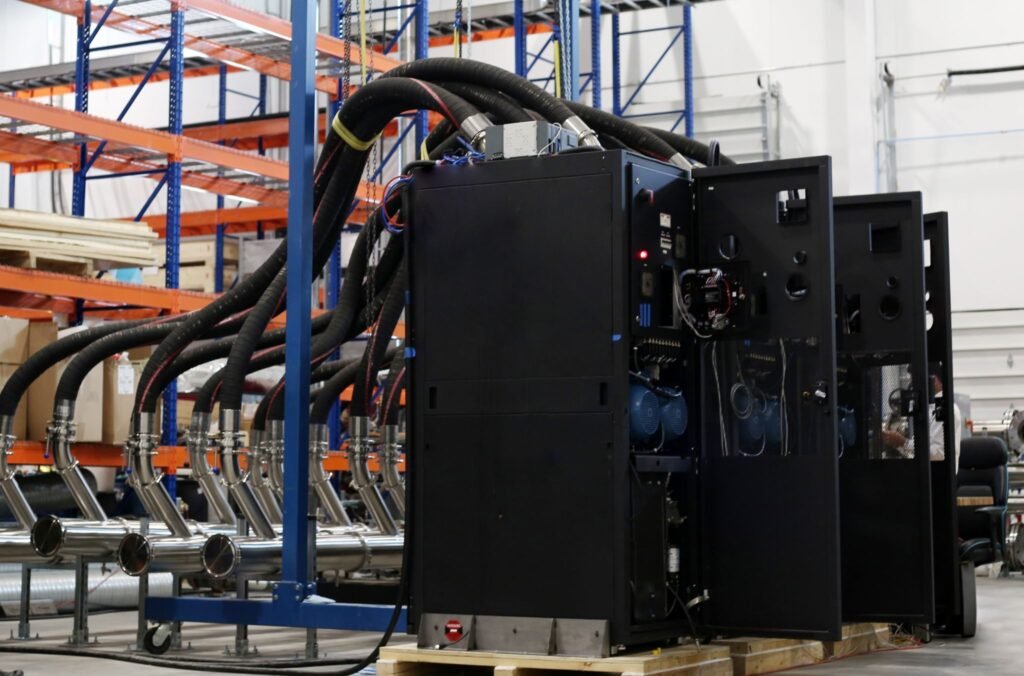
Cooling manifolds distribute coolant to each server node.
These manifolds require:
- multiple branch connections
- easy maintenance access
Tri-clamp connections allow fast disassembly.
Liquid distribution units (LDUs)
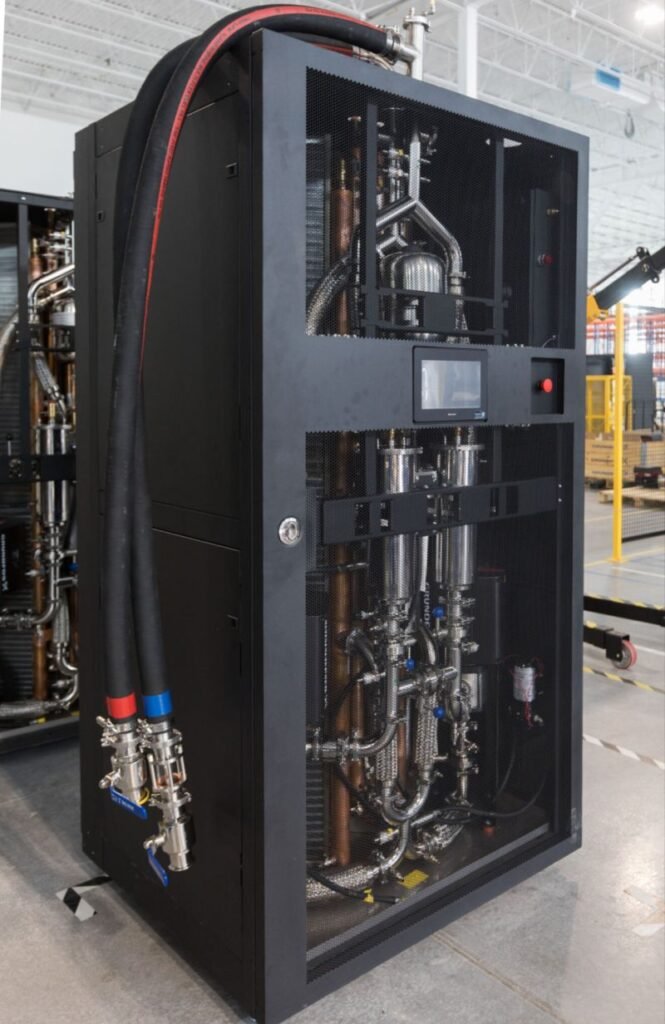
LDUs manage coolant flow across racks.
They often include:
- pumps
- filters
- sensors
- heat exchangers
Service access is critical.
Tri-clamp fittings simplify component replacement.
Coolant piping loops
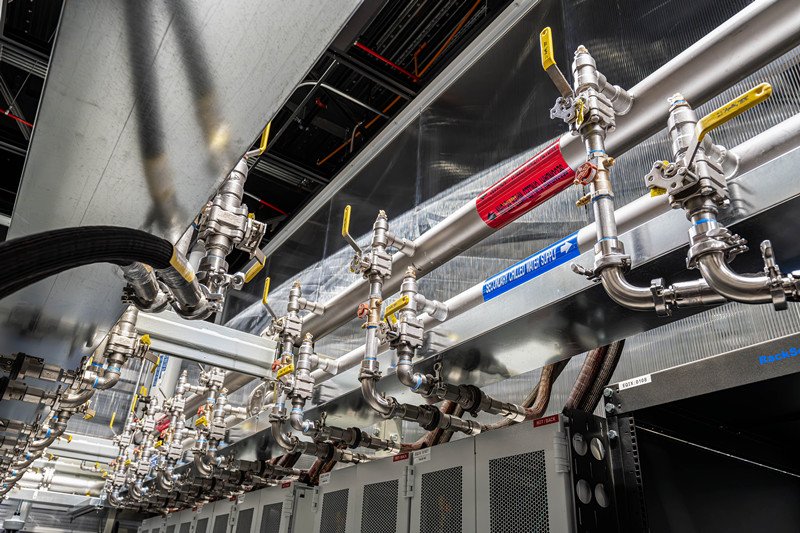
The main piping loop connects:
- racks
- chillers
- heat exchangers
Tri-clamp fittings support modular piping sections.
Pump and heat exchanger connections
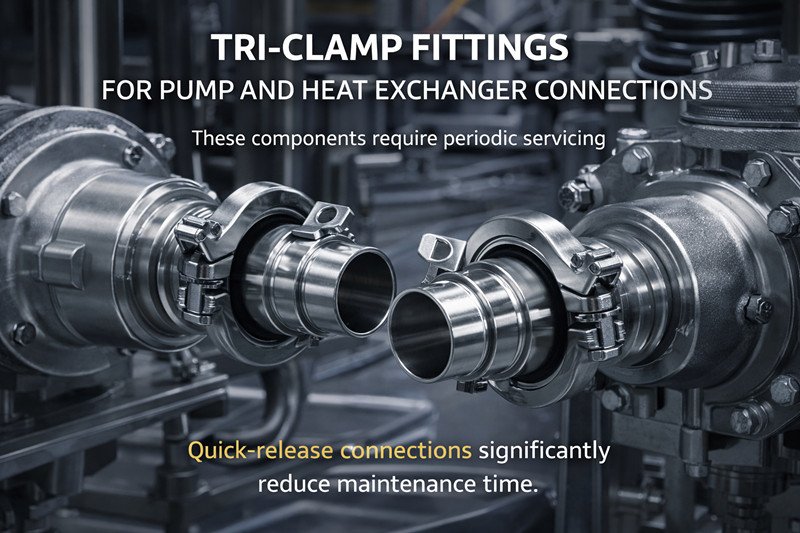
These components require periodic servicing.
Quick-release connections significantly reduce maintenance time.
Best Materials and Gasket Types for AI Cooling?
Material selection directly impacts system reliability.
EPDM, PTFE, and silicone gaskets are commonly used in tri-clamp cooling connections depending on coolant chemistry, temperature, and pressure.
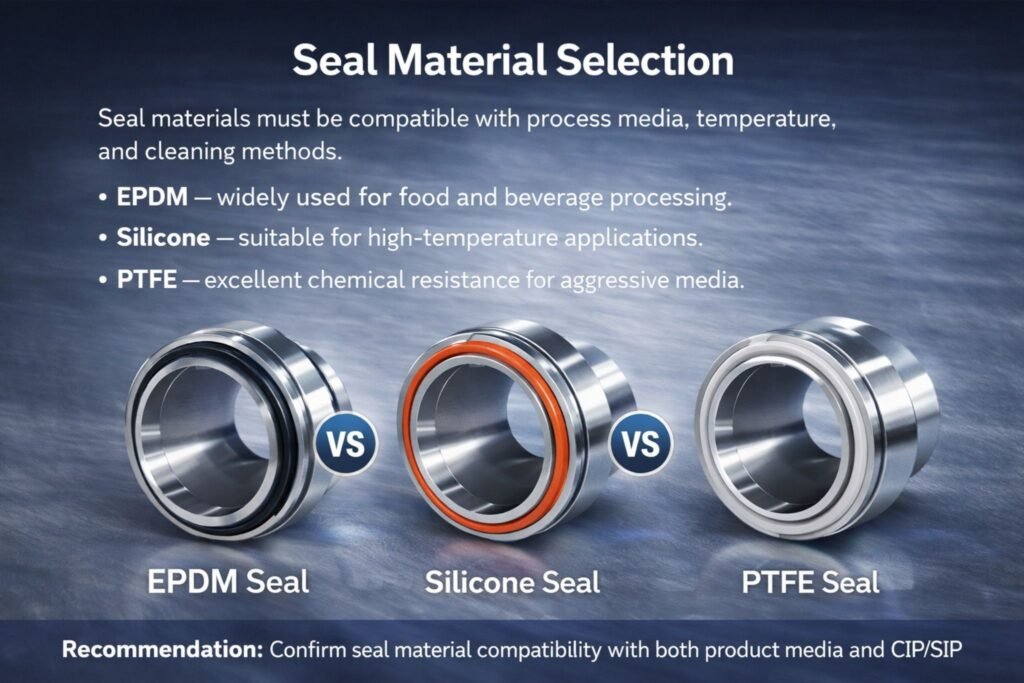
EPDM vs PTFE vs silicone gaskets
Each gasket type has advantages.
| Gasket | Strength | Best Use |
|---|---|---|
| EPDM | Excellent chemical resistance | Glycol coolant |
| PTFE | Very chemical resistant | Specialty fluids |
| Silicone | Flexible | Low pressure systems |
EPDM is most common for cooling systems.
Compatibility with glycol coolants
Glycol solutions protect against freezing.
But they also interact with elastomers.
EPDM offers strong compatibility.
Temperature and pressure considerations
Typical cooling loop conditions:
| Parameter | Typical Range |
|---|---|
| Temperature | 20–60°C |
| Pressure | 1–6 bar |
Most tri-clamp systems handle this easily.
How to Choose the Right Tri-Clamp Fittings for Cooling Systems?
Choosing the wrong fittings can create long-term problems.
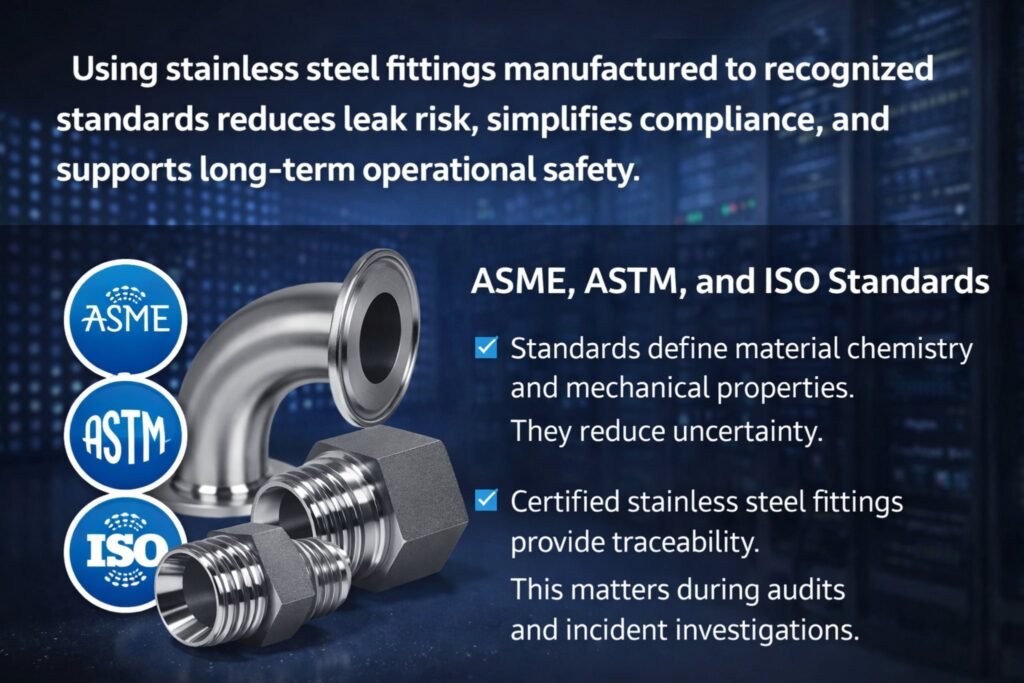
Engineers should evaluate size standards, pressure ratings, and surface finish when selecting tri-clamp fittings for cooling systems.
Size standards (DIN, ISO, BS)
Common tri-clamp standards include:
| Standard | Region |
|---|---|
| DIN | Europe |
| ISO | Global |
| BS | UK |
Global projects must ensure compatibility.
Pressure ratings
Most tri-clamp fittings support moderate pressure.
Typical ratings:
- 10–16 bar depending on size
This is adequate for most cooling loops.
Surface finish requirements
Smooth surfaces prevent:
- contamination
- corrosion
- bacterial growth
High-quality stainless steel fittings often use polished finishes common in sanitary piping systems.
Future of Cooling Infrastructure for AI Data Centers?
AI infrastructure is evolving rapidly.
Liquid cooling will likely become the standard for hyperscale AI clusters, and modular pipe connections will play a critical role in scalable cooling architecture.
Hyperscale AI clusters
AI training clusters continue growing.
Some facilities now exceed:
- 100 MW power capacity
Cooling systems must scale accordingly.
Liquid cooling becoming standard
Industry trends clearly show adoption accelerating.
Many hardware vendors already support direct liquid cooling.
Importance of modular pipe connections
Modular piping enables:
- faster infrastructure deployment
- easier maintenance
- scalable cooling loops
Connection technology will become increasingly important as AI infrastructure expands globally.
Conclusion
Tri-clamp fittings enable reliable, modular, and leak-resistant connections, making them a practical choice for modern AI liquid cooling systems and future hyperscale data center infrastructure.
Beyond Fluid is a leading supplier of Tri-Clamp Fittings for data center cooling industry. Download the Tri-Clamp Fittings Catalog.