
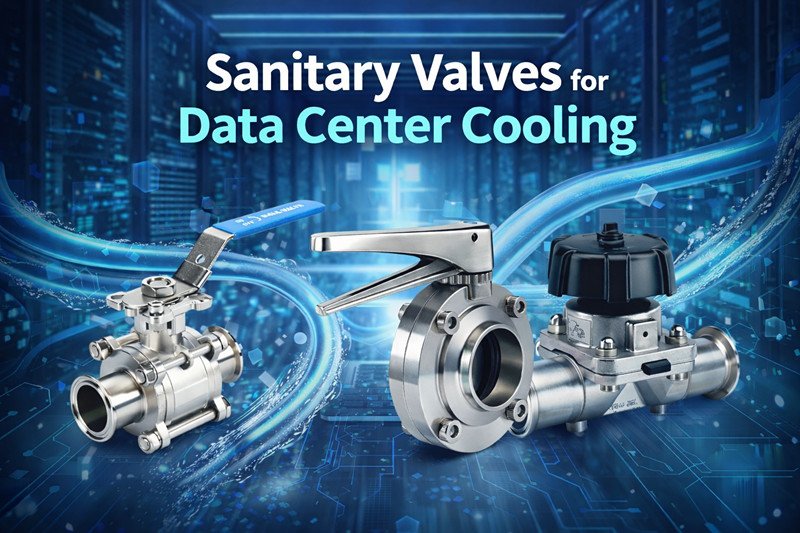
Data centers are overheating, air cooling is failing, and downtime is costly. Liquid cooling solves heat problems but introduces leak risks, reliability concerns, and design pressure.
Yes. Sanitary valves are increasingly used in data center liquid cooling systems because they reduce leak risk, improve reliability near IT hardware, and simplify maintenance while supporting higher thermal loads.
Once liquid moves closer to servers, valve quality stops being a cost detail and becomes a risk decision. I have seen this shift many times across industries, and data centers are now following the same path.
The Evolution of Data Center Cooling Systems?
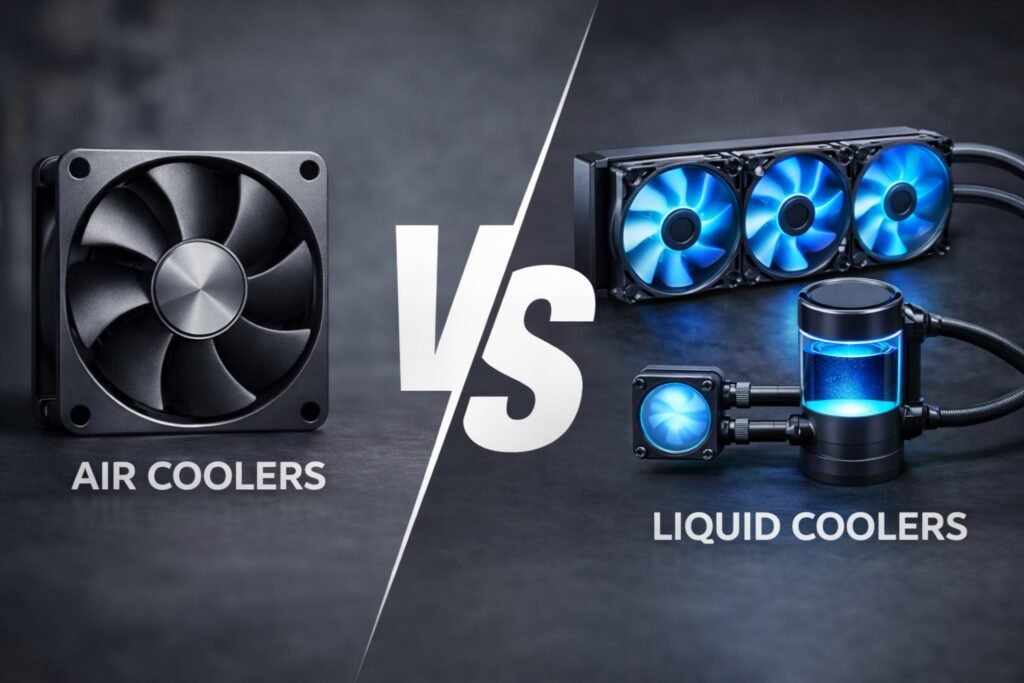
Air cooling once worked well, but rising power density changed the rules. Engineers now face thermal limits that airflow alone cannot solve.
Data center cooling evolved from air-based systems to liquid cooling because modern racks generate more heat than air can remove efficiently and safely.
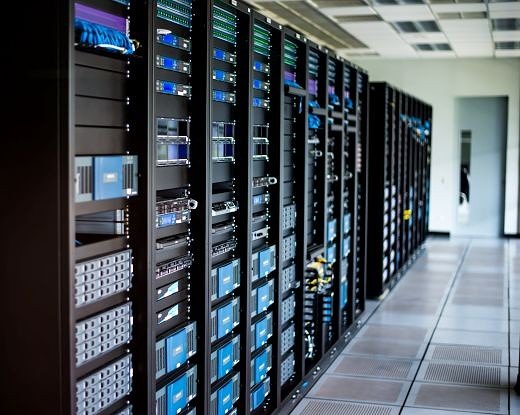
Why Air Cooling Is Reaching Its Limits
Air cooling depends on volume, velocity, and temperature difference. Each has limits. Fans consume power. Ducts take space. Noise increases. Most importantly, air cannot absorb enough heat at high rack densities. I have seen projects where airflow optimization delayed upgrades but never solved the core problem.
Increasing Rack Density and Heat Loads
AI workloads, GPUs, and high-performance computing push racks beyond 30–60 kW. At this level, hot spots appear even with perfect airflow. Uneven cooling creates reliability risks. Components age faster. Operators add redundancy, which raises costs but not performance.
The Shift Toward Liquid-Based Cooling
Liquid removes heat at the source. Water and dielectric fluids carry far more energy than air. This allows compact designs and stable temperatures. But liquid also introduces fear. Leaks near servers are unacceptable. This is where component selection, especially valves, becomes critical.
Types of Liquid Cooling Used in Data Centers?
Not all liquid cooling systems are the same. Each design changes how valves behave and what risks matter most.
Data centers use direct-to-chip, rear-door heat exchangers, and immersion cooling, each requiring different valve designs and control strategies.
Direct-to-Chip Cooling Systems
Coolant flows through cold plates mounted on CPUs and GPUs. These systems need precise flow control and reliable isolation. A small leak can damage expensive hardware. Valves often sit close to electronics, so sealing quality matters more than pressure rating.
Rear-Door Heat Exchangers
These systems cool exhaust air using liquid-filled doors. Flow rates are higher, and maintenance access is frequent. Valves must support fast isolation and repeated operation without wear. Poor valve design leads to drips during servicing.
Immersion Cooling Systems
Servers are submerged in dielectric fluid. Valves manage fluid circulation and filtration. Clean internal surfaces prevent particle buildup. Even though fluids are non-conductive, contamination still affects thermal performance and pump life.
Closed-Loop vs Open-Loop Designs
Most data centers prefer closed loops to reduce contamination. Valves in closed loops must maintain seal integrity for years. Open loops increase exposure risk and demand easier cleaning and replacement.
Where the Sanitary Valves Used in Data Center Cooling System?
Liquid cooling brings coolant closer to IT hardware, so valve location directly affects risk, uptime, and maintenance effort.
Sanitary valves are mainly used at points where coolant is closest to IT equipment, requires frequent isolation, or demands the lowest possible leak risk.
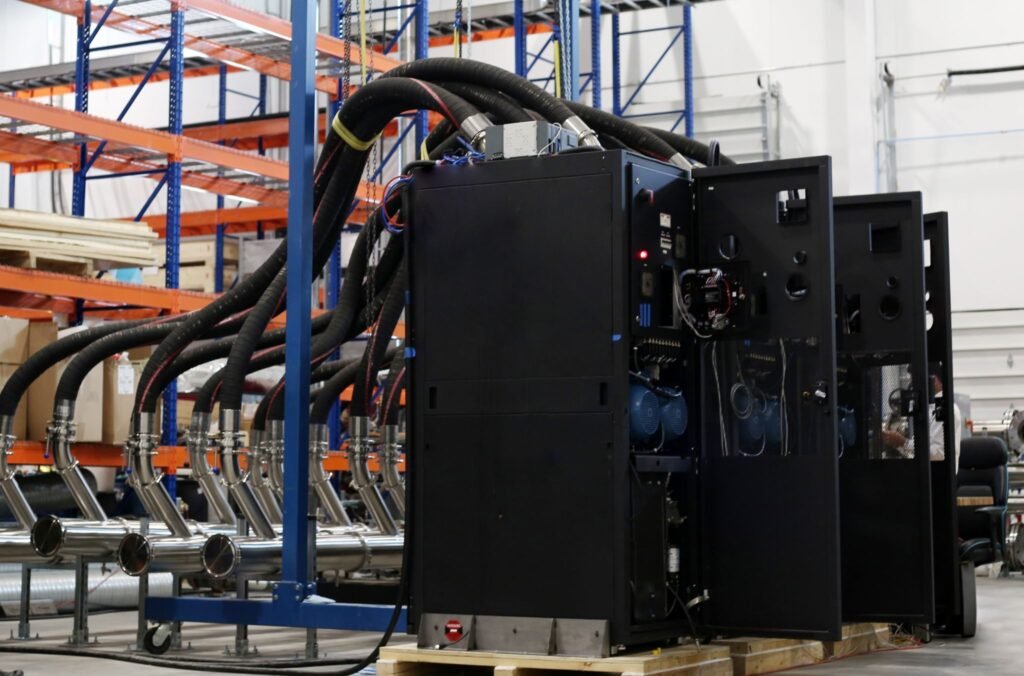
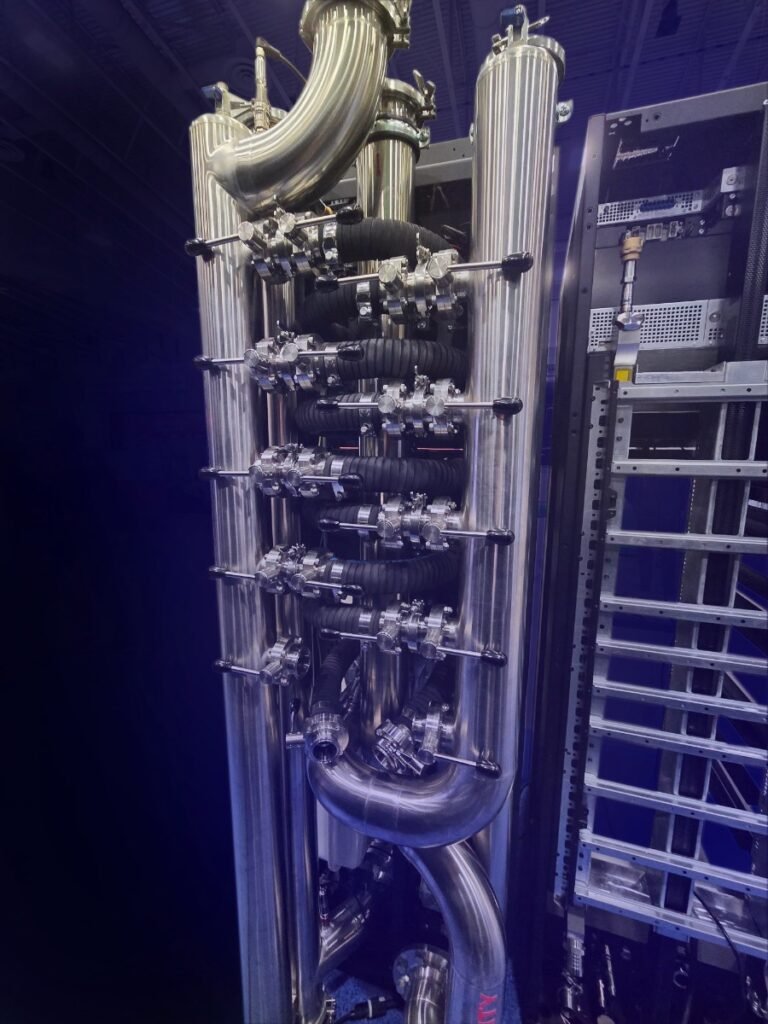
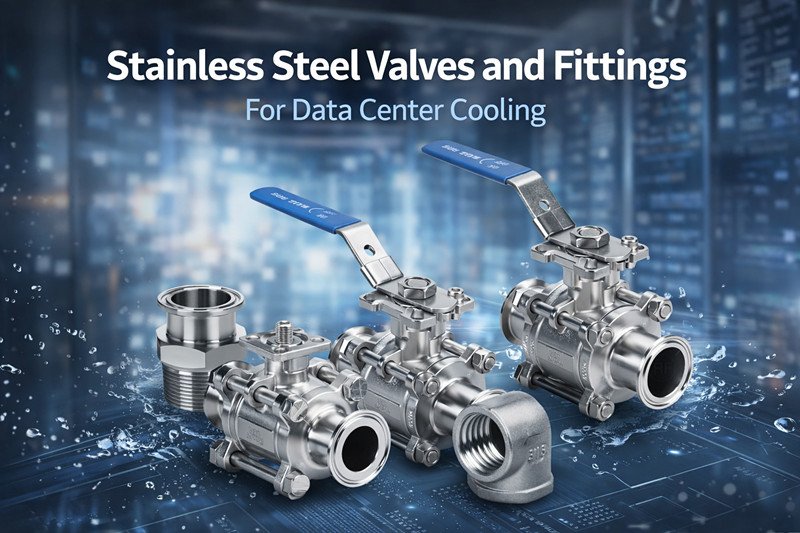
Sanitary valves are most commonly installed in direct-to-chip cooling loops, especially on supply and return lines near server racks. In these locations, even a minor leak can cause major hardware damage, so smooth bores, strong seals, and minimal joints matter.
They are also widely used at manifold distribution units (CDUs). Here, valves isolate individual racks or rows. Sanitary designs reduce drip risk during maintenance and allow faster service without draining the entire system.
Another key area is heat exchanger interfaces, including rear-door heat exchangers and liquid-to-liquid plate exchangers. These points experience regular maintenance and flow adjustment. Sanitary valves shorten service windows and improve sealing reliability.
In immersion cooling systems, sanitary valves manage fluid circulation, filtration, and bypass lines. Clean internal geometry helps maintain fluid quality and stable thermal performance over time.
Finally, sanitary valves appear in critical branch lines and redundancy loops, where isolation speed and reliability directly affect uptime. In data centers, valve placement is not random. Sanitary valves are used where failure cost is highest and maintenance access is most frequent.
The Role of Valves in Liquid Cooling Infrastructure?
Valves are not accessories. They define system safety, uptime, and service strategy.
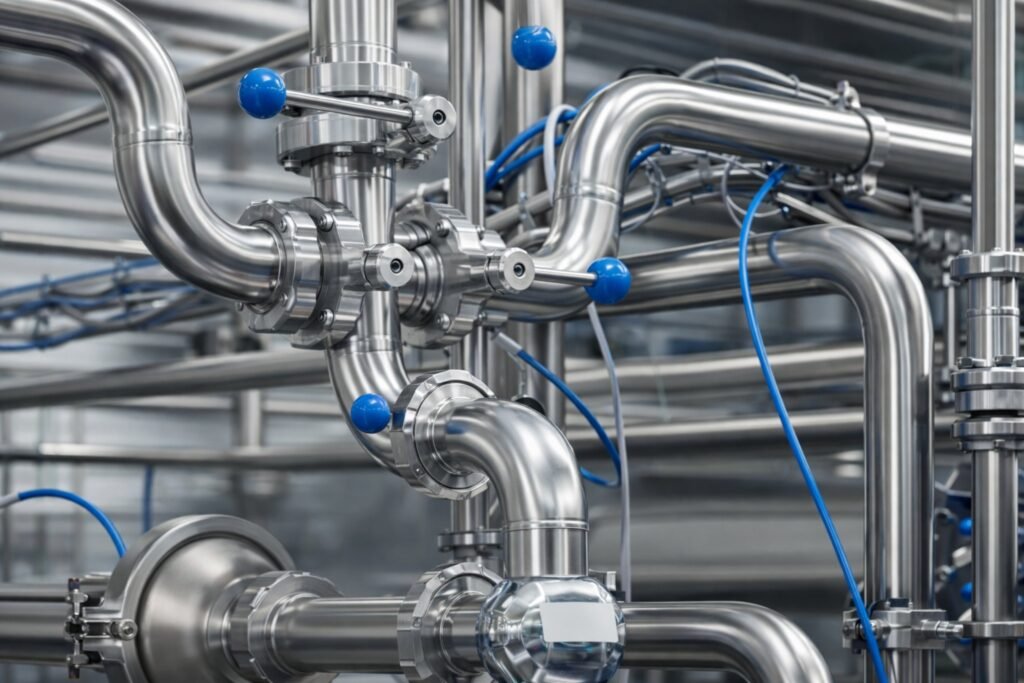
Valves control flow, isolate sections, prevent leaks, and enable maintenance without shutting down the entire cooling system.
Flow Isolation and System Control
Precise isolation allows localized service. Without reliable valves, operators drain entire loops for small tasks. This increases downtime and risk. Smooth operation and predictable torque matter more than many buyers expect.
Leak Prevention and Risk Mitigation
Every threaded joint and cavity is a potential leak path. In data centers, leaks are not just messy. They are catastrophic. Valve design directly affects how many failure points exist in the system.
Maintenance, Redundancy, and Uptime
Good valves support redundancy. Poor valves force compromise. I have seen facilities overspend on pumps and controls while underestimating valve quality, only to face service issues later.
Why Sanitary Valves Are Gaining Adoption?
Sanitary valves were not designed for data centers, but their features solve modern cooling problems.
Sanitary valves reduce leak points, improve sealing, and simplify maintenance, making them ideal for liquid cooling near sensitive IT equipment.
Design Differences vs Industrial Valves
Industrial valves often accept dead spaces, rough bores, and threaded cavities. Sanitary valves eliminate these by design. Fewer internal voids mean fewer leak paths. This directly lowers downtime risk.
Smooth Bores, Minimal Dead Legs, and Cleanability
Smooth internal surfaces prevent particle buildup. In cooling systems, this means stable flow and predictable heat transfer. Cleaning becomes easier. Service windows shorten. Labor costs drop.
Stainless Steel Materials and Seal Integrity
Sanitary valves use high-grade stainless steel and controlled elastomers. Better seals mean safer proximity to servers. This is not about hygiene. It is about risk control and long-term stability.
Sanitary Valve Standards and Why They Matter?
Standards translate design theory into predictable performance.
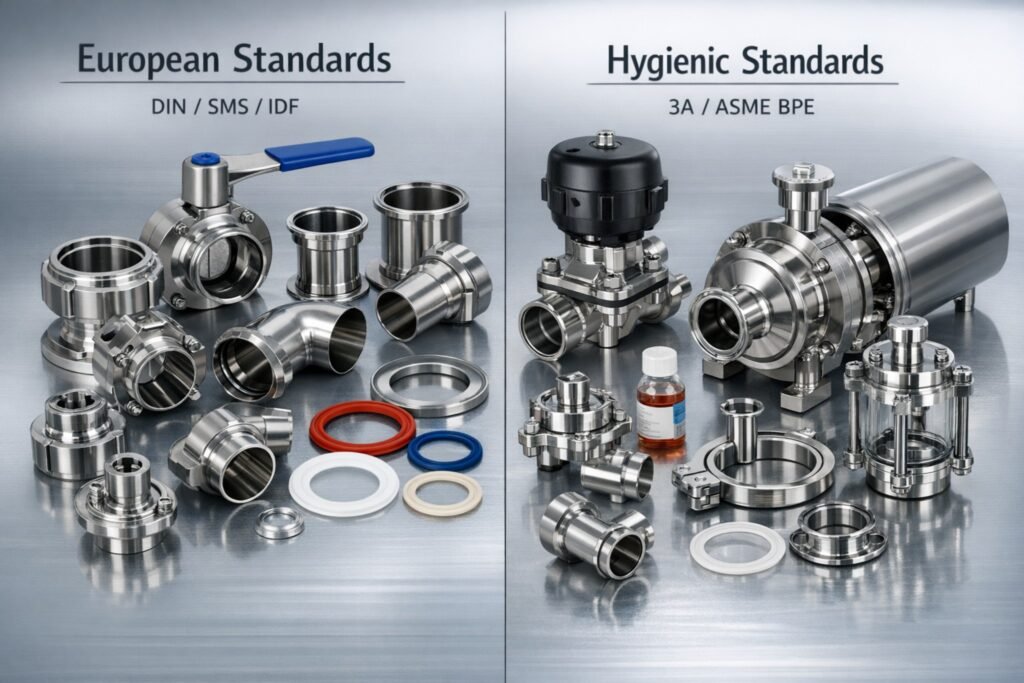
Sanitary standards ensure valves perform consistently, resist contamination, and maintain sealing integrity over long service cycles.
ASME BPE and Hygienic Design
ASME BPE focuses on clean geometry and material control. For data centers, this means fewer surprises during operation. Predictable design reduces engineering guesswork.
USP Class VI Materials in Cooling Fluids
Seal materials tested for chemical stability last longer. They resist swelling and cracking. This improves reliability and reduces replacement frequency.
Long-Term Reliability and Contamination Control
Clean design slows degradation. Over years of operation, this stability saves more money than initial cost differences.
Selecting the Right Sanitary Valve for Data Center Cooling?
Valve selection must match system behavior, not just specifications.
The right sanitary valve balances flow control, automation needs, and pressure limits while minimizing leak risk and maintenance effort.
Valve Types (Ball, Butterfly, Diaphragm)
Ball valves offer tight shutoff and compact size.
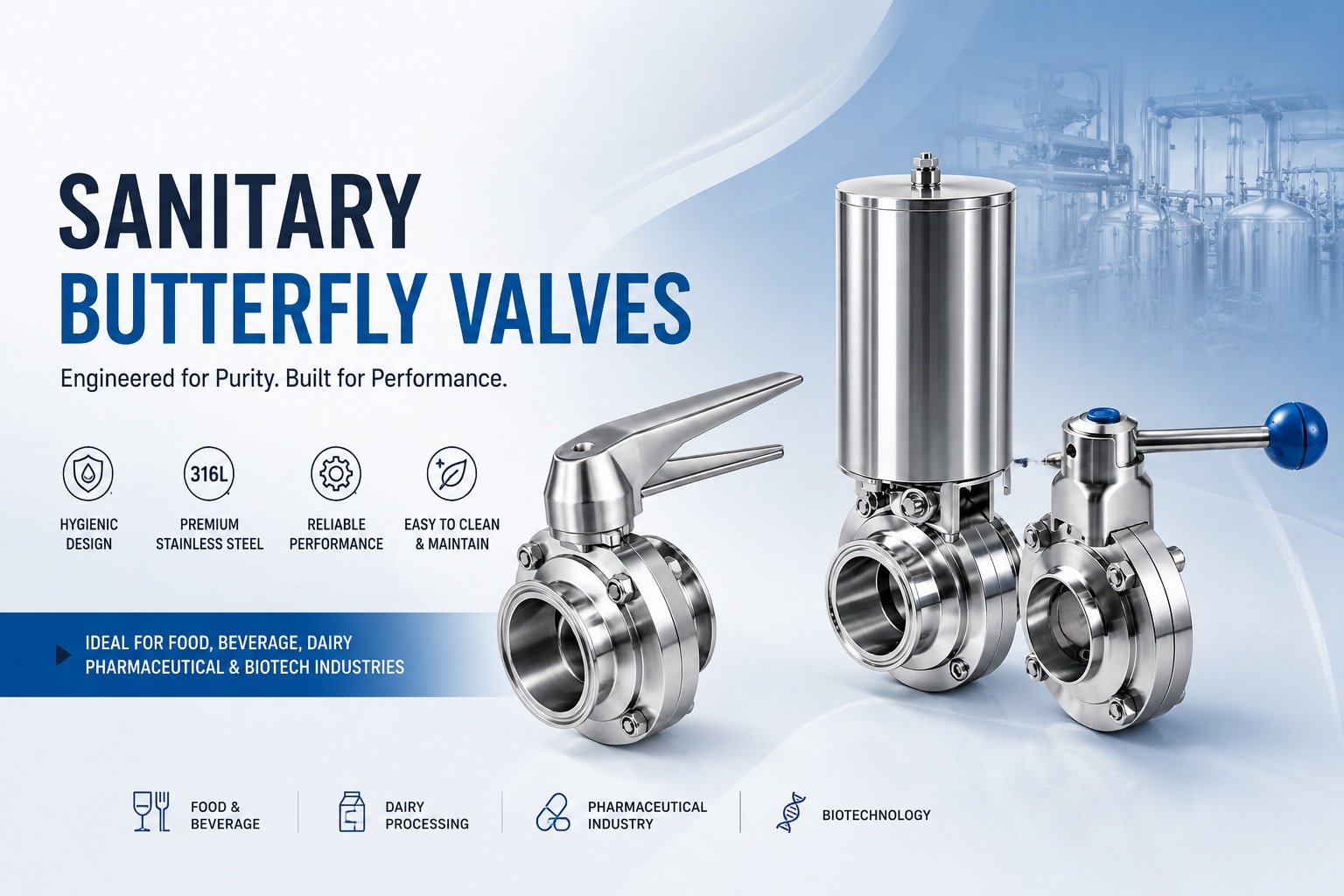
Butterfly valves handle larger lines with low pressure drop.
Diaphragm valves provide excellent isolation but cost more. Each has a role depending on loop design.
Connection Types of Sanitary Valves in Data Center Cooling?
Poor connection choices create leaks, long service times, and hidden risks. In liquid cooling systems, connection design often matters more than the valve body itself.
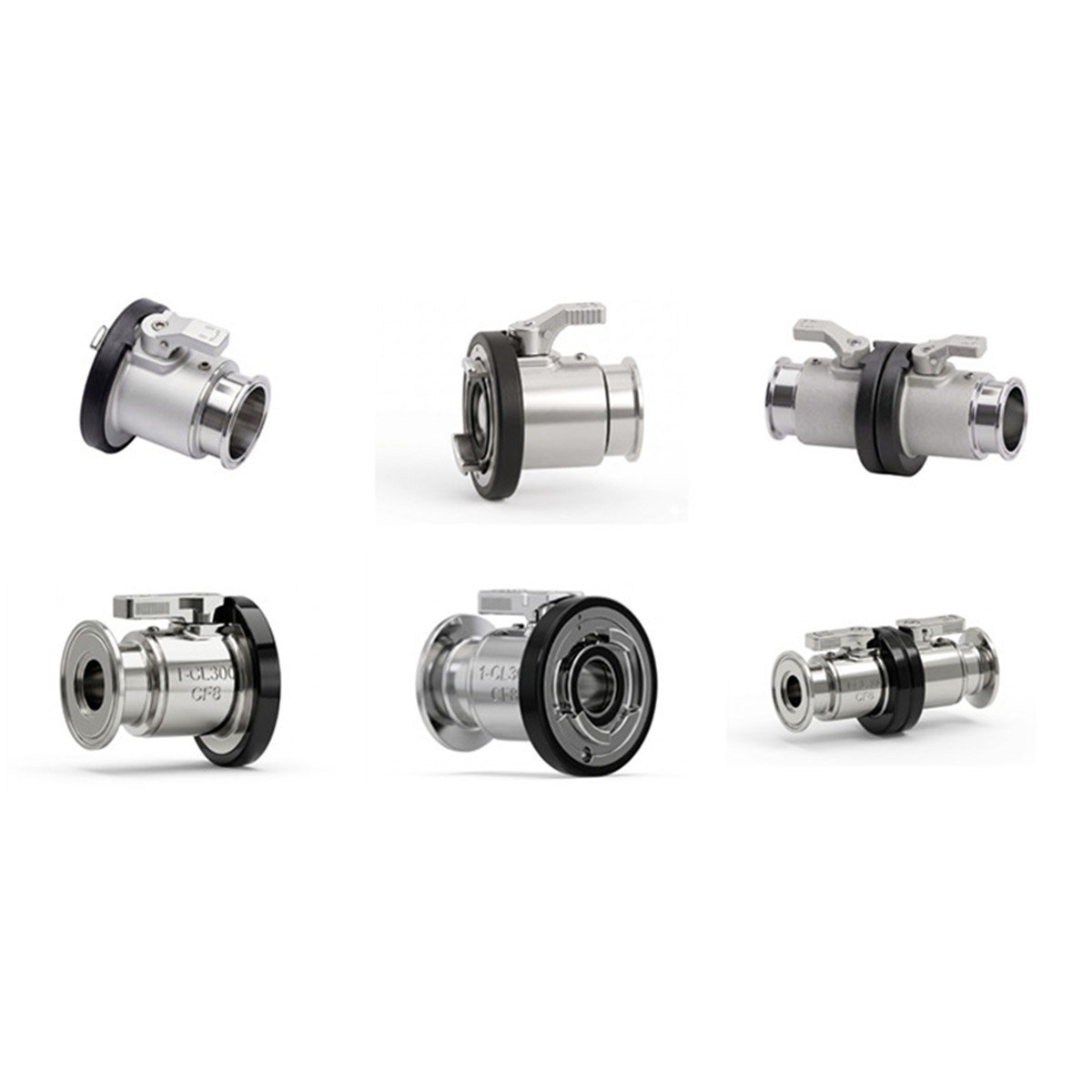
Common sanitary valve connection types include tri-clamp, butt weld, hygienic threaded, and flange connections, each balancing leak risk, service speed, and system permanence differently.
Tri-Clamp Connections
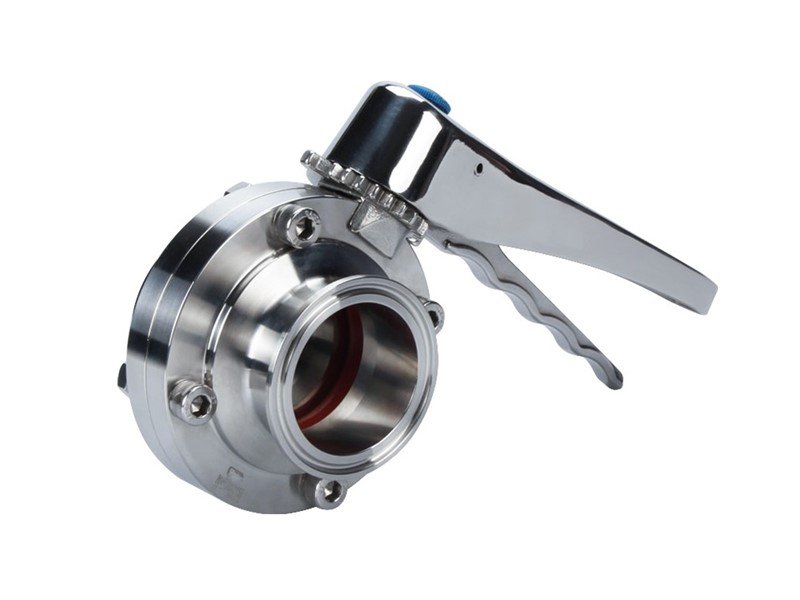
Fast to install and remove. Fewer leak points. Ideal for areas near IT hardware and frequent maintenance zones.
Butt Weld Connections
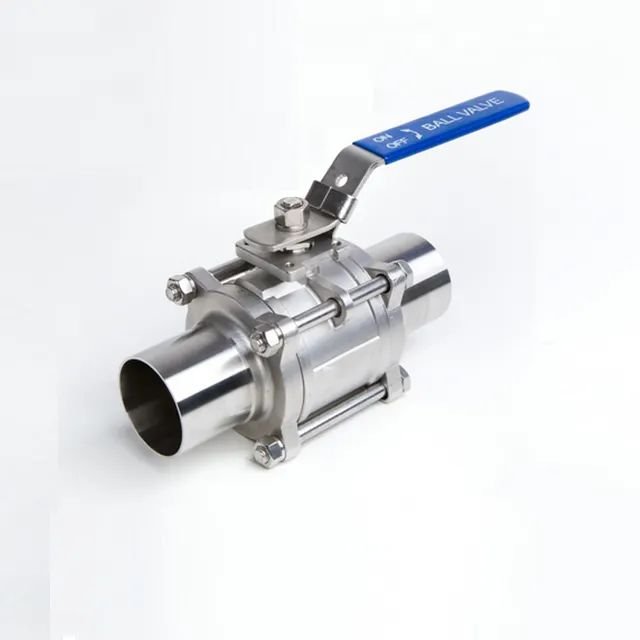
Permanent and lowest leak risk. Best for stable, critical sections with minimal future modification.
Hygienic Threaded Connections

Compact and flexible for retrofits. Higher risk than clamps or welds but acceptable in secondary loops.
Flange Connections
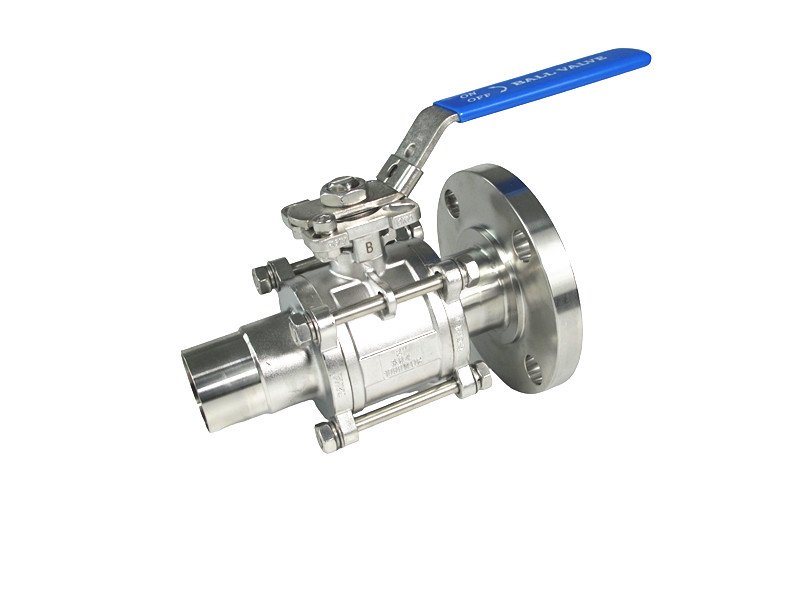
Strong and reliable for large pipe sizes. Common in main distribution headers rather than near racks.
Connection selection is a risk decision. In data centers, fewer leak points and faster service usually win.
Actuation and Automation Considerations
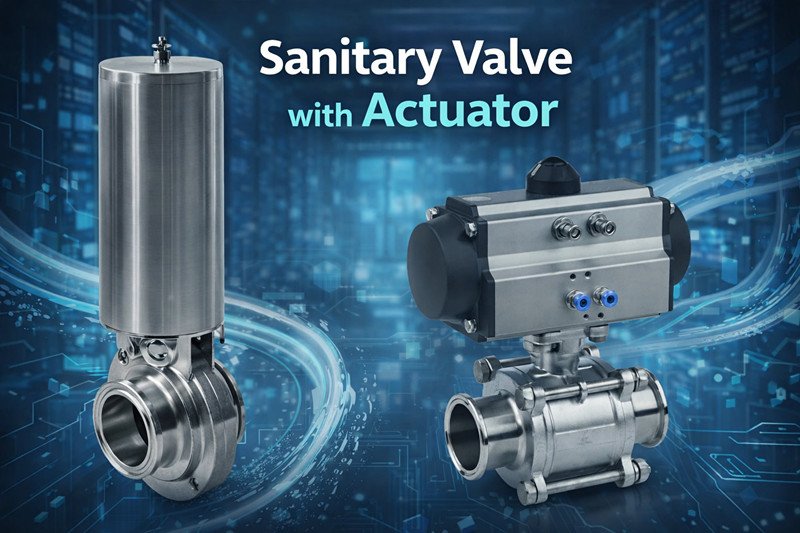
Automated valves reduce human error. Actuator reliability becomes part of the risk equation. Simple designs often outperform complex ones over time.
Pressure, Temperature, and Flow Sizing
Oversizing increases cost and slows control response. Undersizing raises wear and noise. Proper sizing protects both performance and lifespan.
Practical Installation and Design Considerations?
Even the best valve fails if installed poorly.
Proper valve placement, sensor integration, and service access determine real-world reliability more than catalog data.
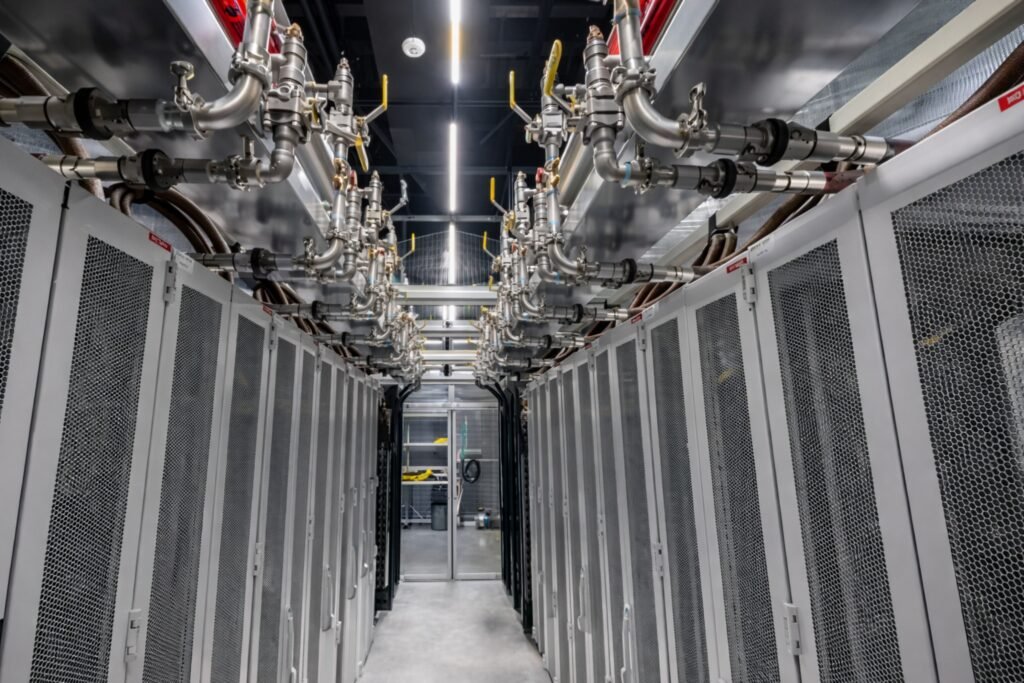
Valve Placement in Cooling Loops
Place valves where isolation minimizes drained volume. Avoid tight spaces that complicate service. Accessibility saves hours during maintenance.
Integration with Sensors and Controls
Valves and sensors must work together. Poor integration causes false alarms or delayed response. Coordination improves system confidence.
Maintenance and Serviceability
Sanitary valves simplify disassembly. Faster service reduces downtime. Over years, this becomes a major operational advantage.
Key Takeaways for Engineers and Specifiers?
Good decisions align engineering goals with business outcomes.
Sanitary valves are worth the investment when downtime risk, maintenance cost, and hardware protection matter more than lowest initial price.
When Sanitary Valves Are Worth the Investment
Fewer leak points mean lower downtime risk. Better seals protect IT hardware. Easier maintenance reduces service windows. These benefits translate directly into financial value.
Common Specification Mistakes to Avoid
Focusing only on pressure rating. Ignoring seal materials. Underestimating installation quality. These mistakes cost more later.
Future Trends in Data Center Thermal Management
Liquid cooling adoption will grow. Valve expectations will rise. Designs will favor reliability over shortcuts. I see this pattern repeating across industries.
Conclusion
Sanitary valves reduce risk, protect hardware, and simplify maintenance, making them a smart choice for modern data center liquid cooling systems.
Beyond Fluid is a leading supplier of sanitary valves in China. Download a sanitary valve catalog.
)