Many buyers confuse wafer and lug valves. This causes wrong orders and costly delays. I often see projects fail because of simple selection mistakes.
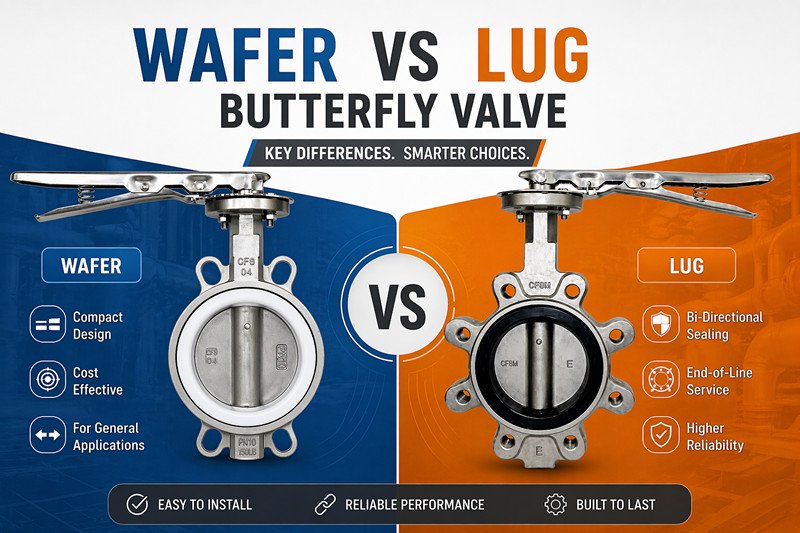
Wafer and lug butterfly valves differ mainly in mounting design, isolation capability, and maintenance flexibility. Wafer valves are cost-effective for general flow control, while lug valves allow end-of-line service and safer maintenance in critical systems.
I have helped hundreds of clients fix wrong valve selections. This guide explains the real differences so you can avoid expensive mistakes.
What Is a Butterfly Valve?
Choosing the wrong valve type creates leakage, pressure loss, and shutdown risks. Many buyers focus only on price and ignore function.
A butterfly valve is a quarter-turn valve that uses a rotating disc to control or isolate fluid flow. It is compact, lightweight, and widely used in industrial pipelines.
Basic Working Principle
I always explain butterfly valves in simple terms.
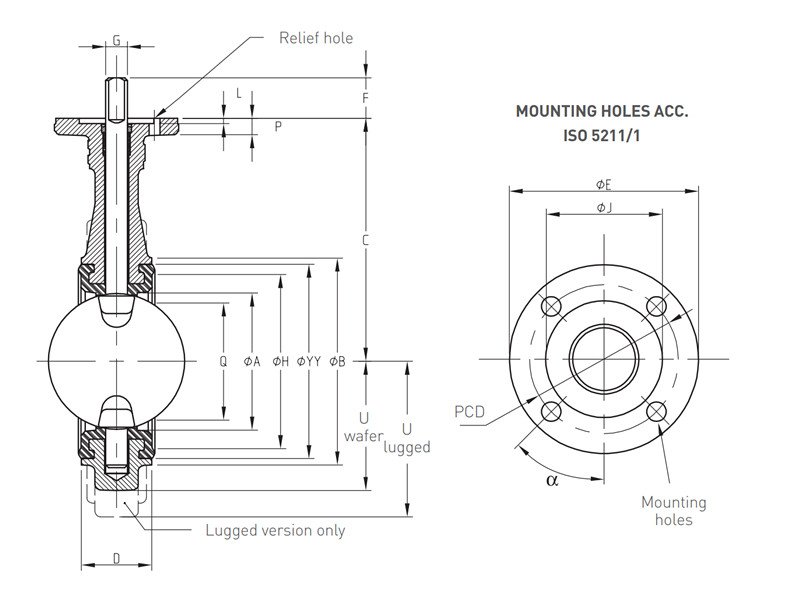
The valve has three main parts:
- Disc (controls flow)
- Stem (connects actuator)
- Body (holds structure)
When I turn the handle or actuator:
- 0° position = fully open
- 90° position = fully closed
The disc rotates inside the pipe. This makes flow control fast and simple.
Common Types of Butterfly Valves
From my experience, buyers mainly deal with:
| Type | Key Feature | Typical Use |
|---|---|---|
| Wafer | Sandwiched between flanges | Cost-sensitive systems |
| Lug | Threaded inserts for bolts | Isolation systems |
| Double offset | Better sealing | Higher pressure |
| Triple offset | Metal sealing | High temperature |
In our sanitary product lines, I often see butterfly valves used in food and pharma systems. The design stays simple, but performance depends heavily on installation style.
What Is a Wafer Butterfly Valve?
Many buyers choose wafer valves because of price. But they do not always understand the limitations.
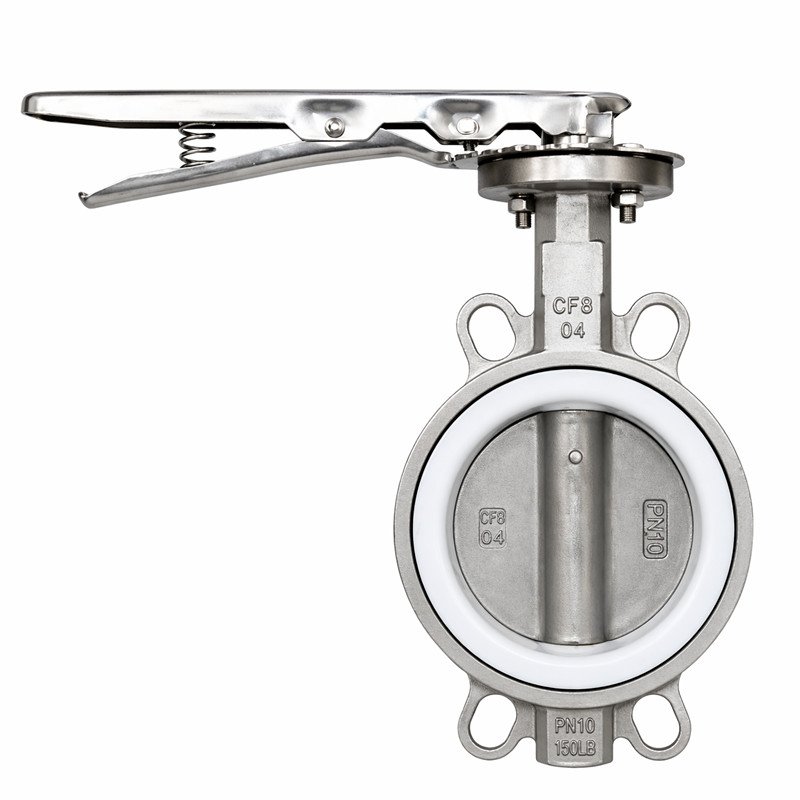
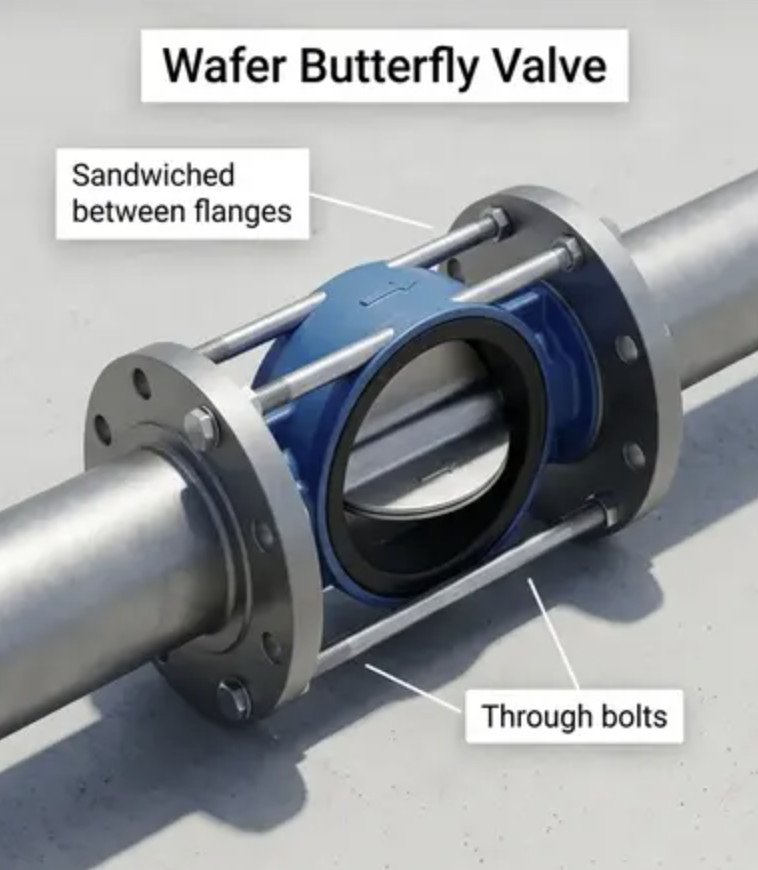
A wafer butterfly valve is designed to fit between two pipe flanges and is held in place by long bolts passing through the entire assembly.
Design and Structure
I see wafer valves as the simplest structure.
Key features:
- No threaded inserts
- Thin body design
- Centered disc
The valve sits between flanges like a “sandwich.” Bolts clamp everything together.
Installation Method
Installation is straightforward:
- Align valve between flanges
- Insert long bolts
- Tighten evenly
But here is the key issue:
The valve depends entirely on flange compression.
If one side is removed, the valve loses support.
Advantages
From my projects, wafer valves offer:
- Lower cost
- Lightweight design
- Easy installation
- Compact size
They are ideal when budget matters.
Limitations
This is where many buyers make mistakes.
Main limitations:
- Cannot be used for end-of-line service
- No independent flange support
- Risk during maintenance
If you remove one pipeline side, the valve may shift or fail.
What Is a Lug Butterfly Valve?
Some systems require safer isolation. This is where lug valves become important.
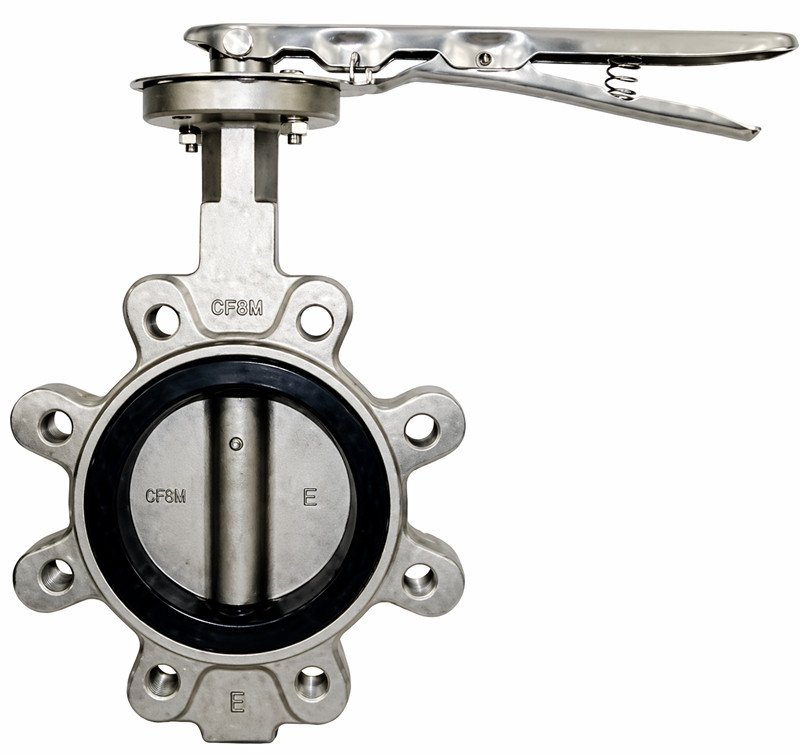
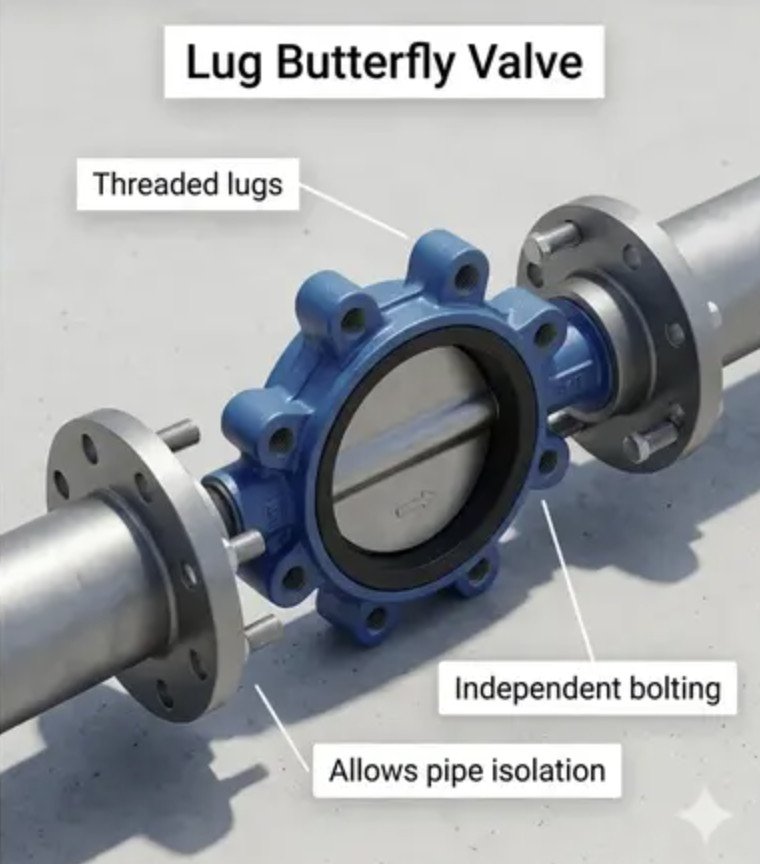
A lug butterfly valve has threaded inserts (lugs) on both sides, allowing it to be bolted directly to each flange independently.
Design and Structure
The main difference is clear:
- Threaded lugs around the body
- Stronger mechanical support
- Independent flange connection
Each bolt screws directly into the valve body.
Installation Method
Installation steps:
- Align valve with flanges
- Insert bolts into threaded lugs
- Tighten each side independently
This creates a much stronger and safer connection.
Advantages
In my experience, lug valves are used in critical systems because:
- They allow end-of-line service
- Better mechanical stability
- Easier maintenance
- Safer isolation
You can remove one side of the pipeline without disturbing the valve.
Limitations
However, nothing is perfect.
Limitations include:
- Higher cost
- Heavier weight
- More complex machining
Many buyers hesitate because of price, but ignore long-term benefits.
Wafer vs Lug Butterfly Valve: Side-by-Side Comparison
Many clients ask me for a quick comparison. I always break it down clearly.
Structural Differences
| Feature | Wafer | Lug |
|---|---|---|
| Body | Thin | Thick |
| Bolt type | Through bolts | Threaded lugs |
| Support | Flange dependent | Independent |
Installation Differences
- Wafer: clamped between flanges
- Lug: bolted directly to valve body
This difference affects safety and flexibility.
Pressure Handling
From my experience:
- Lug valves handle stress better
- Wafer valves rely on uniform bolt load
Improper tightening can cause leakage in wafer designs.
Maintenance and Replacement
This is critical for buyers.
| Factor | Wafer | Lug |
|---|---|---|
| Isolation capability | No | Yes |
| Maintenance ease | Low | High |
Lug valves allow partial system shutdown.
Cost Comparison
| Type | Cost Level |
|---|---|
| Wafer | Lower |
| Lug | Higher |
But I always tell clients:
Initial cost is not total cost.
Common Materials for Butterfly Valves and Their Pros & Cons
Many buyers focus only on valve type but ignore material selection. This often leads to corrosion, leakage, or short service life.
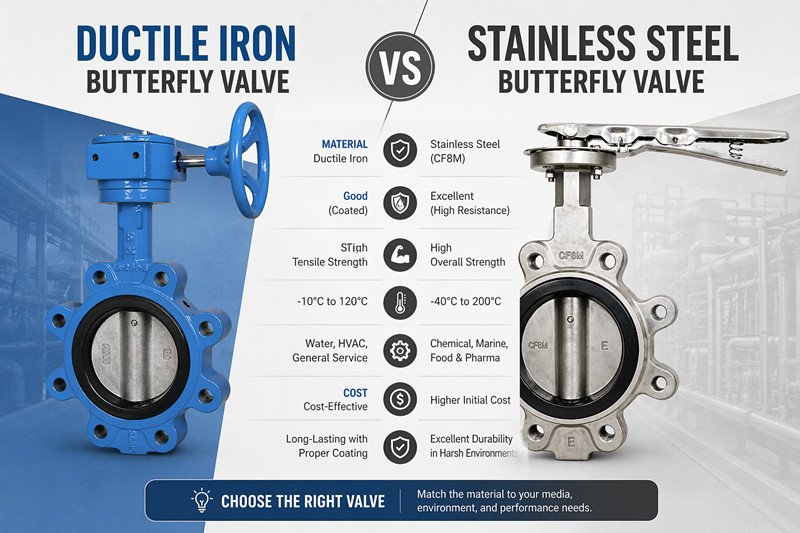
Choosing the right material is critical because it directly affects durability, chemical resistance, and total lifecycle cost.
Common Materials Overview
From my experience supplying global OEM customers, these are the most common materials used in butterfly valves:
| Material | Typical Grade | Main Use |
|---|---|---|
| Stainless Steel | SS304 / SS316 / SS316L | Food, pharma, chemical |
| Ductile Iron | GGG40 / GGG50 | Water, HVAC |
| Carbon Steel | WCB | Oil & gas |
| PVC / CPVC | Plastic | Corrosive, low pressure |
| Alloy (Monel / Hastelloy) | Custom | High corrosion environments |
At Beyond Fluid, we mainly supply stainless steel materials with full EN10204 3.1 certification because high-end markets require traceability and reliability.
Detailed Pros and Cons Analysis
I always advise buyers to evaluate materials based on environment, not price alone.
| Material | Advantages | Disadvantages |
|---|---|---|
| SS304 | Cost-effective stainless option; good corrosion resistance; widely available | Not suitable for strong acids or chlorides |
| SS316 / SS316L | Excellent corrosion resistance; ideal for chemical and marine use; hygienic | Higher cost than SS304 |
| Ductile Iron | Low cost; strong mechanical strength; good for large diameters | Poor corrosion resistance; requires coating |
| Carbon Steel (WCB) | High strength; good for high pressure; cost-effective for oil & gas | Prone to rust; needs surface protection |
| PVC / CPVC | Excellent chemical resistance; lightweight; low cost | Low pressure and temperature limits |
| Monel | Excellent resistance to seawater and acids | Very expensive; limited availability |
| Hastelloy | Outstanding corrosion resistance in extreme environments | Extremely high cost; longer lead time |
How I Help Clients Choose Materials
In real projects, I never recommend materials blindly. I break the decision into key factors:
1. Corrosion Environment
- Clean water → Ductile iron or SS304
- Chemical media → SS316L or higher alloys
- Strong acids → Hastelloy
2. Pressure and Temperature
- Low pressure → PVC
- Medium → Stainless steel
- High pressure → Carbon steel or alloy
3. Certification Requirements
Many EU and US buyers require:
- EN10204 3.1 certificates
- Material traceability
This is why we always provide certified materials for every shipment.
4. Total Cost vs Initial Cost
Cheap materials often fail early.
I always tell my clients:
- Lower price = higher risk
- Correct material = lower long-term cost
Quick Selection Table
For fast decision-making, I summarize like this:
| Application | Recommended Material |
|---|---|
| Water treatment | Ductile iron / SS304 |
| Food & beverage | SS316L |
| Chemical processing | SS316L / Hastelloy |
| Oil & gas | Carbon steel / SS316 |
| Seawater | Monel / SS316L |
This approach helps buyers avoid over-specification and under-specification at the same time.
When Should You Use a Wafer Butterfly Valve?
Choosing wafer valves blindly leads to risk. But used correctly, they are very efficient.
A wafer valve is best for general flow control where full isolation is not required.
Best Applications
I recommend wafer valves for:
- Water treatment systems
- HVAC pipelines
- Low-pressure systems
- Non-critical services
These systems do not require frequent isolation.
When to Avoid
Avoid wafer valves when:
- End-of-line service is needed
- Maintenance requires isolation
- Safety is critical
I have seen failures when wafer valves were used in shutdown systems.
When Should You Use a Lug Butterfly Valve?
Some applications demand higher safety. This is where lug valves perform better.
A lug valve is ideal when you need isolation, maintenance flexibility, and system reliability.
Best Applications
I recommend lug valves for:
- Oil & gas pipelines
- Chemical processing
- Critical isolation points
- High-maintenance systems
These environments require reliability.
When to Avoid
Avoid lug valves when:
- Budget is very limited
- System is simple and non-critical
Otherwise, you may overpay without real benefit.
How to Choose Between Wafer and Lug Butterfly Valves
Many buyers ask me this question directly. I always break it into four factors.
Based on Pipeline Design
If your pipeline needs:
- Continuous flow → wafer
- Section isolation → lug
Based on Maintenance Needs
If maintenance is frequent:
- Choose lug
If not:
- Wafer is enough
Based on Budget
- Tight budget → wafer
- Long-term value → lug
Based on Safety Requirements
This is the most important factor.
- Low risk → wafer
- High risk → lug
I always prioritize safety over price.
Common Mistakes to Avoid
I have seen the same mistakes for years. They cost buyers time and money.
Misusing Wafer Valves for Isolation
This is the biggest mistake.
Wafer valves are not designed for isolation. Using them this way creates safety risks.
Ignoring Bolt Load Requirements
Uneven bolt tightening causes:
- Leakage
- Valve distortion
Proper torque control is critical.
Incorrect Installation Practices
Common errors include:
- Misalignment
- Over-tightening
- Lack of support
Even a good valve fails with bad installation.
Industry-Specific Recommendations
Different industries need different solutions. I always customize recommendations.
Oil & Gas
I always recommend:
- Lug valves
- High-pressure designs
Safety is critical.
Water Treatment
Wafer valves work well because:
- Lower pressure
- Lower cost
HVAC Systems
Most systems use:
- Wafer valves
- Lightweight designs
Cost matters more here.
Chemical Processing
I recommend:
- Lug valves
- Corrosion-resistant materials
Materials like SS316L or Hastelloy improve reliability.
FAQ
Can a wafer valve be used for end-of-line service?
No. A wafer valve cannot safely handle end-of-line service because it depends on flange support from both sides.
Why are lug valves more expensive?
Lug valves require more material and machining due to threaded inserts. This increases production cost but improves safety and flexibility.
Which valve lasts longer?
Lug valves generally last longer in demanding applications because they provide better mechanical stability and easier maintenance.
Conclusion
Wafer valves save cost, but lug valves provide safety and flexibility. I always recommend choosing based on application risk, not just price.
Beyond Fluid is a leading supplier of stainless steel butterfly valves for over 15 years. Contact us for more information.