Contamination risks, wrong valve choices, and unclear specs cause failures. Buyers lose money and trust. I see this often. Let me clarify the difference clearly.
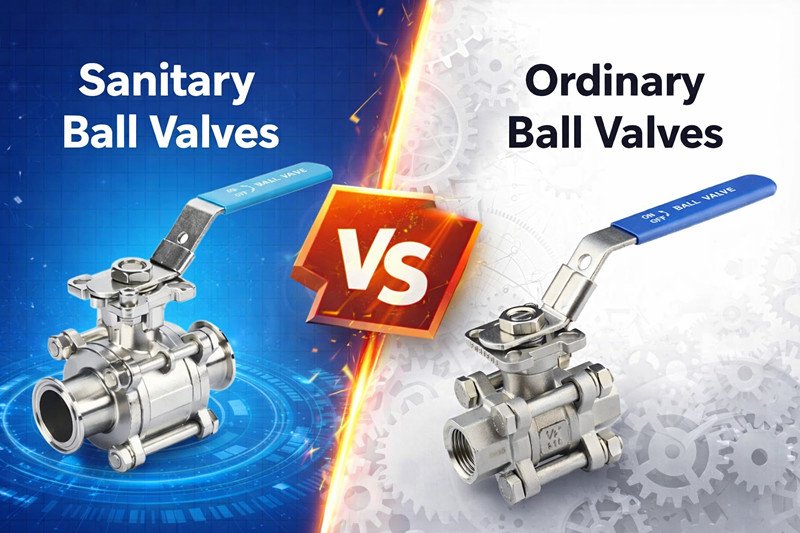
Sanitary ball valves are designed for hygienic, cleanable processes, while ordinary ball valves are built for general industrial flow control where hygiene is not critical.
Sanitary valves prevent contamination. Ordinary valves focus on pressure, cost, and durability.
I have worked with both valve types for over fifteen years. Many problems come from using the right valve in the wrong place. This guide explains how to avoid that.
What Is a Ball Valve?
Confusion starts with basics. Many buyers use ball valves daily but never think about how they really work or why designs differ.
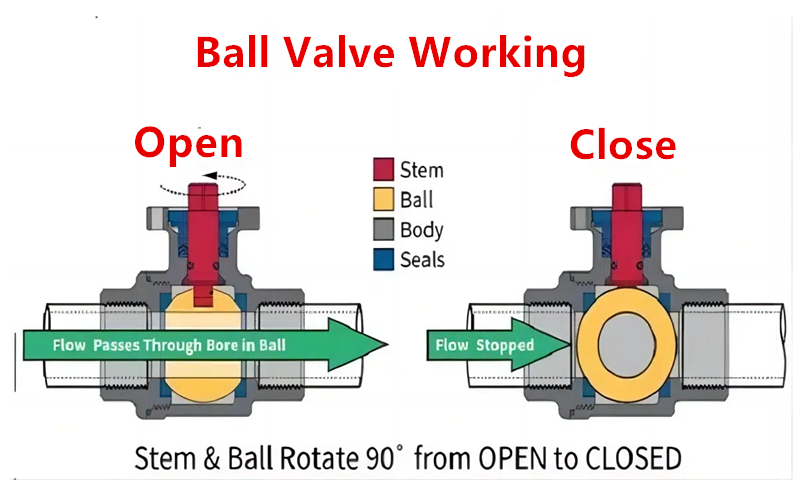
A ball valve is a quarter-turn valve that controls flow using a rotating ball with a drilled bore.
When aligned, flow passes. When rotated 90 degrees, flow stops.
How a Ball Valve Works (Basic Mechanism)
A ball valve uses a solid metal ball with a hole through its center. The ball sits between two seats. A stem connects the ball to the handle.
When I turn the handle, the stem rotates the ball. If the bore aligns with the pipeline, media flows freely. If the bore turns perpendicular, the solid side blocks flow.
This simple motion gives ball valves fast operation and tight shutoff. That is why buyers like them. But simplicity hides design differences.
Seat materials, body construction, and internal cavities all change how the valve behaves. These details matter more than many buyers expect.
Common Uses of Ball Valves Across Industries
I see ordinary ball valves used in oil and gas, water treatment, chemical plants, utilities, and compressed air systems.
They handle high pressure and temperature. They tolerate dirty media. They cost less.
Sanitary ball valves appear in food, beverage, dairy, pharmaceutical, cosmetic, and biotech plants. In these industries, cleanliness matters more than pressure rating.
Understanding this split is the foundation of correct valve selection.
What Makes a Valve “Sanitary”?
Many suppliers label valves as sanitary without real design differences. This creates risk for buyers who sell into regulated markets.
A sanitary valve is designed to eliminate contamination risks through hygienic materials, smooth surfaces, and cleanable internal geometry.
Design matters more than appearance.

Hygienic Design Criteria & Cleanability (CIP/SIP)
Sanitary valves must support CIP and SIP processes. That means cleaning chemicals or steam must reach every internal surface.
I always look for self-draining design. No dead legs. No trapped cavities. No shadow zones behind seats.
Ordinary ball valves often trap product inside the body cavity when closed. That trapped media becomes a bacterial risk. Sanitary designs solve this through cavity-filled or cavity-free construction.
Without proper CIP/SIP compatibility, cleaning becomes manual, slow, and unreliable.
Material Requirements (304/316/L, FDA Elastomers)
Sanitary valves use stainless steel 304 or 316L almost exclusively. For aggressive media, special alloys may apply, but carbon steel is never acceptable.
Seals matter as much as metal. FDA-approved elastomers like EPDM, PTFE, FKM, or silicone are standard.
I have seen buyers fail audits because seal materials lacked traceability. Every sanitary valve should ship with material certificates and elastomer compliance data.
Surface Finish & Crevice-Free Design Importance
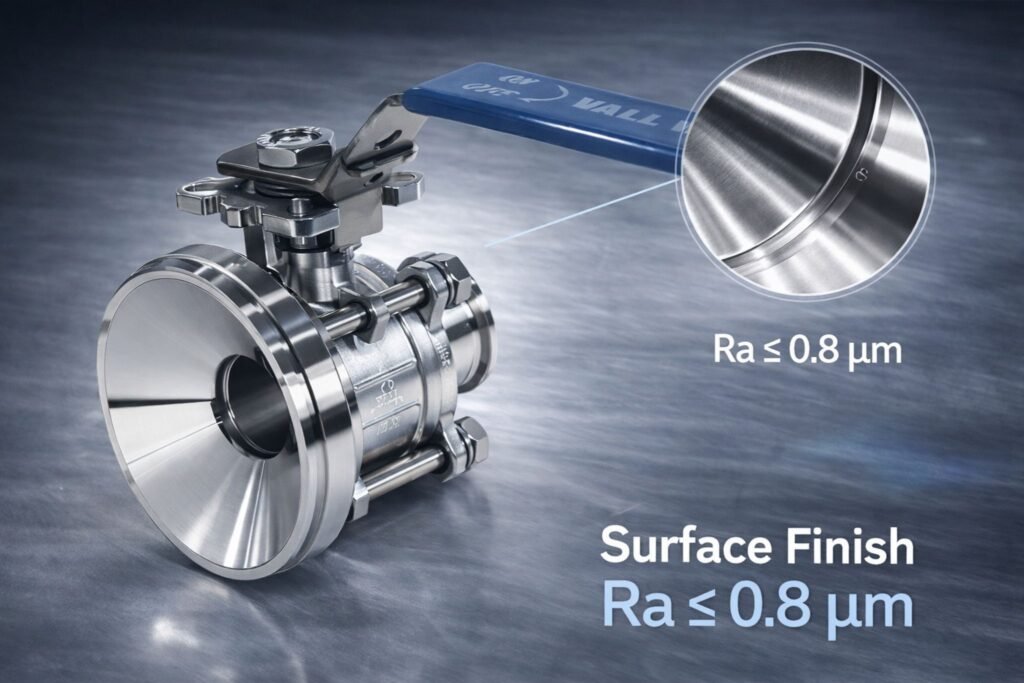
Surface finish controls bacterial adhesion. Sanitary valves typically require Ra ≤ 0.8 μm, sometimes lower.
Polished internal surfaces reduce residue buildup. Welds must be smooth and blended.
Ordinary ball valves do not control surface roughness. Machining marks and sharp edges are common. In hygienic service, those features become contamination sources.
Comparing Sanitary vs Ordinary Ball Valves
Many buyers ask me if the difference is only price. It is not.
Sanitary and ordinary ball valves differ in materials, internal geometry, connections, and compliance standards.
Each difference affects safety and usability.

Material & Surface Differences
Ordinary ball valves may use cast steel, carbon steel, or mixed materials. Surface finish is functional, not hygienic.
Sanitary valves use forged or precision-machined stainless steel with polished surfaces. Every wetted part meets hygienic standards.
This difference drives cost but also defines application limits.
Internal Design (Cavity-Filled vs Standard Cavities)
Standard ball valves create body cavities when closed. Media stays trapped between seats.
Sanitary ball valves often use cavity-filled seats or special seat geometry. This eliminates trapped product and allows full flushing during CIP.
This single feature often decides whether a valve passes inspection or fails.
Connection Types & Ease of Cleaning
Ordinary valves use threaded, flanged, or socket weld connections. These joints are strong but hard to clean.
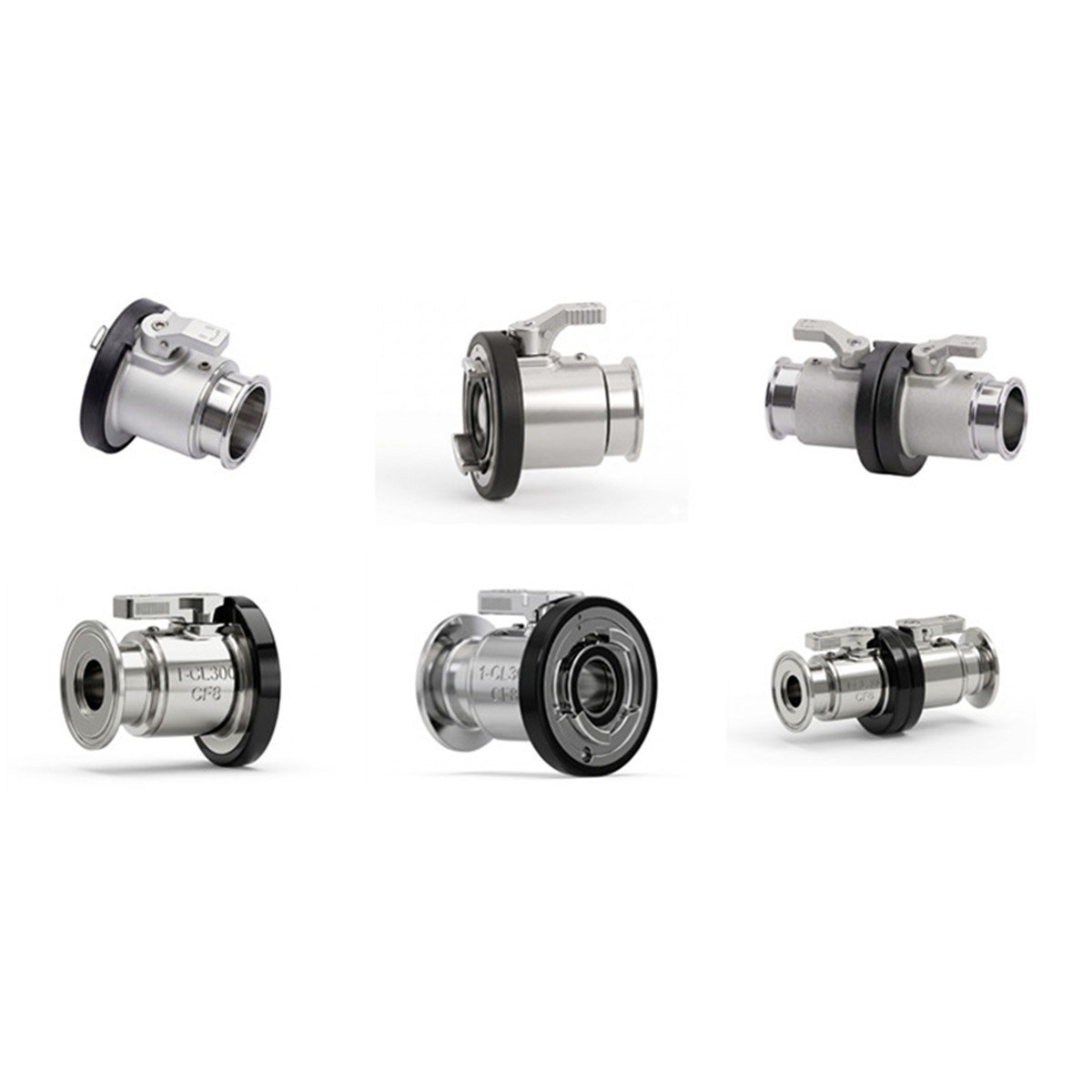
Sanitary valves use tri-clamp, weld-end, or hygienic unions. These allow easy disassembly and smooth flow paths.
Connection choice directly affects downtime and cleaning efficiency.
Regulatory Standards & Certifications
Ordinary ball valves usually meet pressure standards like ANSI or ASME.
Sanitary valves must meet 3-A, FDA, or sometimes EHEDG requirements. Documentation matters as much as the valve itself.
Buyers selling into Europe or North America must verify certification authenticity carefully.
Applications & Industry Fit
Using the wrong valve type causes real losses. I have seen entire batches scrapped because of valve selection errors.
Application environment should always decide valve type, not price alone.

Where Sanitary Valves Are Essential (Food, Pharma, Biotech)
Any process involving consumable products requires sanitary valves.
This includes dairy lines, beverage filling systems, pharmaceutical reactors, biotech fermentation, and cosmetic production.
Regulators expect hygienic design. Auditors inspect valves closely. Shortcuts almost always fail later.
Ordinary Ball Valve Use Cases (Industrial, High Pressure, Utilities)
Ordinary ball valves excel in non-hygienic systems.
They handle steam, oil, gas, water, and chemicals. They tolerate high pressure and rough conditions. They cost less and last long.
Using sanitary valves here wastes money without benefit.
How to Choose the Right Valve
Most buyers do not need complex calculations. They need a clear decision framework.
Correct valve selection balances hygiene risk, operating conditions, and long-term cost.
Selection Checklist
I recommend asking these questions first:
| Question | Why It Matters |
|---|---|
| Is the media consumable? | Determines hygiene requirement |
| Is CIP/SIP required? | Defines internal design |
| What material certificates are needed? | Affects compliance |
| What connection type fits cleaning needs? | Impacts maintenance |
| Who audits the system? | Sets documentation level |
Answering these avoids most mistakes.
Cost vs Performance Tradeoffs
Sanitary valves cost more upfront. But they reduce cleaning time, audit risk, and contamination losses.
Ordinary valves save money initially but can create expensive failures if misused.
I always advise buyers to calculate total lifecycle cost, not unit price.
Maintenance & Longevity Insights
Sanitary valves require regular seal replacement but stay clean.
Ordinary valves last long mechanically but degrade hygienically fast.
Maintenance strategy should match valve design and process risk.
FAQ – What Engineers Ask Most
Is a polished industrial valve sanitary? No. Finish alone is not enough.
Can sanitary valves handle high pressure? Sometimes, but not always efficiently.
Are all stainless valves sanitary? Absolutely not. Design defines sanitation.
Conclusion — When to Use Sanitary vs Ordinary Ball Valves
Sanitary valves protect product safety. Ordinary ball valves protect flow control. Choosing correctly prevents contamination, audit failures, and unnecessary cost.
Beyond Fluid is a leading supplier of sanitary ball valves for over 15 years. Download a sanitary ball valves catalog.