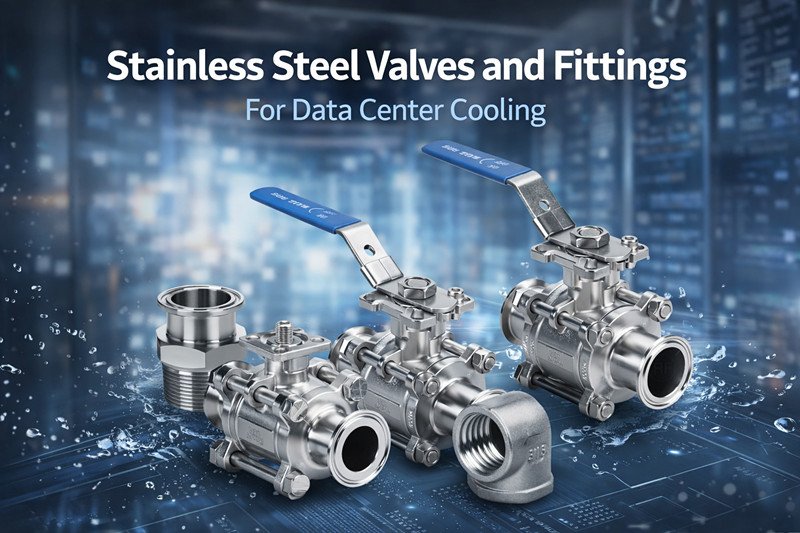
Data centers cannot tolerate downtime. Yet many failures begin with poor fluid control. A small valve issue can stop cooling, disrupt fuel supply, or disable fire protection.
Data centers use multiple valve types including butterfly valves, ball valves, gate valves, globe valves, check valves, pressure relief valves, solenoid valves, breather valves, and fusible link safety valves. Each type controls flow, protects equipment, and ensures reliable operation across cooling, fuel, and fire protection systems.
In my experience supplying stainless steel valves and fittings globally, many engineers focus heavily on pumps, chillers, or generators. But valves quietly control the reliability of the entire infrastructure.
Let me walk through how these valves work inside modern data centers.
Why Valves Are Critical in Data Center Infrastructure?
Fluid systems in data centers look simple. But one leaking or failing valve can disrupt cooling, fuel supply, or fire protection.
Valves are critical because they control fluid flow, isolate equipment, regulate pressure, and ensure safe operation of cooling, fuel, and fire protection systems that support mission-critical data center uptime.
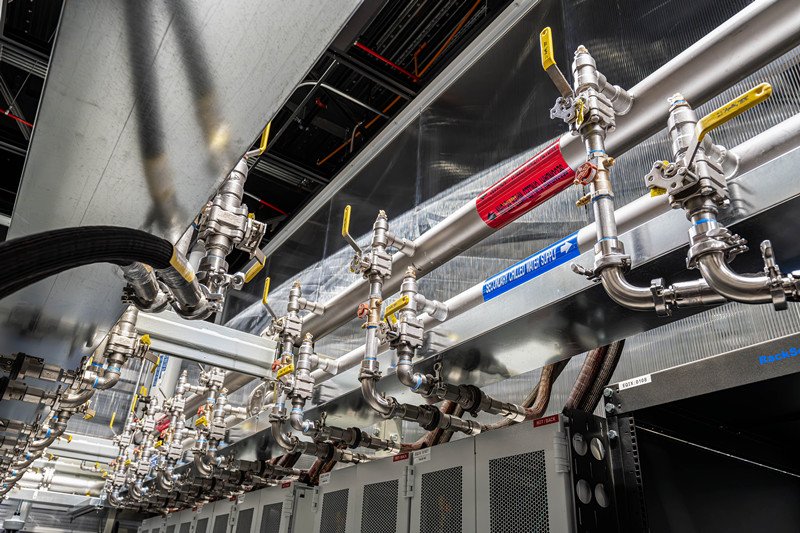
Fluid Control Enables Stable Operations
Every major system in a data center moves fluids.
These include:
- chilled water
- condenser water
- diesel fuel
- fire suppression water
- treated facility water
Without valves, engineers cannot control where these fluids move.
Valves allow operators to:
| Function | Example in Data Centers |
|---|---|
| Isolation | Shut off cooling loops during maintenance |
| Flow control | Adjust water distribution across racks |
| Safety | Prevent reverse flow in pumps |
| Pressure protection | Protect tanks and pipelines |
| Emergency shutdown | Stop fuel flow during fire |
These functions make valves essential safety and control devices.
Reliability Requirements Are Extremely High
Data centers operate 24/7. Even a short outage can cost millions of dollars.
This means valves must meet strict reliability requirements.
Key expectations include:
- zero or minimal leakage
- long maintenance intervals
- high cycle life
- stable operation under pressure changes
For example, many instrumentation valves used in industrial systems operate under pressures up to several thousand PSI and require leak-tight testing before delivery.
Those reliability expectations translate directly into data center infrastructure.
Mission-Critical Uptime Depends on Isolation
One design principle always appears in modern data centers: redundancy.
Cooling systems often have multiple loops. Power systems include backup generators. Fire protection systems include independent supply lines.
Valves allow operators to isolate individual equipment without shutting down the entire facility.
Without proper isolation valves, maintenance becomes extremely risky.
Overview of Data Center Mechanical Systems?
Many people imagine data centers as rows of servers. But behind the racks is a complex mechanical infrastructure.
Data centers rely on four main mechanical systems: cooling systems, backup power fuel systems, fire protection systems, and water supply systems. Each requires dedicated valves to manage flow, safety, and equipment isolation.
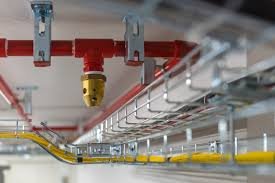
Cooling Systems
Cooling is the largest fluid system inside most facilities.
Common cooling technologies include:
Chilled water systems
Large chillers produce chilled water that circulates through the building.
Typical components include:
- chillers
- pumps
- cooling towers
- heat exchangers
- distribution piping
CRAH / CRAC units
Computer Room Air Handler units distribute cold air across server racks.
These systems rely on chilled water supply lines that must be balanced and controlled.
Liquid cooling loops
Modern AI data centers increasingly use liquid cooling.
These loops move coolant directly to high-density processors.
This requires extremely precise flow control.
Modern hyperscale data centers increasingly rely on pressure independent control valves (PICVs) to maintain stable chilled water flow even when system pressure fluctuates.
Backup Power Systems
Data centers cannot depend solely on the electrical grid.
Backup power systems include:
- diesel generators
- day tanks
- fuel transfer pumps
- fuel storage tanks
Fuel must move reliably from storage tanks to generators.
Valve systems control:
- fuel transfer
- fuel isolation
- emergency shutdown
- tank ventilation
Fire Protection Systems
Fire protection systems rely heavily on valves.
Common systems include:
- sprinkler systems
- pre-action systems
- clean agent systems
Valves ensure water only flows when needed.
They also isolate zones during maintenance.
Water Supply and Treatment
Many facilities also include water treatment systems.
These systems handle:
- cooling tower water
- makeup water
- filtration
- chemical dosing
Again, valves regulate and isolate flow across each stage.
Main Types of Valves Used in Data Centers?
Different systems require different valve designs.
Data centers commonly use butterfly valves, ball valves, gate valves, globe valves, check valves, pressure relief valves, solenoid valves, breather valves, and fusible link safety valves. Each type serves a specific control or safety function.
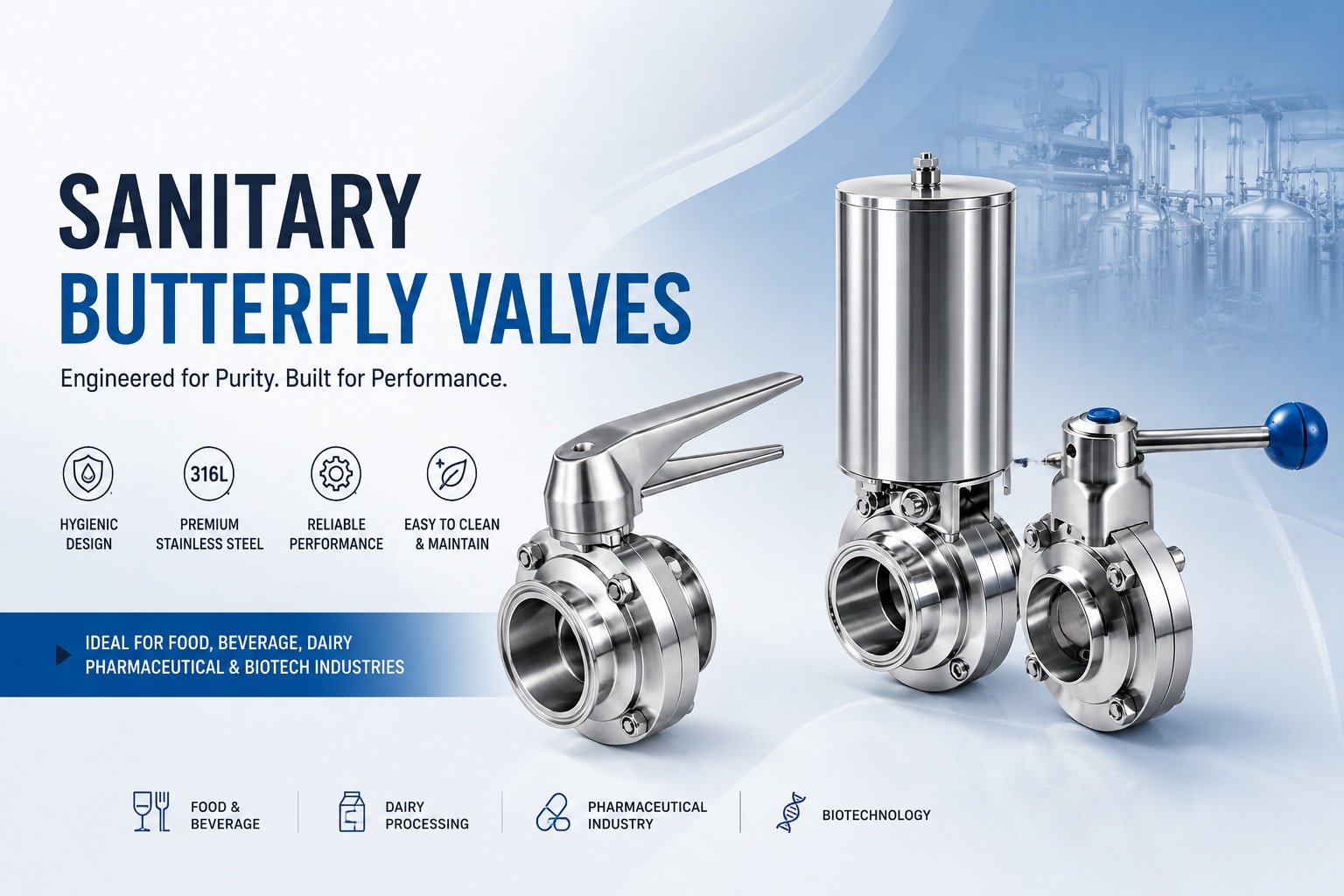
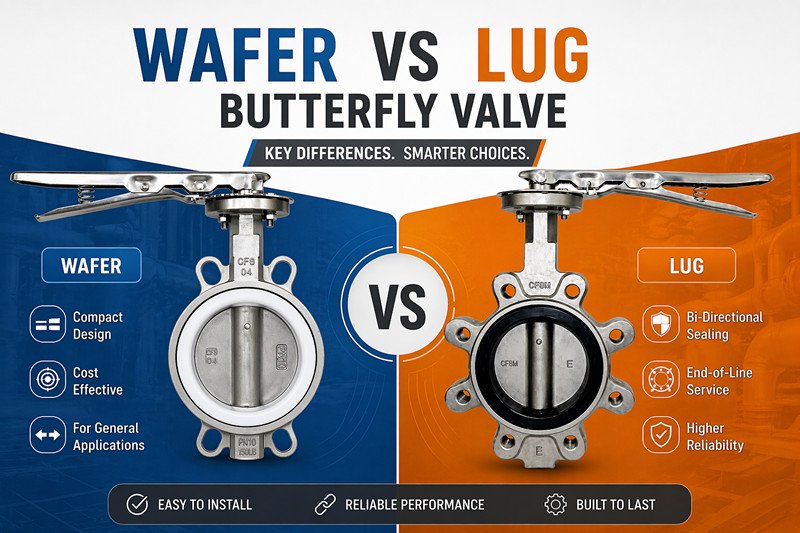
Butterfly Valves

Applications
- chilled water loops
- condenser water systems
Advantages
- compact design
- low cost
- ideal for large pipe diameters
Butterfly valves dominate large cooling loops.
For pipes larger than DN150, butterfly valves offer major cost advantages.
Their thin disk rotates inside the pipe to control flow.
This design keeps the valve body compact and lightweight.
Ball Valves
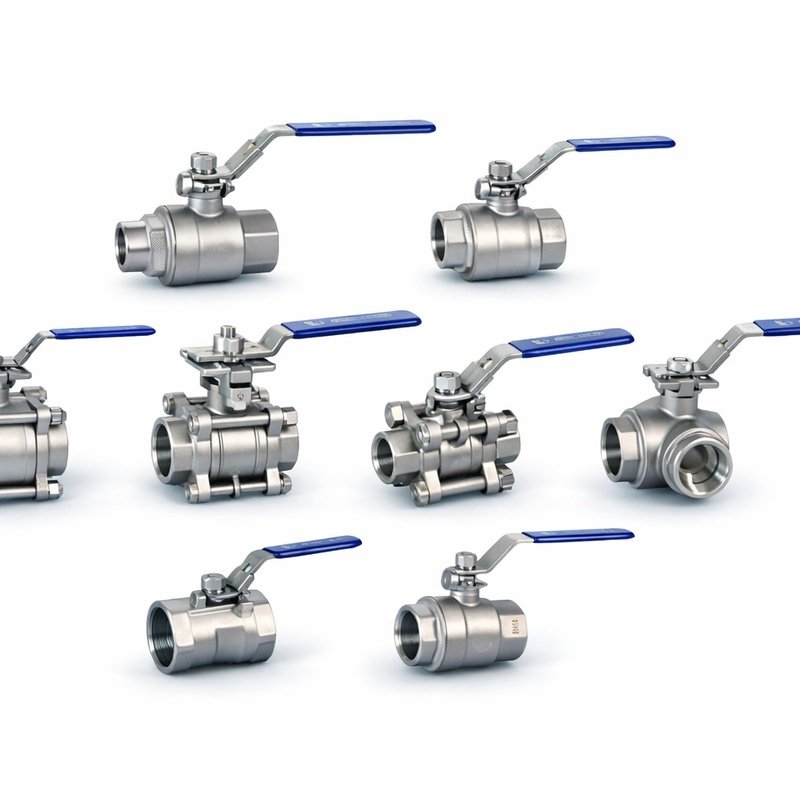
Applications
- diesel fuel lines
- equipment isolation
Advantages
- tight shutoff
- fast quarter-turn operation
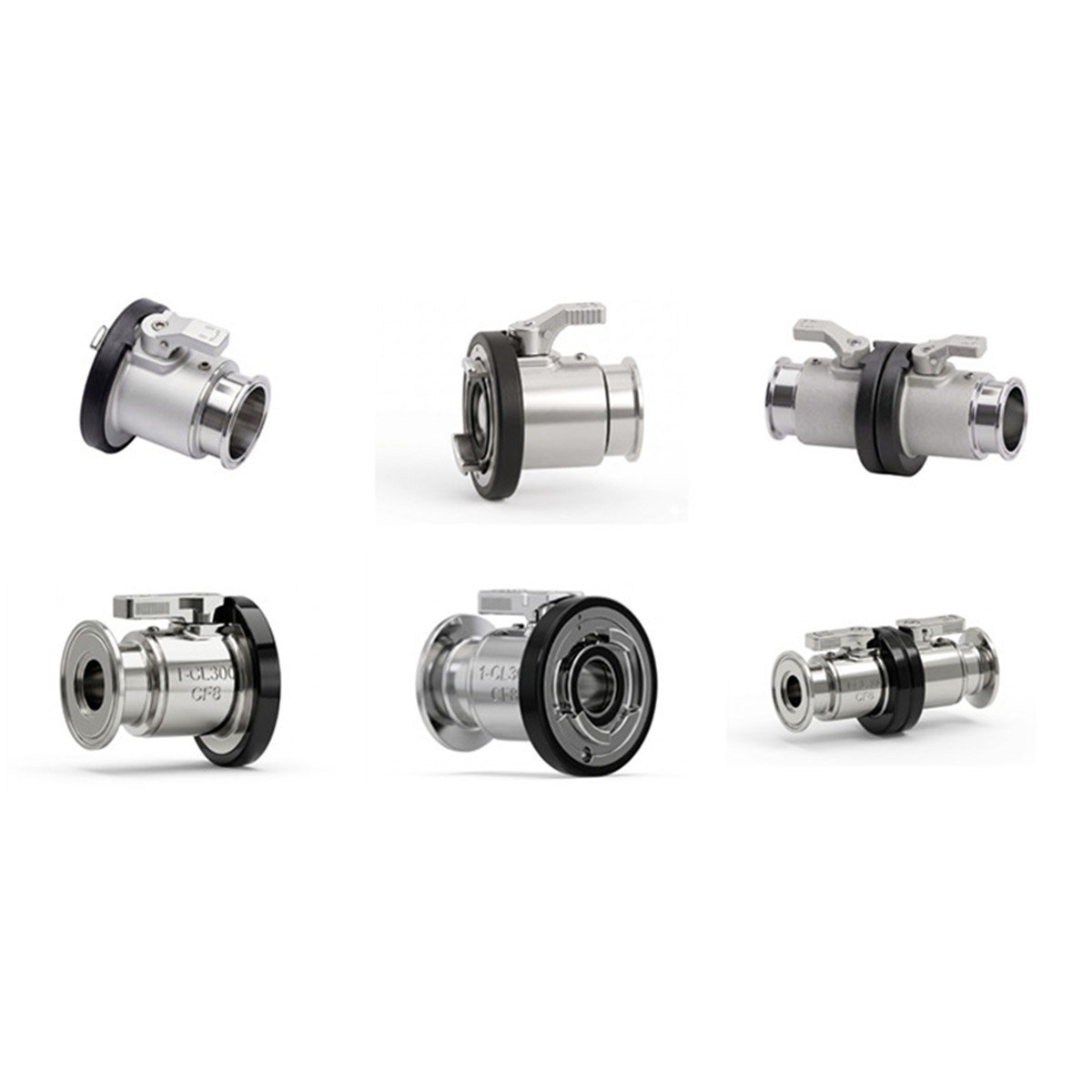
Ball valves use a rotating spherical ball to stop or allow flow.
Many industrial stainless steel ball valves provide bubble-tight shutoff and bi-directional flow control.
These properties make them ideal for fuel systems and isolation applications.
Gate Valves
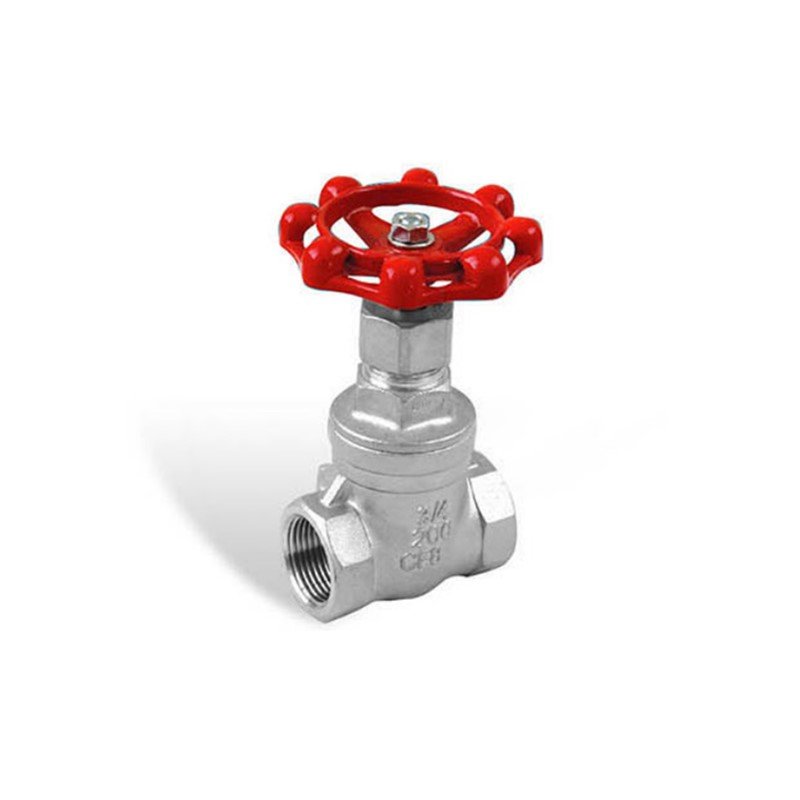
Applications
- main water supply lines
- large pipe isolation
Advantages
- minimal flow restriction
Gate valves lift a flat gate vertically out of the flow path.
This produces very low pressure drop.
Globe Valves
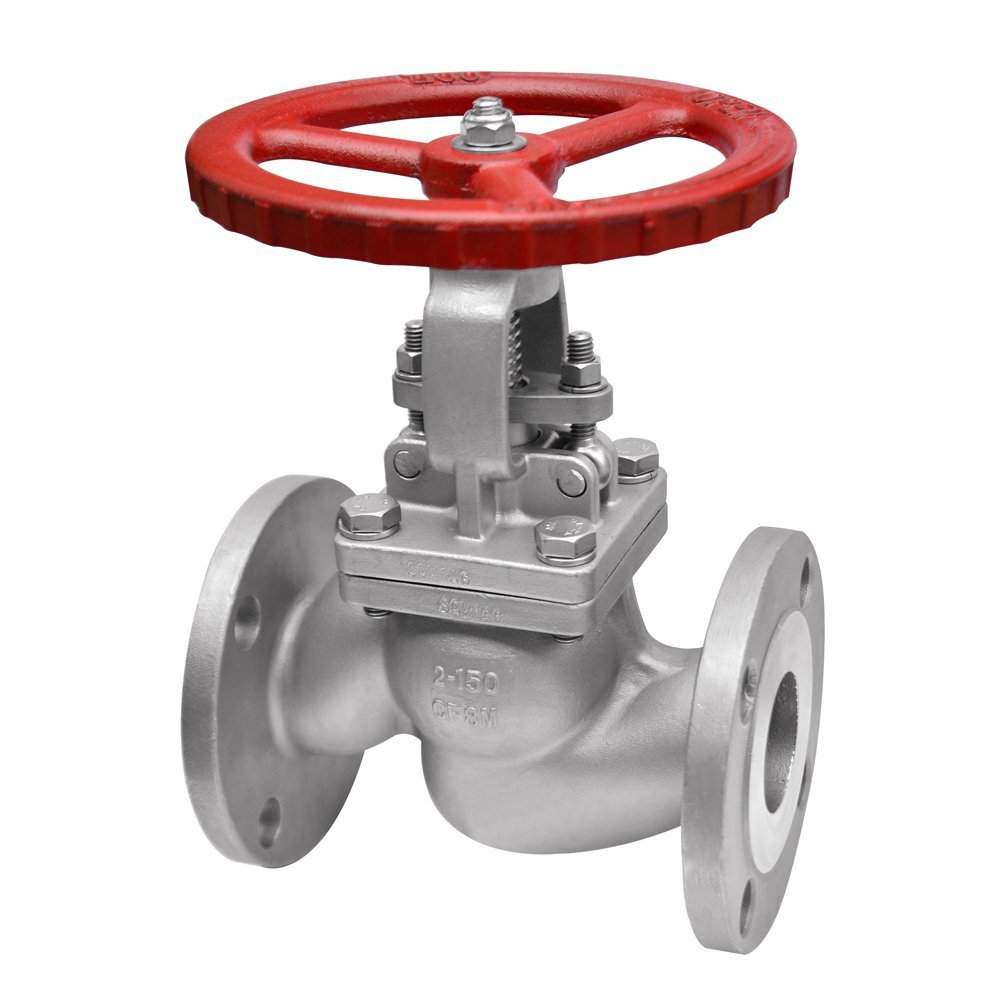
Applications
- flow regulation
- cooling distribution systems
Advantages
- precise throttling control
Globe valves are widely used where operators need accurate flow adjustment.
Check Valves

Applications
- pump protection
- preventing reverse flow
Check valves allow fluid to move in only one direction.
Spring-loaded poppet designs are common in instrumentation systems.
Pressure Relief Valves

Applications
- chilled water systems
- fuel tanks
Purpose
- prevent over-pressure damage
These valves open automatically when system pressure exceeds safe limits.
Solenoid Valves

Applications
- automated fuel systems
- emergency shutdown systems
Solenoid valves allow remote or automatic control through electrical signals.
Breather Valves with Flame Arrestors
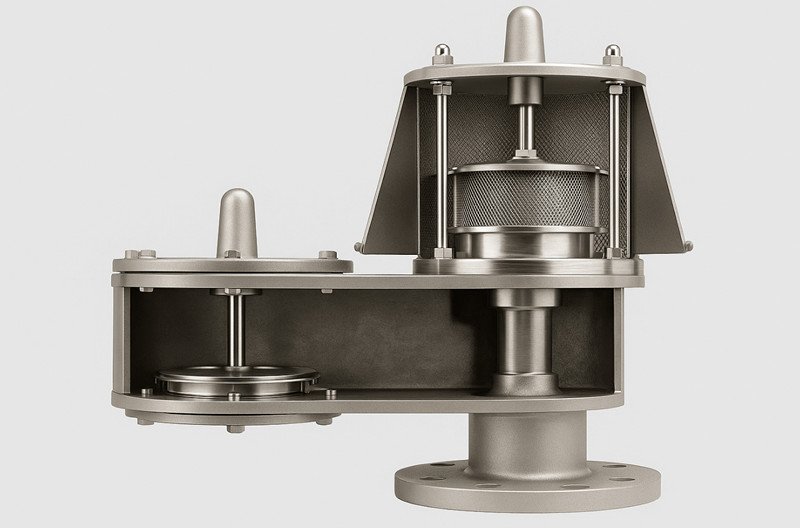
Applications
- diesel fuel storage tanks
These valves allow tanks to breathe while preventing ignition from external flames.
Fusible Link Safety Valves

Applications
- automatic fuel shutoff during fire
In diesel generator fuel systems, fail-safe valves such as fusible link valves and solenoid shutoff valves are critical to prevent fire hazards during emergencies.
Valves Used in Data Center Cooling Systems?
Cooling failures can shut down an entire facility within minutes.
Cooling systems use butterfly valves, control valves, balancing valves, and pressure independent control valves (PICVs) to regulate chilled water distribution and maintain stable temperatures across server rooms.
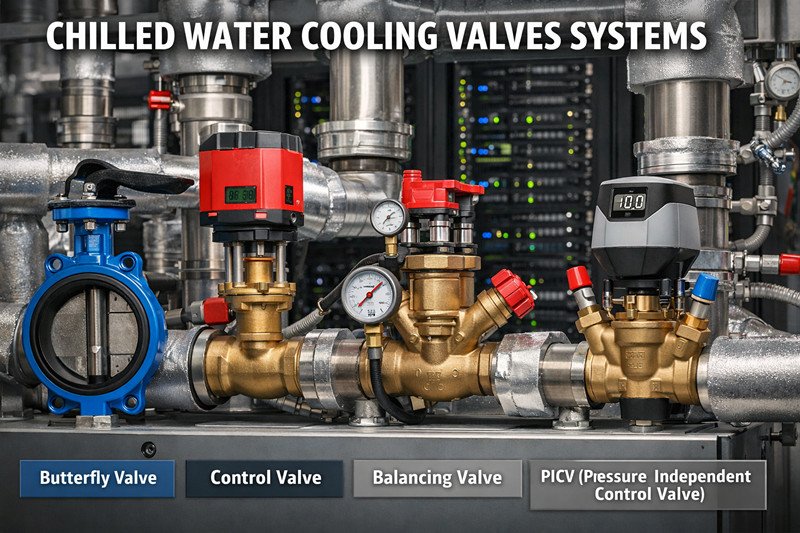
Chilled Water Loop Structure
Most large data centers use a closed chilled water loop.
The basic structure includes:
- chillers produce cold water
- pumps circulate the water
- CRAH units absorb heat from server rooms
- warm water returns to chillers
Each section requires different valves.
Butterfly Valves for Main Loops
Main chilled water pipes are very large.
Diameters often exceed:
- DN200
- DN300
- DN500
Butterfly valves dominate these pipes because:
- they are lightweight
- they require less installation space
- they cost much less than gate valves
For large cooling loops, butterfly valves are the most common choice.
Control Valves for Temperature Regulation
Control valves regulate how much chilled water enters cooling units.
These valves work with building management systems (BMS).
Sensors measure temperature and send signals to valve actuators.
The valve then adjusts flow automatically.
Balancing Valves
Balancing valves ensure equal flow distribution across different cooling branches.
Without balancing valves:
- some racks receive too much cooling
- others receive too little
Pressure Independent Control Valves (PICVs)
Modern hyperscale data centers increasingly use PICVs.
PICVs combine:
- flow control
- pressure regulation
- automatic balancing
Even when system pressure changes, the flow rate stays stable.
This improves cooling stability across the facility.
Valves Used in Data Center Diesel Fuel Systems?
Backup power depends entirely on reliable fuel delivery.
Diesel fuel systems use ball valves for isolation, solenoid valves for automation, fusible link valves for fire safety, and breather valves for tank ventilation.
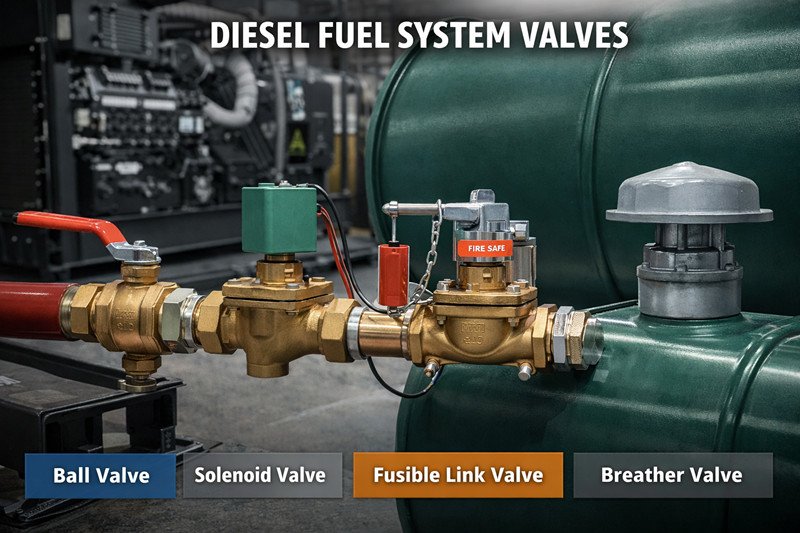
Ball Valves for Fuel Isolation
Ball valves are widely used in fuel piping.
Reasons include:
- fast operation
- tight shutoff
- simple design
In emergency situations, operators can shut off fuel quickly.
Solenoid Valves for Automated Control
Solenoid valves automate fuel systems.
Typical functions include:
- automatic generator startup
- fuel transfer control
- emergency shutdown
These valves respond instantly to control signals.
Fusible Link Safety Valves
Fusible link valves are critical safety devices.
They contain a metal link designed to melt during fire.
When the link melts, the valve automatically closes.
This stops fuel flow immediately.
Breather Valves for Fuel Tanks
Fuel tanks must allow air exchange.
Without breathing valves:
- pressure builds during filling
- vacuum forms during fuel withdrawal
Breather valves maintain safe pressure levels.
Valves Used in Data Center Fire Protection Systems?
Fire protection systems require extremely reliable valves.
Gate valves, check valves, and deluge valves are commonly used to control water supply and activate fire suppression systems in data centers.
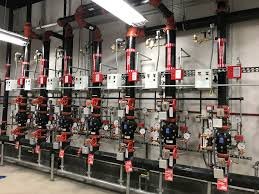
Gate Valves for Main Isolation
Gate valves often isolate sprinkler supply lines.
They allow full flow with minimal pressure loss.
Check Valves for Flow Direction
Check valves prevent water from flowing backward.
This protects fire pumps and prevents contamination of water supply.
Deluge Valves
Deluge valves release large volumes of water during fire emergencies.
They activate automatically when fire detection systems trigger.
Key Valve Selection Criteria for Data Centers?
Selecting the wrong valve can compromise reliability.
Engineers select valves based on reliability, leakage rate, automation capability, pressure rating, and system redundancy requirements.
Reliability
Valves must operate for years without failure.
This is why stainless steel materials such as SS304 or SS316L are widely used.
Leakage Rate
Leakage must be minimal.
For fuel systems and cooling systems, tight shutoff is critical.
Automation Compatibility
Many valves now include:
- electric actuators
- pneumatic actuators
- digital monitoring
Automation improves system response during emergencies.
Pressure Rating
Engineers must verify pressure ratings.
Some industrial valves operate at extremely high pressures.
For example, instrumentation valves may handle pressures up to 10,000 psig depending on design and materials.
Redundancy
Modern data centers always include redundant systems.
Valve layouts must support isolation between redundant loops.
Standards and Certifications for Data Center Valves?
Safety and compliance depend on certified equipment.
Data center valves must comply with standards such as UL, FM, API, ASME, and NFPA to ensure safety, fire protection reliability, and pressure integrity.
Common standards include:
| Standard | Purpose |
|---|---|
| UL | Safety certification |
| FM | Fire protection approval |
| API | Industrial valve standards |
| ASME | Pressure vessel and piping codes |
| NFPA | Fire protection system requirements |
Many projects require multiple certifications before installation approval.
Future Trends in Data Center Valve Technology?
Data center infrastructure is evolving rapidly.
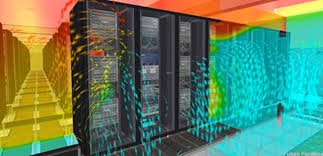
Future data centers will require smarter valves with advanced monitoring, high-precision flow control, and leak-free designs to support AI computing and liquid cooling technologies.
AI Data Centers and High Heat Loads
AI servers produce far more heat than traditional hardware.
Cooling requirements are increasing dramatically.
Direct-to-Chip Liquid Cooling
Many AI data centers now use direct liquid cooling.
Coolant flows directly through cold plates attached to processors.
This requires:
- highly precise flow control
- leak-free connections
- fast isolation capability
Smart Valve Monitoring
Future valves increasingly include sensors that monitor:
- position
- pressure
- temperature
- vibration
Operators can monitor valve performance remotely.
Smart Actuators
Smart actuators connect valves to digital control systems.
These systems enable:
- predictive maintenance
- automated response
- remote diagnostics
Demand for high-precision control valves, leak-proof quick isolation valves, and smart monitoring valves will continue growing.
Conclusion
Data centers rely on many valve types to control cooling, fuel, and fire protection systems. Choosing reliable valves ensures safe operation, stable temperatures, and uninterrupted uptime for mission-critical digital infrastructure.
Beyond Fluid is a leading supplier of stainless steel valves and pipe fittings for data center systems. Please contact us for more details.