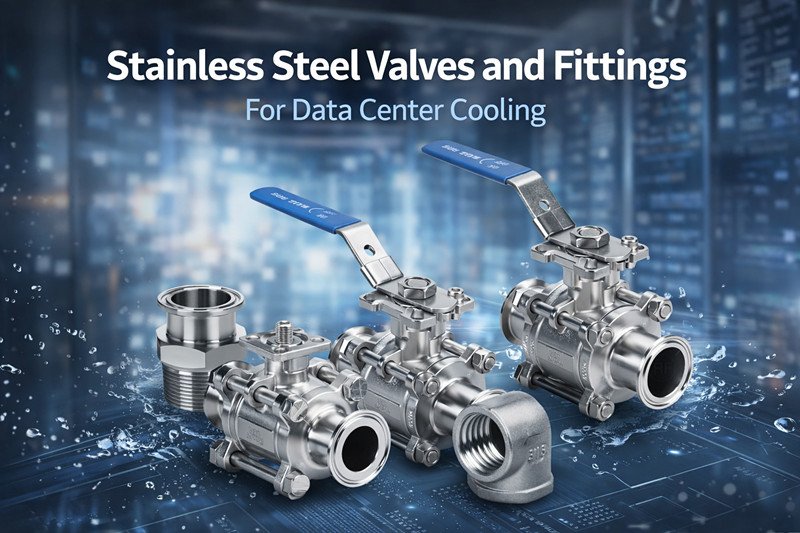
Modern data centers fail fast when cooling fails. Heat keeps rising, downtime costs more, and weak piping parts create hidden risks that many buyers only notice after leaks begin.
Yes. Stainless steel valves and pipe fittings are widely used in data center cooling systems because they offer corrosion resistance, leak control, long service life, and easier maintenance in chilled water and liquid cooling infrastructure.
I have seen cooling infrastructure become a serious purchasing topic as data centers move toward higher rack density and more liquid cooling. In this article, I explain where stainless steel valves and fittings fit, why they matter, and how I evaluate the right components for reliable long-term operation.
Introduction to Data Center Cooling Systems
Cooling problems can damage servers, reduce uptime, and raise operating costs. As computing density increases, data centers need more stable cooling systems with better fluid control and stronger piping reliability.
Data center cooling systems remove heat from servers through air or liquid-based methods. Their job is to keep equipment within safe temperatures, maintain uptime, and support efficient operation under continuous high thermal loads.
Why Cooling Is Critical for Data Centers
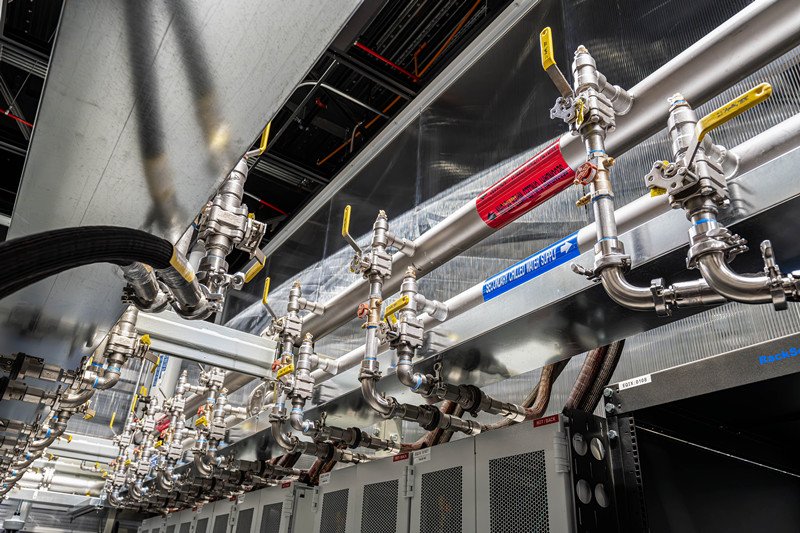
In my view, cooling is not a support function in a data center. It is part of the core reliability system. Servers, storage systems, switches, and power equipment all generate heat, and that heat must be removed continuously. When heat stays inside the room or rack, component temperatures rise, fan loads increase, and failure rates can move up fast.
Heat load keeps rising with computing density
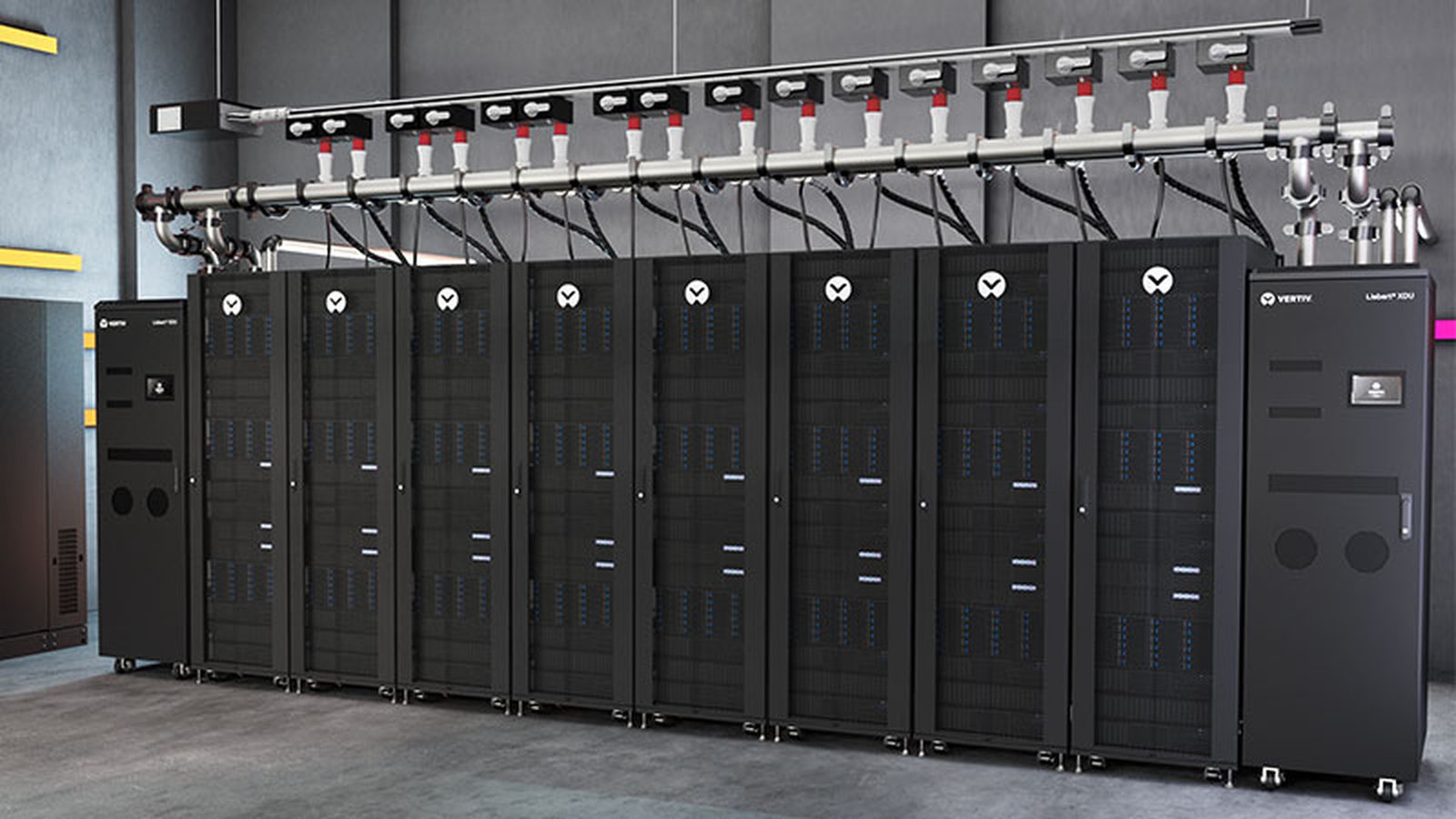
Traditional server rooms handled lower thermal density, so standard room-level air cooling could often manage the load. But modern AI clusters, GPU racks, and high-density computing platforms produce much higher heat loads in much smaller footprints. That change pushes operators toward chilled water systems, rear-door heat exchangers, direct-to-chip cooling, and even immersion systems.
Cooling affects uptime and hardware life
I always tell buyers that cooling is directly tied to server reliability. Poor temperature control can reduce component life, create hot spots, and increase the risk of shutdowns. In mission-critical environments, even a small cooling interruption can lead to service impact. That is why the mechanical side of the system matters just as much as the IT side.
Efficient liquid cooling needs dependable fluid infrastructure
Liquid cooling only works well when the fluid path is stable and clean. Pumps, valves, fittings, manifolds, CDUs, sensors, and heat exchangers must all work together without leakage or contamination. A cooling system may look simple on a schematic, but the real performance depends on connection quality, material compatibility, and serviceability across the whole loop.
Common Types of Data Center Cooling Systems
I now see four cooling approaches discussed most often in projects and sourcing conversations.
Chilled water cooling systems
These are still common in facility-level infrastructure. Chilled water moves through heat exchangers, CRAH units, or other cooling equipment to remove heat from data halls. These systems usually require larger pipes, isolation valves, check valves, strainers, and flanged connections.
Direct-to-chip liquid cooling
This method sends coolant directly to cold plates mounted on processors or other hot components. It improves heat removal where air cooling becomes inefficient. Because these loops are more sensitive, material cleanliness, corrosion resistance, and leak integrity become even more important.
Immersion cooling systems
In immersion cooling, IT equipment is submerged in a thermally managed fluid. Even though the fluid approach is different, the supporting skid, pumping, and heat transfer system still relies on valves and fittings that can handle long-term service.
Cooling distribution units and cooling skids
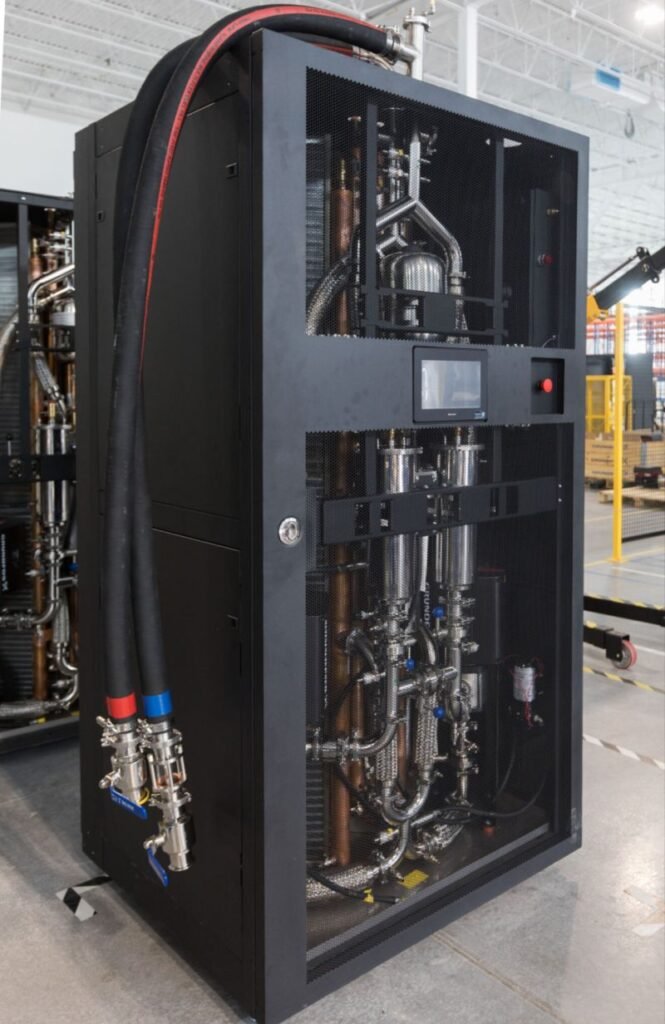
CDUs act as the control point between facility water and secondary liquid cooling loops. I see them as the bridge between building infrastructure and rack-level cooling. They usually include pumps, heat exchangers, instrumentation, control valves, isolation valves, unions, adapters, and compact piping assemblies. This is one of the areas where stainless steel components make practical sense.
Why Stainless Steel Valves and Pipe Fittings Are Ideal for Data Center Cooling
Cheap materials can save money at the start, but cooling failures cost much more later. In critical systems, buyers need materials that stay stable under continuous flow and long service periods.
Stainless steel valves and fittings are ideal for data center cooling because they resist corrosion, reduce leakage risk, support high-purity fluids, and lower maintenance over the full life of the cooling system.
Corrosion Resistance in Closed Cooling Loops
When buyers compare materials, corrosion resistance is usually the first reason stainless steel stays on the shortlist. Even in closed loops, water chemistry is never something I treat lightly. Oxygen ingress, treatment imbalance, mixed materials, poor startup flushing, and maintenance issues can all create corrosion risk over time.
Closed loop does not mean zero corrosion risk
Some people assume closed chilled water systems are always low risk. I do not agree with that assumption. Closed systems reduce exposure, but they do not remove every threat. Small chemistry changes, trapped debris, microbial growth, and galvanic issues can still affect long-term performance.
Stainless steel helps protect fluid cleanliness
In data center cooling, contamination matters. Particles and corrosion products can damage pumps, plug narrow passages, foul heat exchangers, and reduce flow consistency in direct-to-chip cooling paths. Stainless steel helps reduce internal rust generation compared with carbon steel. That means a cleaner loop and fewer unwanted solids moving through sensitive cooling equipment.
Better material choice for sensitive infrastructure
For high-value IT assets, I usually favor materials that reduce unknowns. Stainless steel supports long-term loop stability, especially where customers want better cleanliness, lower contamination risk, and stronger confidence in continuous service.
High Reliability and Long Service Life
Reliability is where stainless steel often justifies its cost. Data centers run 24/7, so small mechanical weaknesses become expensive over time.
Lower leakage risk
Leakage is not only about valve design. It is also about body strength, sealing quality, machining accuracy, and material stability. Stainless steel valves and fittings generally offer stronger mechanical performance than many plastic options, and they avoid the corrosion weakness that can shorten the life of carbon steel parts.
Better fit for continuous-duty service
I like stainless steel in critical cooling loops because it supports repeated thermal cycles, long operating hours, and regular maintenance without losing structural confidence too early. In real projects, this helps reduce surprise failures and emergency replacement work.
Compatibility with High-Purity Cooling Fluids
As liquid cooling grows, fluid compatibility matters more. Some systems use treated water, water-glycol mixtures, or higher-purity cooling fluids. Material selection has to support the chemistry of the loop.
Important for direct-to-chip systems
Direct-to-chip loops often operate with tighter cleanliness and material expectations. Narrow channels and close thermal control mean operators cannot ignore contamination or material degradation. Stainless steel is widely preferred in these settings because it offers a clean, durable fluid path.
Reduced Maintenance and Lifecycle Costs
I always encourage buyers to compare lifecycle cost, not just purchase price.
| Material Option | Initial Cost | Corrosion Resistance | Maintenance Frequency | Expected Lifecycle Value |
|---|---|---|---|---|
| Carbon steel | Lower | Moderate to low | Higher | Medium to low |
| Plastic fittings | Low to medium | Good in some fluids | Depends on temperature and pressure | Medium |
| Stainless steel | Medium to high | High | Lower | High |
A stainless steel system may cost more upfront, but lower replacement rates, fewer leak incidents, and less downtime usually improve the overall economics.
Common Stainless Steel Valves Used in Data Center Cooling Systems
A cooling system cannot run well if fluid control is weak. Buyers often focus on pumps and heat exchangers, but valve selection has a direct effect on maintenance, balancing, safety, and uptime.
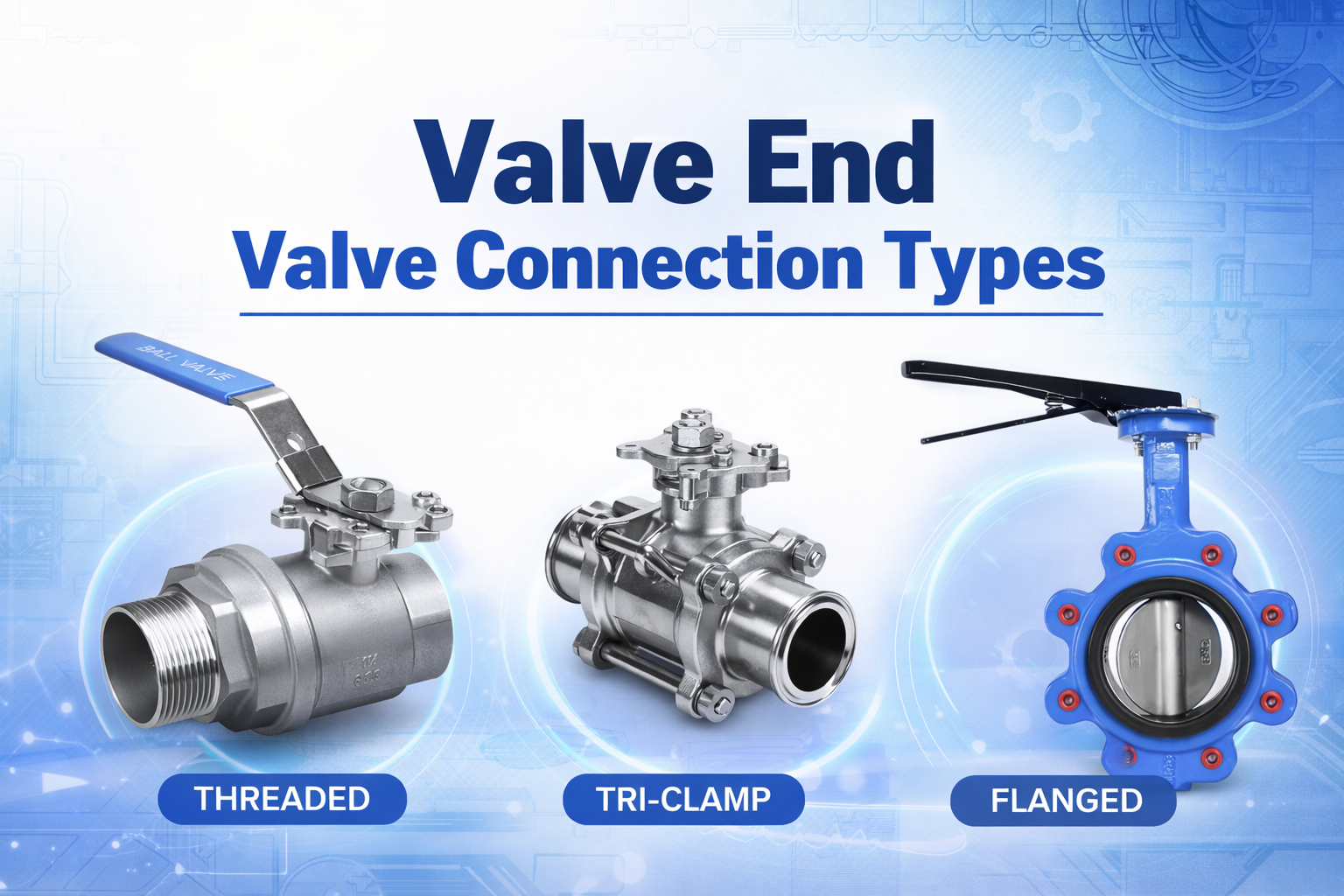
The most common stainless steel valves in data center cooling are ball valves, check valves, globe valves, butterfly valves, and sanitary tri-clamp valves, each serving different isolation, flow control, and maintenance needs.
Stainless Steel Ball Valves
Main isolation workhorse
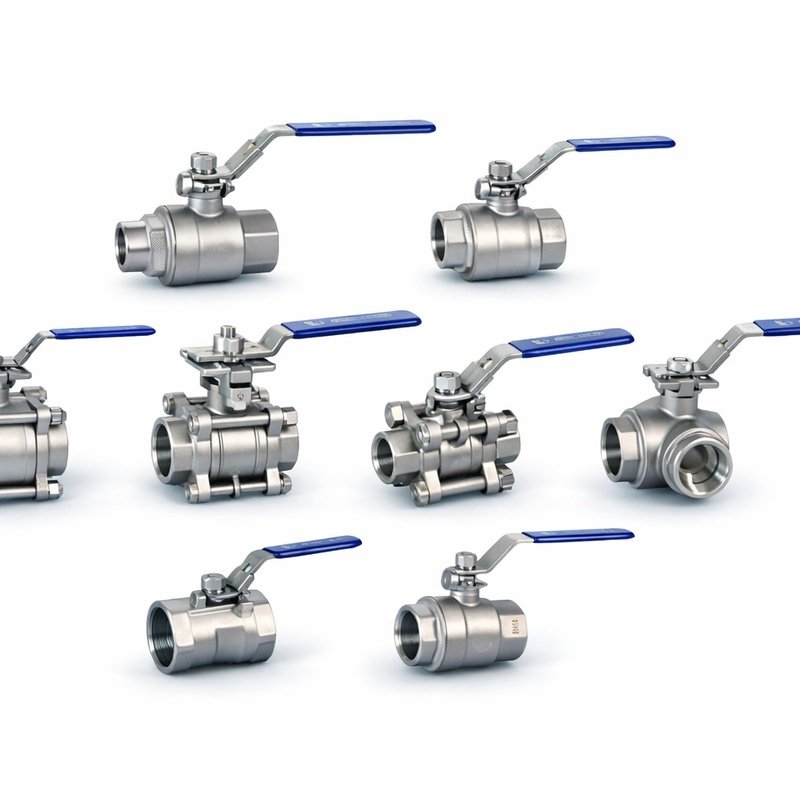
Ball valves are usually the first valve type I think about for cooling loops. They are simple, fast to operate, and effective for shutoff duty. In data center systems, they are often installed around pumps, heat exchangers, CDUs, manifolds, and branch loops.
Why they work well
A stainless steel ball valve gives full-flow shutoff with low pressure drop when fully open. That makes it a practical isolation valve for service operations. When maintenance teams need to change a pump or isolate a CDU, a reliable ball valve saves time and reduces risk.
Stainless Steel Check Valves
Reverse flow protection
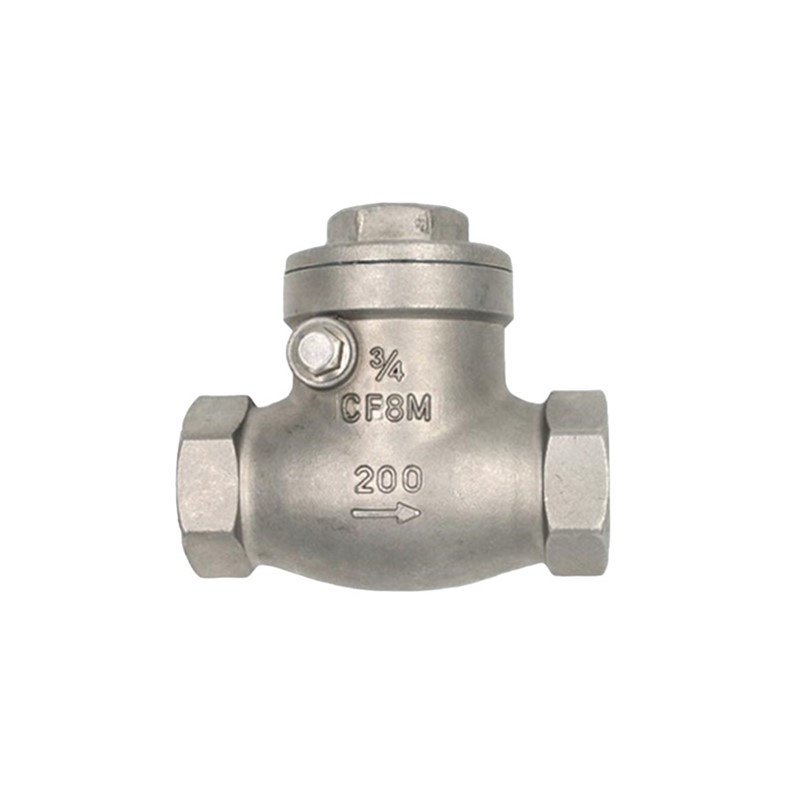
Check valves protect the direction of circulation. In pump systems, reverse flow can damage equipment, upset balancing, and create unstable operating conditions. I see stainless steel check valves used near pumps, return lines, and circulation branches where backflow must be prevented.
Protecting system stability
Without good check valves, standby pumps and parallel lines can behave badly during switching or pressure change events. This is a small component, but it has a big effect on system protection.
Stainless Steel Globe Valves
Better for controlled throttling
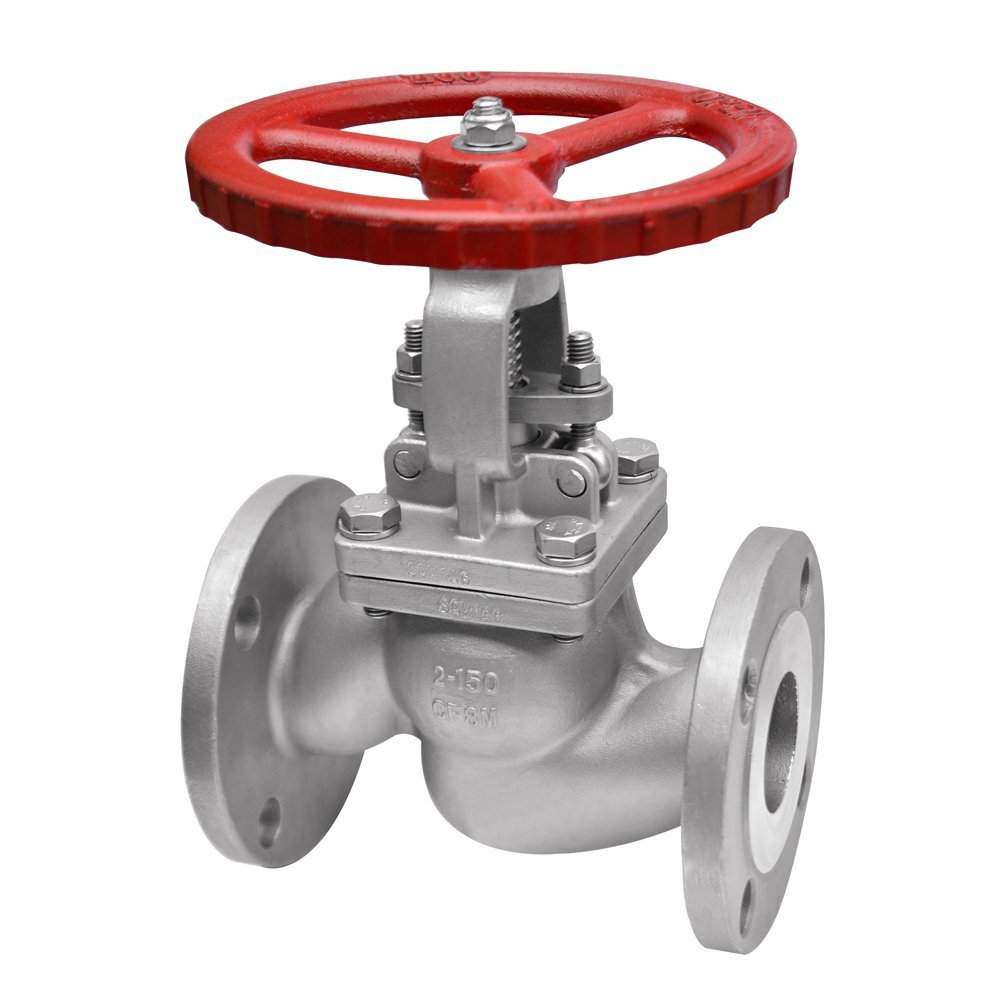
When a buyer asks for more precise flow regulation, I do not default to ball valves. Globe valves are often better when the goal is balancing or throttling. They create more pressure drop, but they give finer control.
Useful in distribution balancing
In cooling networks, especially where multiple branches must share flow, controlled regulation helps maintain stable thermal performance.

Stainless Steel Butterfly Valves
Practical for larger pipe sizes
For larger chilled water lines, butterfly valves often make more sense because they are compact and easier to install than many large ball or globe valves. I often see them in facility-level cooling infrastructure where pipe diameters increase and space matters.
Stainless Steel Sanitary Valves (Tri-Clamp Valves)
Good fit for high-purity loops
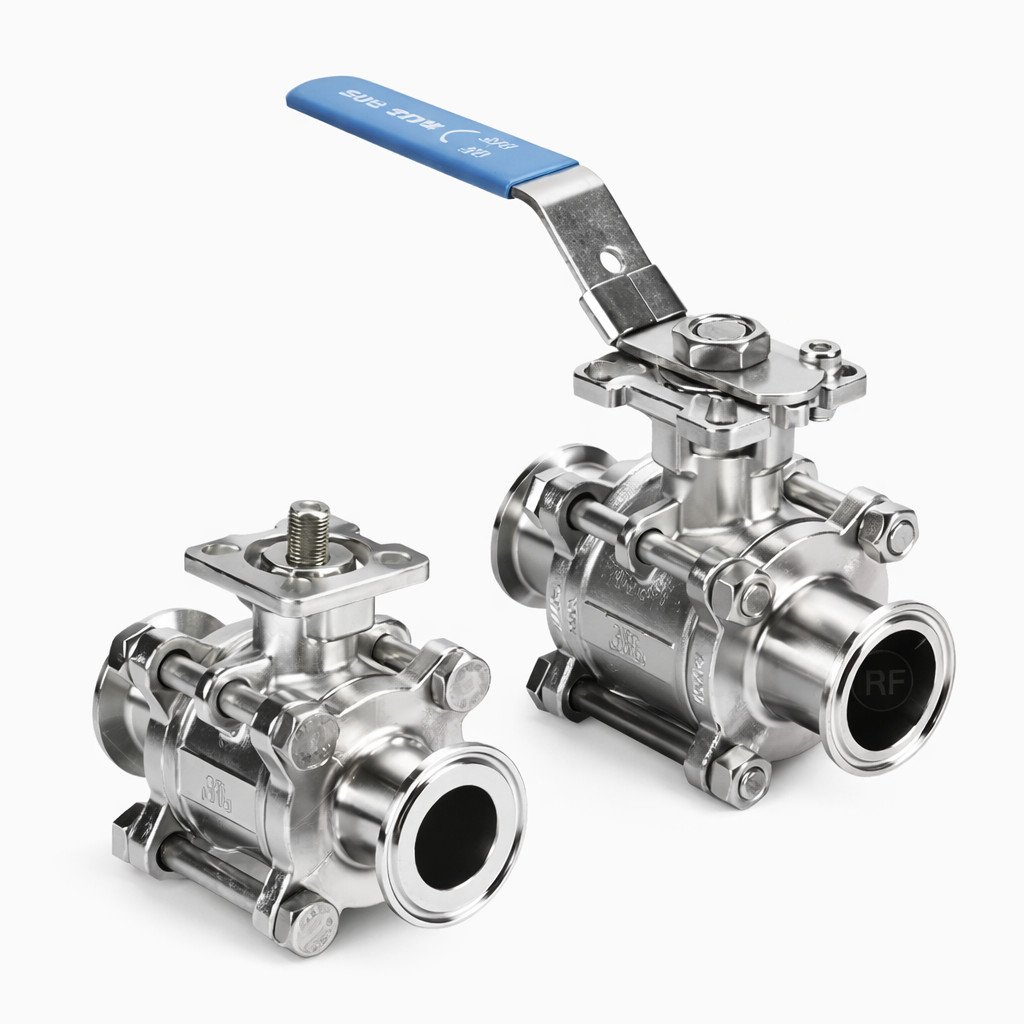
Tri-clamp valves are not limited to food or pharmaceutical systems. In data center liquid cooling, they can be useful where operators want clean connections, quick maintenance, and easy disassembly. I see them as especially relevant in modular skid systems and high-purity secondary loops.
| Valve Type | Main Function | Typical Location |
|---|---|---|
| Ball valve | Isolation | Pumps, CDUs, heat exchangers |
| Check valve | Prevent reverse flow | Pump discharge, circulation branches |
| Globe valve | Flow regulation | Balancing sections |
| Butterfly valve | Large line isolation | Main chilled water lines |
| Tri-clamp sanitary valve | Clean service and quick maintenance | High-purity liquid cooling loops |
Stainless Steel Pipe Fittings Used in Data Center Cooling Infrastructure
Routing errors, poor transitions, and weak joints create long-term problems in cooling systems. The right fitting selection makes installation cleaner and maintenance easier.
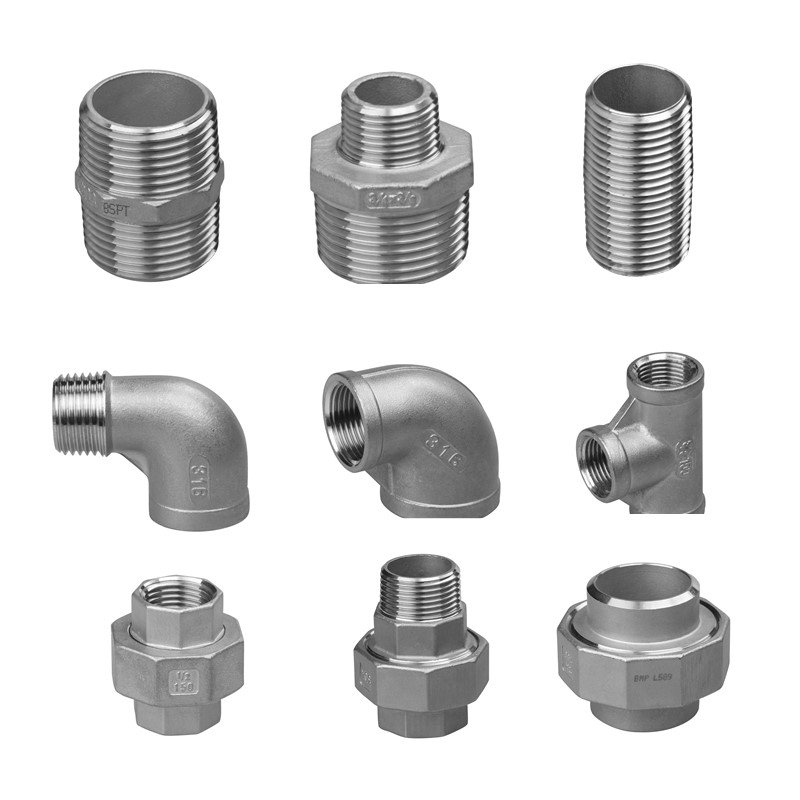
Common stainless steel pipe fittings in data center cooling include elbows, tees, reducers, unions, and flanges, which handle routing, branching, size transitions, service access, and strong leak-resistant connections.
Stainless Steel Elbows
Elbows change flow direction and help route cooling water through mechanical rooms, rack rows, and CDU assemblies. In crowded layouts, elbow quality matters because directional changes often become stress points. I prefer precise, well-finished elbows because they support better alignment and cleaner installation.
Stainless Steel Tee Fittings
Tees split or combine flow. In data center cooling, they are useful when distributing coolant to several server racks, manifolds, or branch modules. A poorly selected tee can increase turbulence or complicate balancing, so I always review its role in the wider flow path.
Stainless Steel Reducers
Reducers connect different pipe sizes, which is common near pumps, heat exchangers, or equipment ports. I often see this where facility piping transitions into smaller secondary loops. Good reducers help maintain flow continuity while avoiding awkward field modifications.
Stainless Steel Pipe Unions
Unions are one of the most useful fittings for maintenance planning. They allow quick removal of pumps, strainers, or other service components without cutting pipe. In systems that must stay available, unions reduce repair time and simplify replacement work.
Stainless Steel Flanges
Flanges are important in larger or higher-pressure chilled water systems. They provide strong, repeatable joints and make it easier to assemble or remove major equipment. For large facility piping, I often see flanges chosen where long-term mechanical strength and maintenance access are both priorities.
Why fitting quality matters
A cooling system is only as reliable as its connection points. The best pump in the room cannot solve problems caused by weak fittings, poor tolerances, or inconsistent sealing surfaces. That is why I treat fitting selection as an engineering and sourcing decision, not a commodity purchase.
Tri-Clamp Fittings and Adapters in Data Center Liquid Cooling
As liquid cooling becomes more modular, maintenance speed matters more. Rigid systems can work, but flexible and clean assembly methods often reduce service time and simplify upgrades.
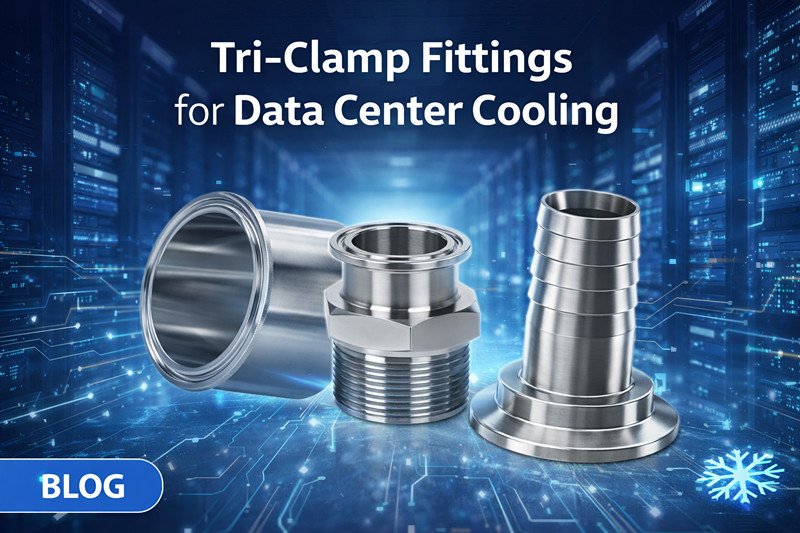
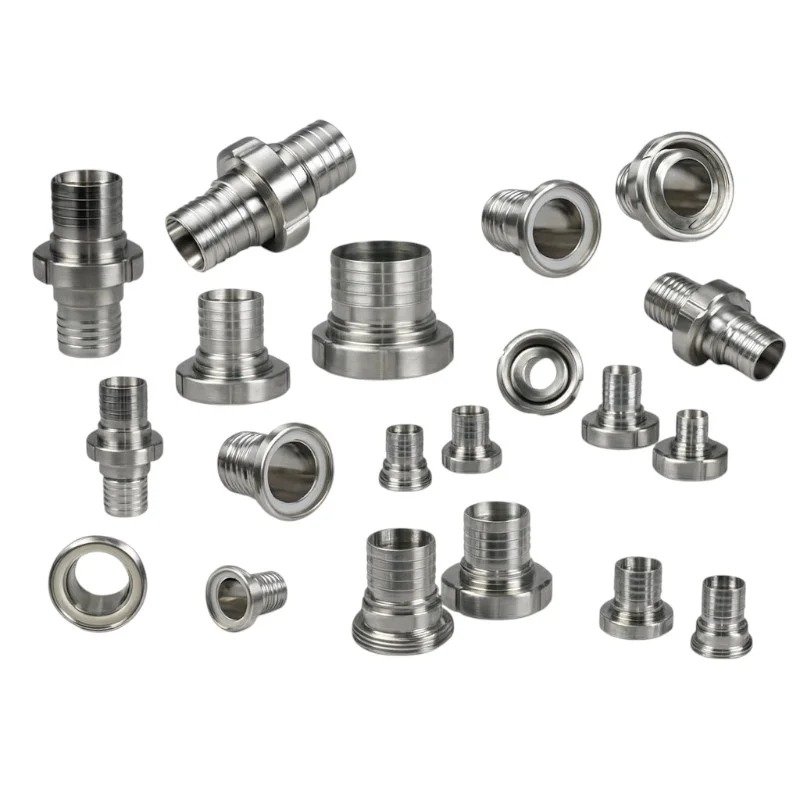
Tri-clamp fittings and adapters are useful in data center liquid cooling because they allow quick assembly, clean disassembly, and easy transitions between sanitary tubing, threaded ports, hoses, and welded pipe sections.
Stainless Steel Tri-Clamp Fittings
In modular cooling systems, tri-clamp fittings offer practical advantages. They are fast to assemble, easy to open for inspection, and suitable for applications where cleanliness matters. I often see interest in tri-clamp elbows, tees, and ferrules for direct-to-chip systems and packaged skid designs.
Why buyers like them
The big benefit is maintenance speed. A technician can open a connection faster than with many threaded or welded joints. That can matter in pilot systems, lab environments, modular expansions, and service-intensive liquid cooling loops.
Tri-Clamp Adapters
Tri-Clamp Adapters help connect sanitary sections to other piping standards. This matters because real cooling systems rarely use one connection style only.
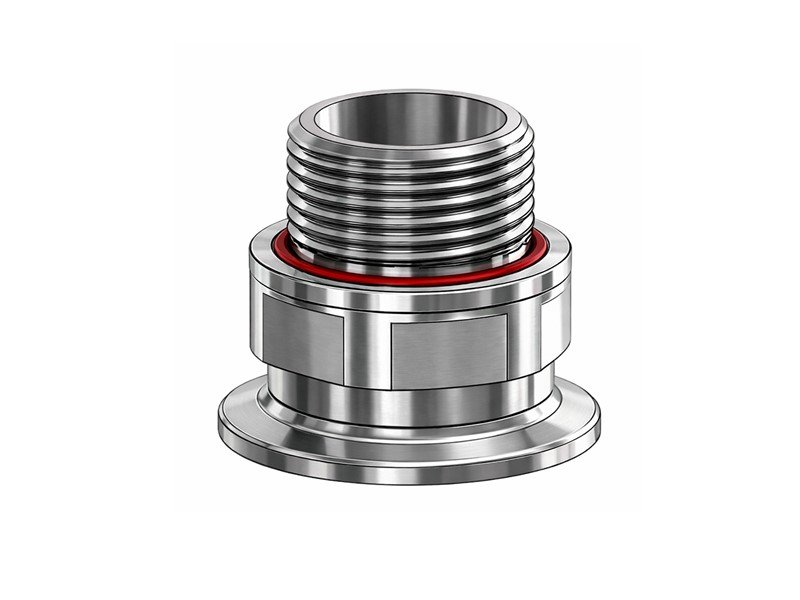
Examples include:
- Tri-clamp to NPT / BSP adapters
- Tri-clamp to hose adapters
- Tri-clamp to welded pipe adapters
These transition points make modular design more practical. They also help buyers standardize some parts of the system while staying compatible with existing infrastructure.
Stainless Steel Threaded Adapters
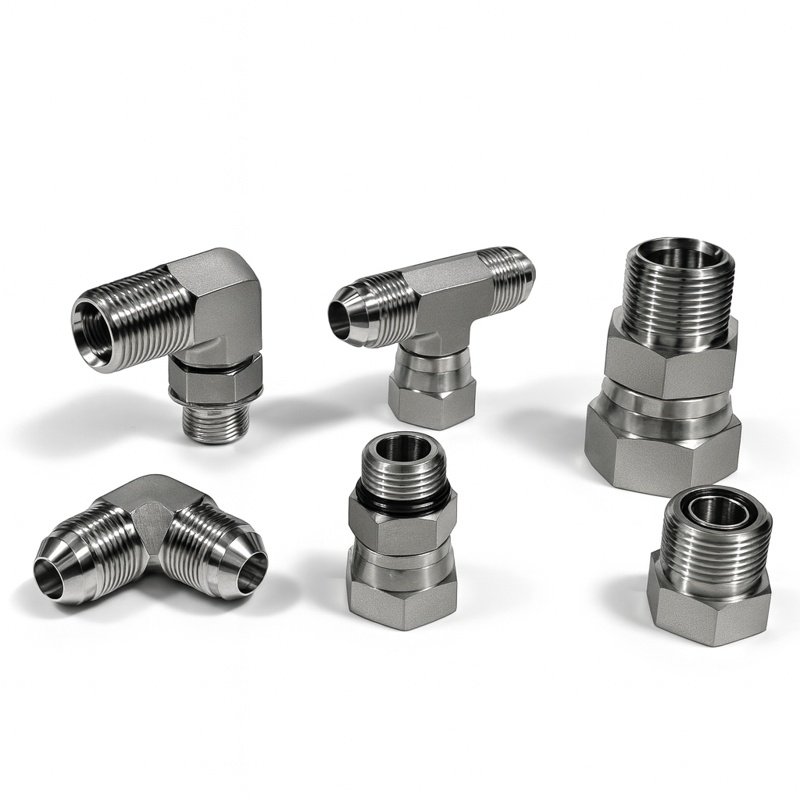
Threaded adapters remain useful for instruments and controls. In many cooling skids, sensors must connect to threaded ports even when the main process line uses another standard.
Common uses include pressure gauges, flow meters, and temperature sensors. I see these adapters as small parts with large importance because poor instrument connections often create avoidable leak points.
Typical Stainless Steel Piping Layout in Data Center Cooling Systems
Many buyers understand the parts list, but not how the parts work together. A simple flow path makes component selection easier and helps avoid missing critical items.
A typical data center cooling piping layout uses pumps, check valves, ball valves, strainers, heat exchangers or CDUs, rack cooling sections, and return lines arranged for stable flow, isolation, and maintainability.
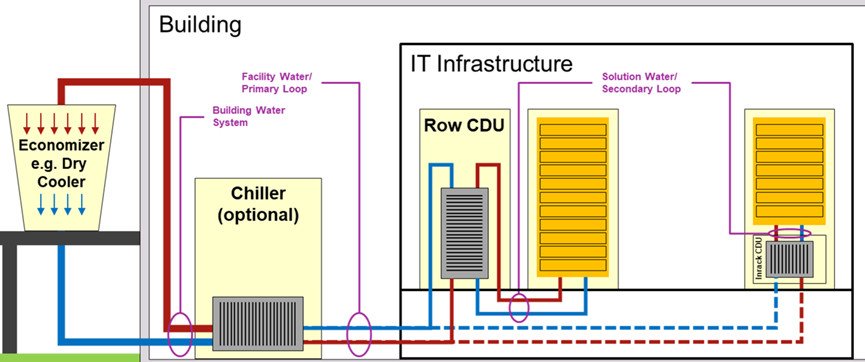
Cooling Water Flow Path Example
A common path looks like this:
Cooling Tower / Chiller → Pump → Check Valve → Ball Valve → Strainer → Heat Exchanger / CDU → Server Rack Cooling → Return Line
Why each component matters
The pump drives circulation. The check valve stops reverse flow. The ball valve isolates equipment for maintenance. The strainer captures debris before it reaches sensitive sections. The heat exchanger or CDU transfers cooling into the secondary loop. Then the coolant passes through rack-level cooling components and returns for recirculation.
This looks straightforward, but layout quality affects pressure loss, service time, and leak risk.
Cooling Distribution Units and Stainless Steel Components
I see CDUs as one of the most important assemblies in modern liquid cooling systems. They often contain many stainless steel components because they combine heat transfer, pumping, instrumentation, isolation, and maintenance access in one compact package.
Typical stainless steel parts inside a CDU can include ball valves, check valves, unions, tees, elbows, reducers, sensor adapters, and sanitary clamp connections depending on the design. In my experience, buyers who think carefully about CDU piping quality usually face fewer service issues later.
Stainless Steel Grades Used in Data Center Cooling Systems
Choosing the wrong grade can raise cost without adding value, or save cost while creating future corrosion issues. Buyers need a simple material logic.
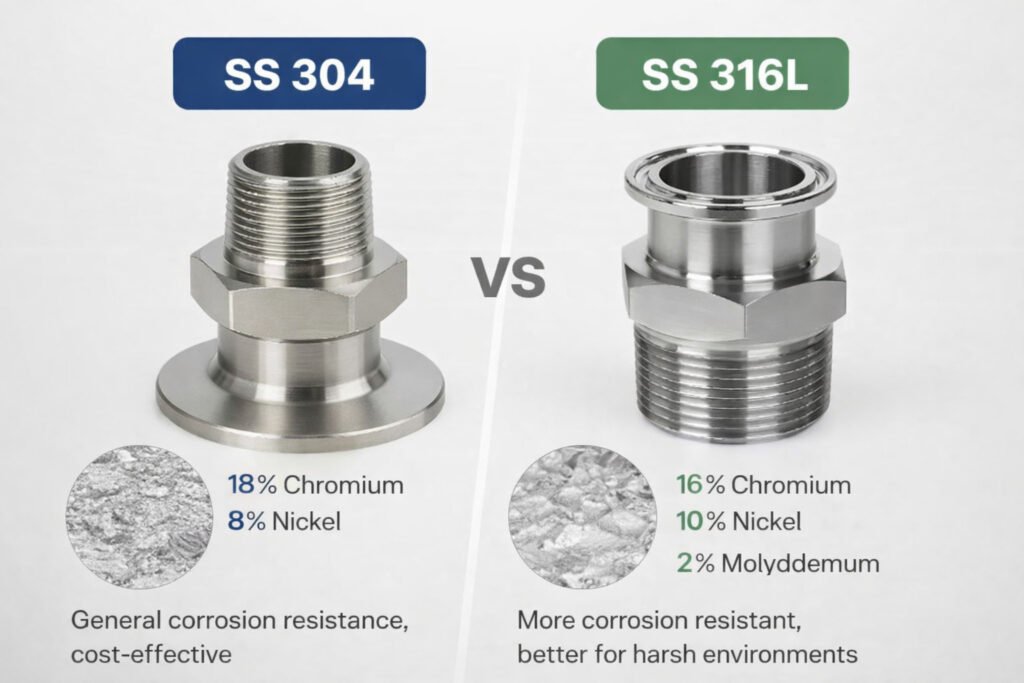
Stainless steel 304 is commonly used in general chilled water systems, while 316 and 316L are preferred where stronger corrosion resistance or cleaner fluid service is needed.
Stainless Steel 304
304 stainless steel is often suitable for many chilled water applications. It is widely used because it offers a good balance of cost and corrosion resistance. For general closed-loop cooling service with controlled chemistry, 304 can be a practical option.
Stainless Steel 316 / 316L
When I need stronger corrosion resistance, I move toward 316 or 316L. These grades are especially useful where fluid purity matters more, where corrosion conditions may be more demanding, or where buyers want extra margin for long-term reliability.
How I usually compare them
| Grade | Main Advantage | Typical Use in Cooling |
|---|---|---|
| 304 | Cost-effective | General chilled water loops |
| 316 | Better corrosion resistance | More demanding cooling environments |
| 316L | Similar to 316 with lower carbon | High-purity loops and welded systems |
Best Practices for Data Center Cooling Piping Design
A good cooling design must do more than move fluid. It must prevent leaks, maintain flow, support maintenance, and allow future expansion without major disruption.
Best practice in data center cooling piping is to use leak-free stainless steel components, place valves correctly, design for maintenance and redundancy, and keep the layout modular for future growth.
Ensure Leak-Free Connections
I always start with connection integrity. Poor threads, low-grade clamps, bad tolerances, and mixed-quality fittings create risk that no operator wants near critical IT equipment. High-quality stainless steel fittings help reduce leak paths and improve sealing confidence.
Optimize Cooling Flow Efficiency
Valve placement and pipe sizing affect pressure drop and temperature control. Oversized or undersized lines can both create inefficiency. Too many unnecessary fittings also add restriction. I prefer layouts that keep the flow path clear, logical, and easy to maintain.
Design for Redundancy and Maintenance
Cooling systems in data centers should not be designed as if nothing will ever need service. Pumps fail, strainers need cleaning, sensors need replacement, and skids get expanded. Isolation valves and unions make these tasks much easier. Redundancy also supports uptime during maintenance events.
Plan for Future Data Center Expansion
This is one area many projects underestimate. Data center growth can happen quickly, especially when new AI loads appear. Modular cooling skids, spare connection points, and scalable piping layouts help operators expand capacity without rebuilding the whole network.
My practical design view
I believe the best cooling layouts combine four things: clean materials, simple routing, service access, and future flexibility. Stainless steel helps support all four when the valves and fittings are selected correctly.
Conclusion
I see stainless steel valves and fittings as a smart choice for data center cooling because they improve reliability, corrosion resistance, maintenance speed, and long-term infrastructure confidence.
Beyond Fluid is a leading supplier of stainless steel valves and fittings for data center cooling system, we are the ideal supplier for valves and fittings distirbutors, CDUs manufacturers, and Liquid cooling system integrator, please feel free to contact us.