Data center cooling failures often start with small fluid connection problems. Even a tiny leak can cause downtime, expensive repairs, and equipment damage.
Dry break interlock quick disconnect couplings provide leak-free, safe, and efficient coolant connections for liquid-cooled data centers. Their automatic shut-off valves and interlock mechanism prevent fluid loss, reduce maintenance risks, and improve system reliability for AI and HPC cooling applications.
As AI servers continue to increase rack densities, reliable liquid cooling connections have become as important as pumps, cold plates, and heat exchangers. Based on my experience supplying stainless steel flow control components for industrial fluid systems, I believe selecting the right coupling can significantly improve both uptime and long-term operating costs.
What Are Dry Break Interlock Quick Disconnect Couplings?
Small coolant leaks may appear harmless, but they often become major maintenance problems in high-density data centers.
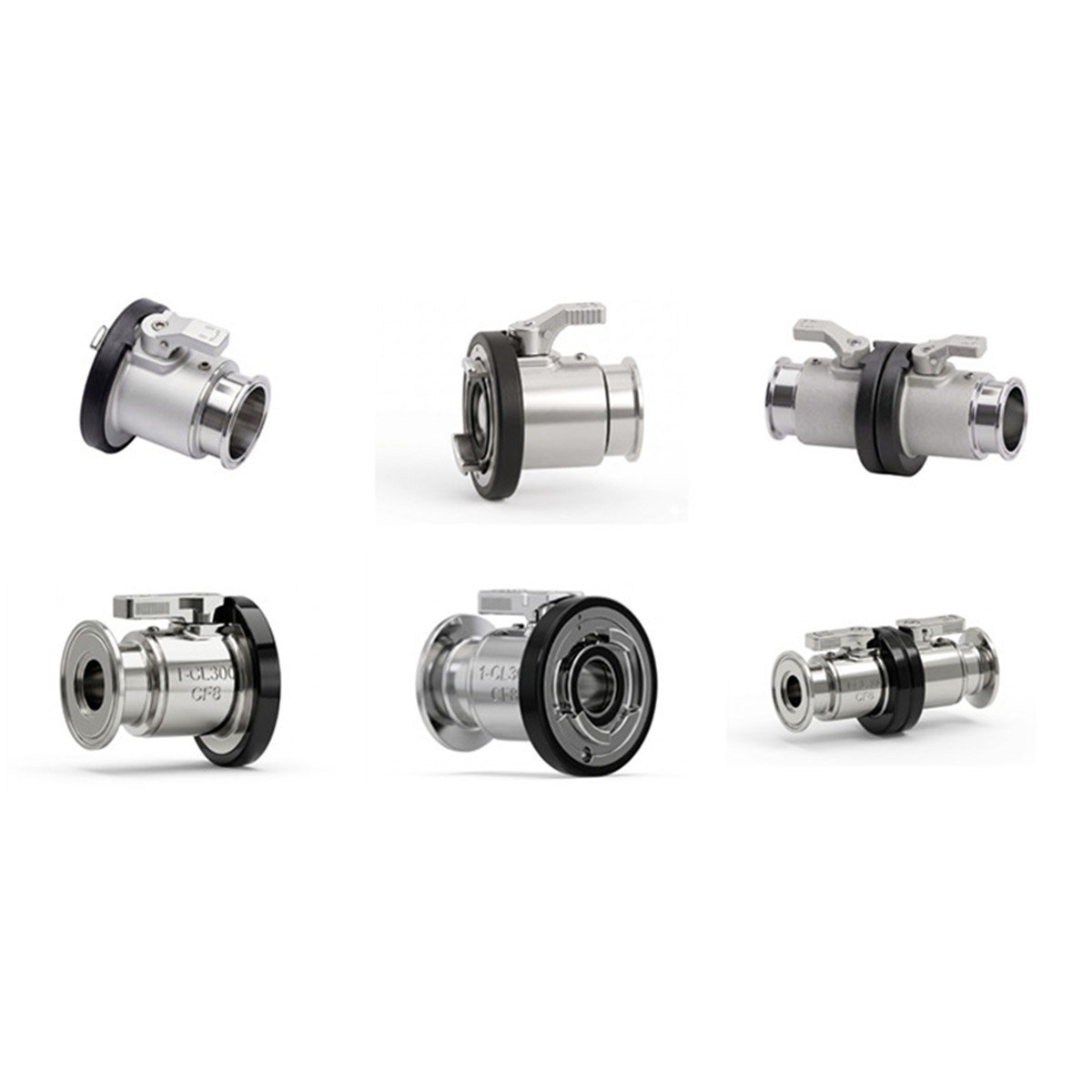
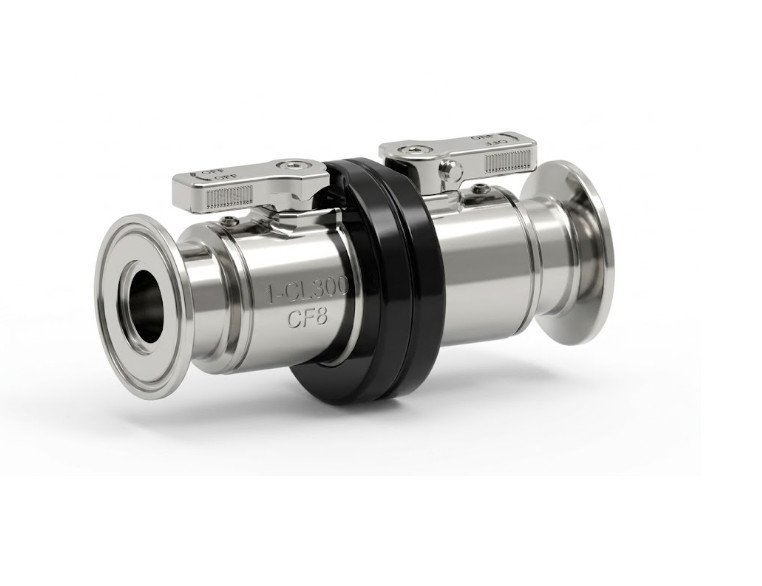
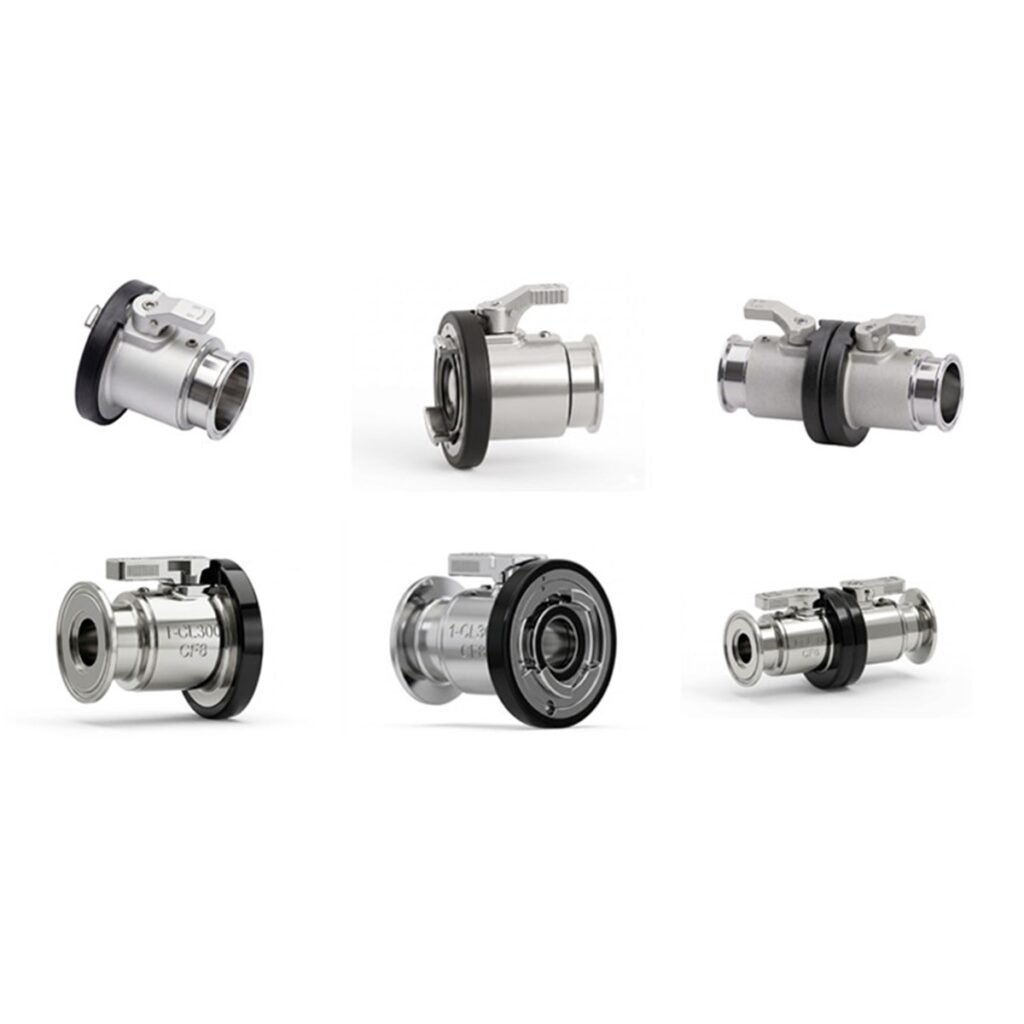
Dry break interlock quick disconnect couplings are leak-free fluid connectors equipped with automatic shut-off valves and a safety interlock. They allow coolant lines to be connected or disconnected with minimal fluid loss while preventing accidental separation.
What Is a Dry Break Coupling?
A dry break coupling is a quick disconnect fitting specifically designed to minimize fluid spillage during connection and disconnection.
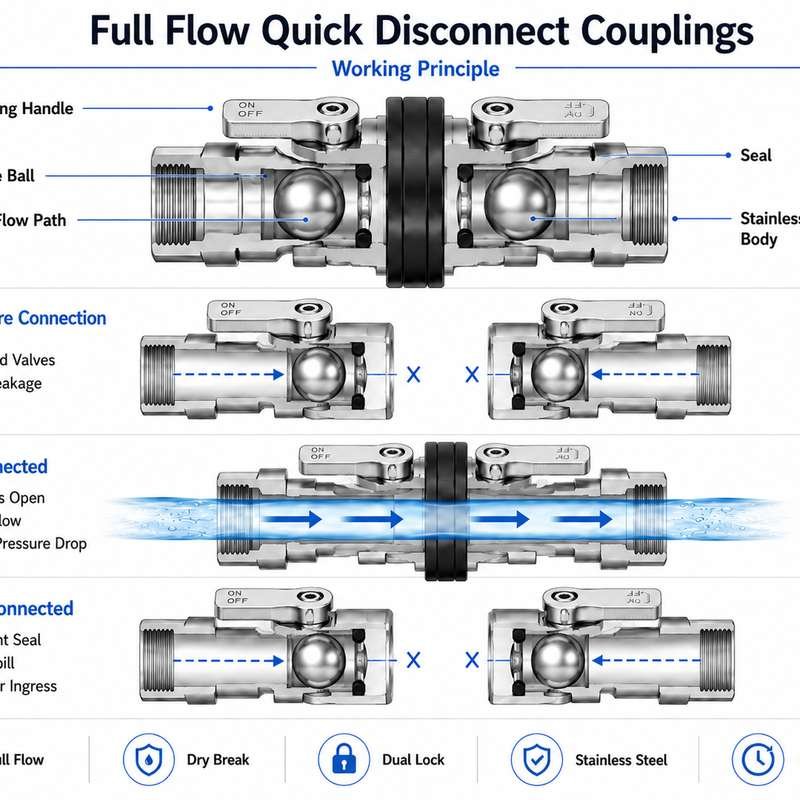
Unlike ordinary quick couplings, both the male and female halves contain internal shut-off valves. These valves remain closed until the coupling is fully connected. Once connected, both valves open simultaneously to allow full coolant flow.
When disconnected, both valves automatically close before separation occurs. This greatly reduces coolant loss and prevents air from entering the cooling circuit.
For modern liquid cooling systems using water or water-glycol mixtures, this feature is extremely valuable because trapped air can reduce cooling efficiency and increase pump wear.
What Is an Interlock Mechanism?
The interlock mechanism adds another layer of protection.
Instead of allowing operators to disconnect the coupling immediately, the mechanism requires a deliberate unlocking action before separation.
This prevents accidental disconnection caused by:
- Vibration
- Operator error
- Hose tension
- Unexpected movement during maintenance
In critical data center environments, preventing accidental coolant release is just as important as preventing electrical failures.
How They Work
The operating sequence is straightforward.
| Step | Function |
|---|---|
| Connect | Male and female bodies lock together |
| Valve Opening | Internal valves open automatically |
| Coolant Flow | Full coolant circulation begins |
| Unlock | Operator releases safety interlock |
| Disconnect | Internal valves close before separation |
Because both valves close automatically, coolant loss is typically only a few drops instead of several hundred milliliters.
Why They Matter in Data Center Liquid Cooling
Modern AI racks generate enormous heat, and every coolant connection becomes a potential failure point.
Dry break interlock couplings improve liquid cooling reliability by preventing leaks, increasing operator safety, minimizing downtime, and maintaining efficient coolant flow.
Leak Prevention
Leak prevention is the primary reason these couplings are widely adopted.
Even a minor coolant leak can damage:
- GPUs
- CPUs
- Memory modules
- Power supplies
- Network switches
Dry break technology isolates coolant before separation occurs.
This dramatically reduces maintenance-related leaks.
Improved Safety
Maintenance technicians often disconnect coolant loops while servers remain installed.
Without an interlock, accidental separation under pressure can release coolant unexpectedly.
Interlock couplings help prevent this situation by requiring intentional unlocking before disconnecting.
The result is a much safer maintenance process.
Reduced Downtime
Data centers cannot afford extended maintenance windows.
Quick disconnect couplings allow technicians to:
- Replace cold plates
- Swap servers
- Upgrade racks
- Service CDUs
without draining the complete cooling loop.
Maintenance becomes faster and far less disruptive.
Lower Pressure Drop
Many premium dry break couplings feature a full-flow internal design.
Compared with conventional quick disconnects, they offer:
- Larger internal flow paths
- Lower flow resistance
- Improved pump efficiency
- Better thermal performance
Lower pressure loss means pumps consume less energy while maintaining adequate coolant circulation.
Key Features
Choosing the correct coupling requires more than simply matching thread size.
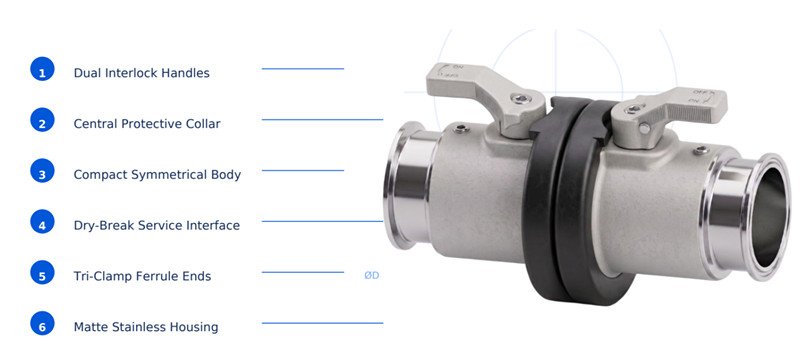
High-quality dry break interlock couplings combine full-flow passages, automatic shut-off valves, corrosion-resistant materials, and compatible sealing systems for long service life.
Full-Flow Design
Full-flow construction minimizes restrictions inside the coupling.
Benefits include:
- Higher flow capacity
- Lower pressure loss
- Better cooling efficiency
- Reduced pump workload
This becomes increasingly important in high-flow direct liquid cooling systems.
Automatic Shut-Off
Internal poppet valves close automatically whenever the coupling separates.
Advantages include:
- Nearly spill-free disconnection
- Less trapped air
- Cleaner maintenance
- Reduced coolant waste
Stainless Steel Construction
I generally recommend stainless steel for demanding cooling systems.
Typical materials include:
- SS304
- SS316L
Stainless steel offers:
- Excellent corrosion resistance
- High mechanical strength
- Long service life
- Compatibility with many industrial coolants
Material quality is especially important for facilities expecting continuous operation for many years.
Seal Materials
Seal compatibility should never be overlooked.
Common seal options include:
| Seal Material | Typical Applications |
|---|---|
| EPDM | Water-based coolant |
| FKM (Viton®) | Glycol mixtures and chemicals |
| Silicone | Low-temperature systems |
Selecting the wrong seal material can shorten coupling life and increase leakage risk.
Applications
Liquid cooling is expanding rapidly across many data center architectures.
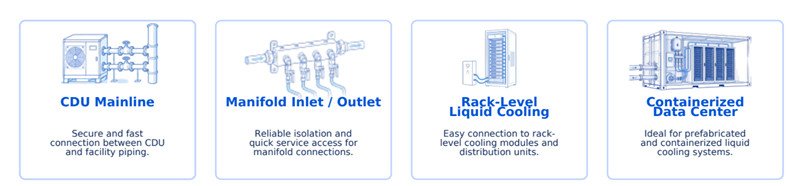
Dry break interlock couplings are widely used in direct-to-chip cooling, coolant distribution units, AI clusters, and high-performance computing facilities.
Direct-to-Chip Cooling
Direct liquid cooling delivers coolant directly to CPU and GPU cold plates.
Because each server may require multiple coolant connections, reliable quick disconnects become essential.
Coolant Distribution Units (CDUs)
CDUs circulate coolant between facility infrastructure and IT equipment.
Dry break couplings simplify maintenance by allowing individual coolant loops to be isolated quickly.
AI & HPC Data Centers
AI and HPC installations often exceed 100 kW per rack.
Traditional air cooling cannot efficiently remove this amount of heat.
Liquid cooling systems using reliable dry break connectors have become the preferred solution for these high-density environments.
How to Choose the Right Coupling
Not every quick disconnect is suitable for liquid cooling.
The best coupling depends on flow rate, operating pressure, coolant compatibility, connection style, and long-term reliability requirements.
Size & Flow Rate
Always verify:
- Internal flow diameter
- Maximum Cv value
- Pump capacity
- Expected coolant velocity
Oversized couplings increase cost, while undersized models restrict flow.
Pressure & Temperature
Check:
- Maximum operating pressure
- Burst pressure
- Continuous operating temperature
- Temperature cycling capability
These ratings should exceed actual operating conditions with sufficient safety margin.
Material & Seal Compatibility
Verify compatibility with:
- Water
- Water-glycol
- Corrosion inhibitors
- Cleaning chemicals
Material selection directly affects service life.
Connection Type
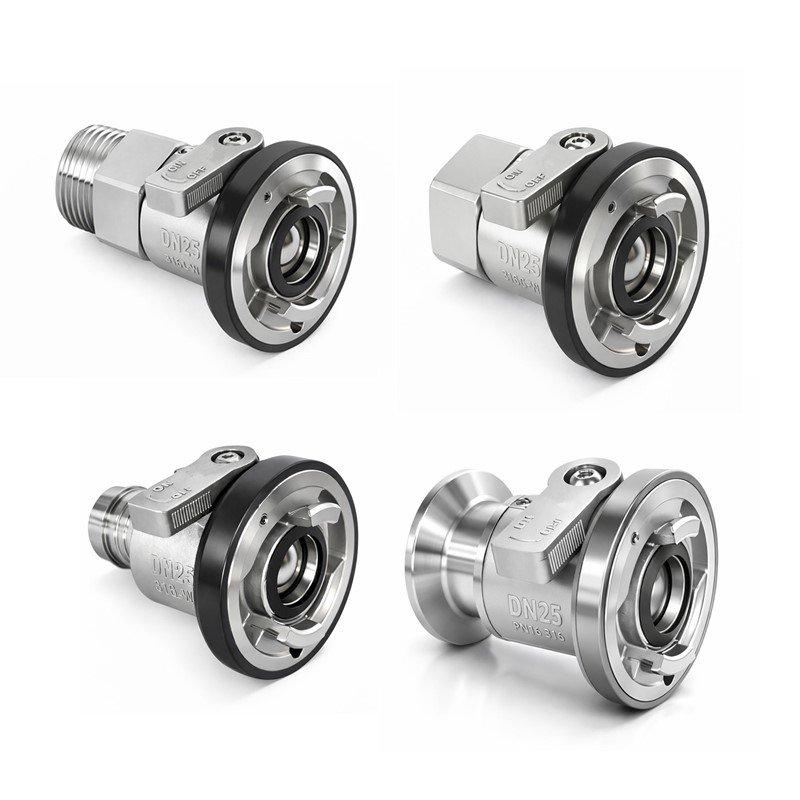
Common connection styles include:
- Threaded
- Compression tube fittings
- Hose barb
- Push-to-connect
- Tri-Clamp
The chosen connection should match the overall cooling system design.
Dry Break vs Standard Quick Disconnect Couplings
Many buyers compare standard quick couplings with dry break designs based only on purchase price.
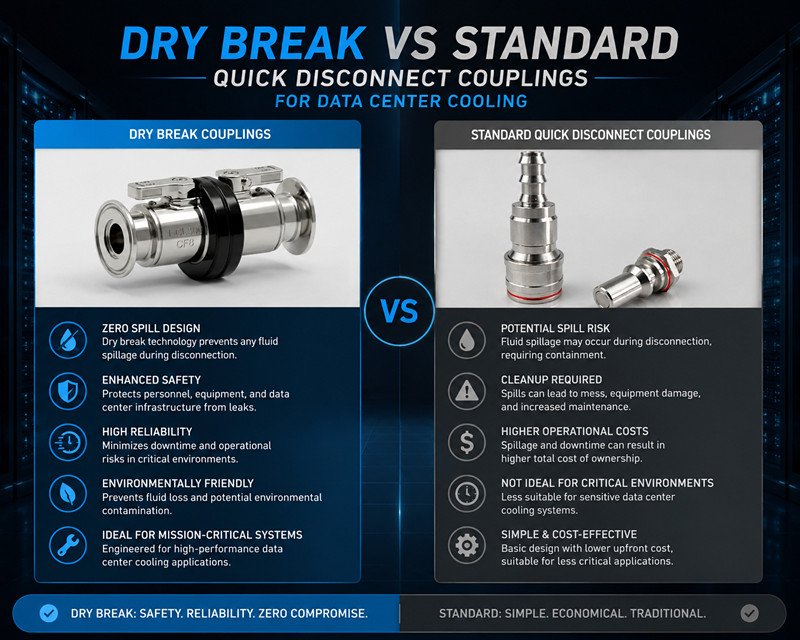
Dry break couplings cost more initially but offer significantly better leak prevention, safety, cleanliness, and long-term reliability than standard quick disconnects.
Performance Comparison
| Feature | Dry Break | Standard Quick Disconnect |
|---|---|---|
| Fluid Loss | Very Low | Moderate |
| Air Ingress | Minimal | Higher |
| Pressure Drop | Lower | Varies |
| Maintenance Cleanliness | Excellent | Fair |
Safety Comparison
Dry break couplings offer:
- Controlled disconnection
- Automatic shut-off
- Reduced spill risk
- Interlock protection
Standard couplings generally lack these safeguards.
Which One to Choose
For mission-critical liquid cooling, I recommend dry break interlock couplings.
Their higher purchase price is usually offset by:
- Lower maintenance costs
- Reduced downtime
- Less coolant waste
- Improved equipment protection
Installation & Maintenance
Even the highest-quality coupling requires proper installation.
Correct installation, regular inspection, and preventive maintenance maximize coupling life and maintain leak-free operation.
Installation Tips
Follow these practices:
- Clean all connection surfaces.
- Confirm seal compatibility.
- Avoid side loading.
- Tighten threaded connections correctly.
- Pressure test before operation.
Routine Maintenance
Inspect periodically for:
- Seal wear
- Corrosion
- Locking performance
- Valve movement
- External damage
Replacing worn seals before leakage develops reduces maintenance costs.
Common Issues
| Issue | Possible Cause | Solution |
|---|---|---|
| Minor leakage | Worn seal | Replace seal |
| Difficult connection | Dirt or damage | Clean and inspect |
| Reduced flow | Internal blockage | Flush system |
| Lock won’t engage | Mechanical wear | Replace coupling |
Proper preventive maintenance greatly extends service life.
FAQs
What coolant can dry break couplings handle?
Most models are compatible with water, water-glycol mixtures, and many industrial coolants, provided the seal material matches the fluid.
Are dry break couplings completely leak-free?
No mechanical connector is absolutely leak-free, but high-quality dry break couplings reduce fluid loss to only a few drops during disconnection.
Why is the interlock mechanism important?
It prevents accidental separation while the system remains pressurized, reducing both safety risks and coolant spills.
Can stainless steel couplings resist corrosion?
Yes. SS316L is particularly suitable for demanding liquid cooling systems because of its excellent corrosion resistance.
Do dry break couplings reduce downtime?
Yes. They allow individual servers or cooling modules to be disconnected without draining the entire cooling loop, significantly shortening maintenance time.
Conclusion
As liquid cooling becomes the standard for AI and HPC infrastructure, I believe dry break interlock quick disconnect couplings are no longer optional. They improve safety, minimize leaks, reduce downtime, and help ensure long-term reliability in modern data center cooling systems.
Beyond Fluid is a leading supplier of dry break interlock disconnect couplings. Dolwnload a dry break disconnect catalog.