Many buyers struggle to choose the right sanitary butterfly valve. A wrong choice can increase cleaning time, contamination risks, and maintenance costs.
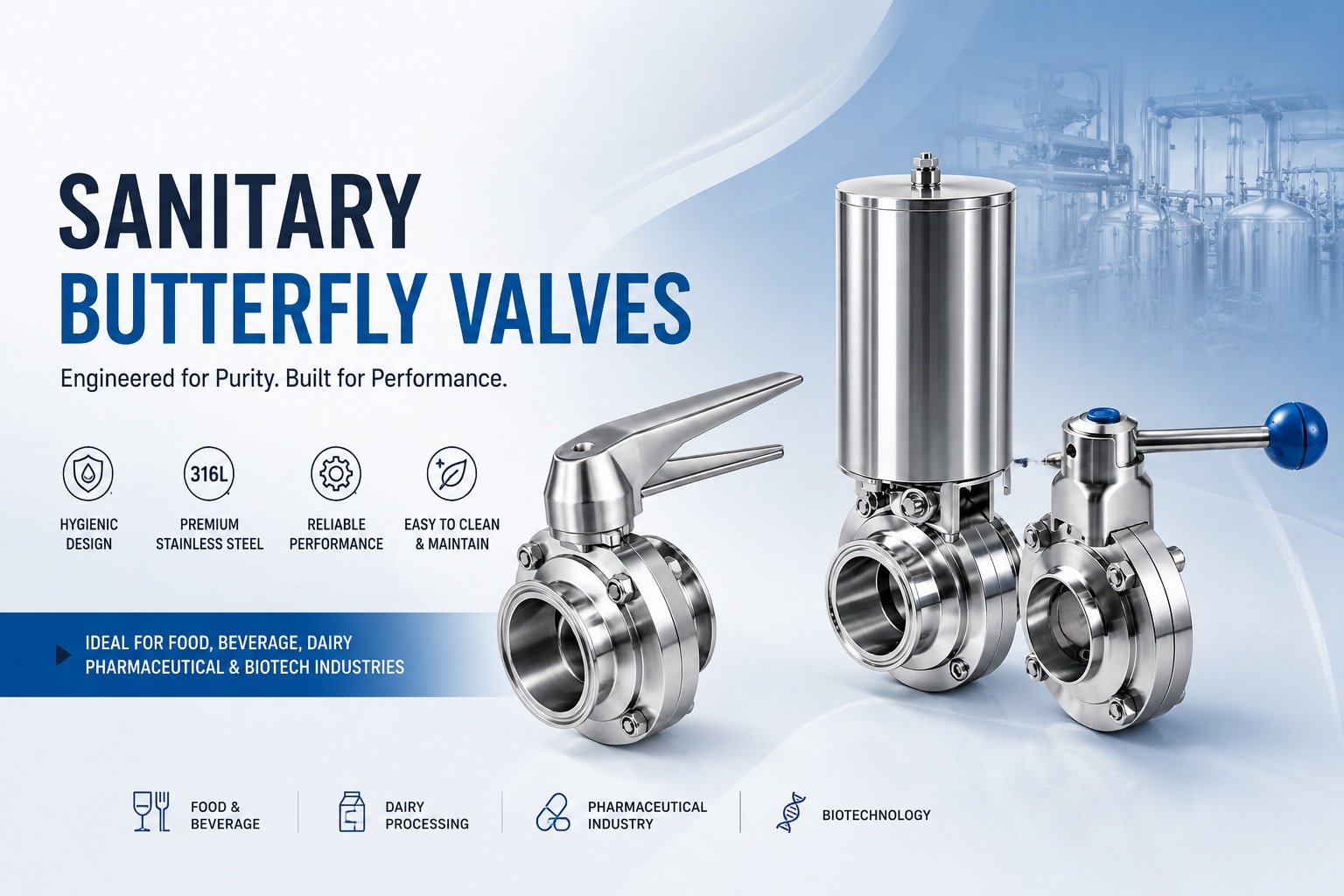
Sanitary butterfly valves are hygienic flow-control valves used in food, beverage, dairy, and pharmaceutical systems. Common types include tri-clamp, weld end, threaded, manual, pneumatic, electric, standard, and split butterfly valves.
Understanding the differences between these valve types helps buyers improve process efficiency, cleaning performance, and long-term reliability.
What Is a Sanitary Butterfly Valve?
Poor valve selection can create hygiene risks and production downtime. Many users underestimate how important valve design is in sanitary systems.
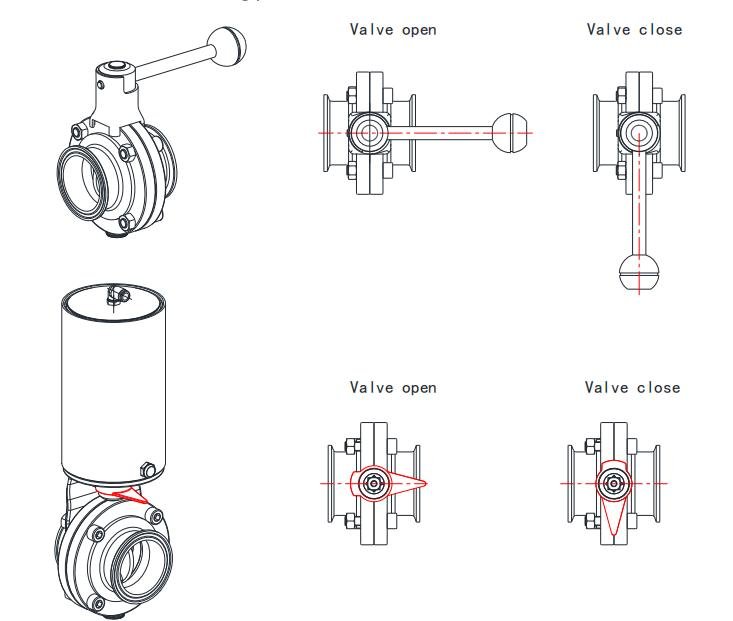
Sanitary butterfly valves are stainless steel hygienic valves that use a rotating disc to regulate or shut off fluid flow while maintaining sanitary processing conditions.
Basic Function
I have worked in the sanitary valve industry for more than 15 years, and sanitary butterfly valves remain one of the most popular solutions for hygienic processing systems.
The valve consists of a circular disc positioned inside the flow path. When the handle or actuator rotates the disc by 90 degrees, the valve changes from fully open to fully closed. This simple mechanism allows quick operation and reliable performance.
Unlike conventional industrial valves, sanitary butterfly valves are designed with smooth internal surfaces and minimal dead zones. This helps reduce product buildup and supports effective cleaning procedures. Many modern sanitary butterfly valves are designed to work with CIP (Clean-in-Place) and SIP (Sterilize-in-Place) systems.
Key Advantages
Several advantages make sanitary butterfly valves a preferred choice across multiple industries.
| Advantage | Benefit |
|---|---|
| Compact Design | Saves installation space |
| Quick Operation | Fast opening and closing |
| Easy Maintenance | Reduces downtime |
| Hygienic Construction | Supports sanitary processing |
| Cost Effective | Lower investment cost |
Why They Are Widely Used
I often recommend sanitary butterfly valves because they provide a strong balance between performance, hygiene, and affordability.
The lightweight design reduces system weight, while the simple construction minimizes maintenance requirements. Compared with many other sanitary valve types, butterfly valves offer reliable shutoff performance without significantly increasing project costs.
Main Types of Sanitary Butterfly Valves?
Many buyers focus only on valve size and overlook important design differences. This can lead to maintenance challenges and unnecessary operating costs.
Sanitary butterfly valves can be classified by connection type, operation type, and valve design.
By Connection Type
Tri-Clamp Butterfly Valve
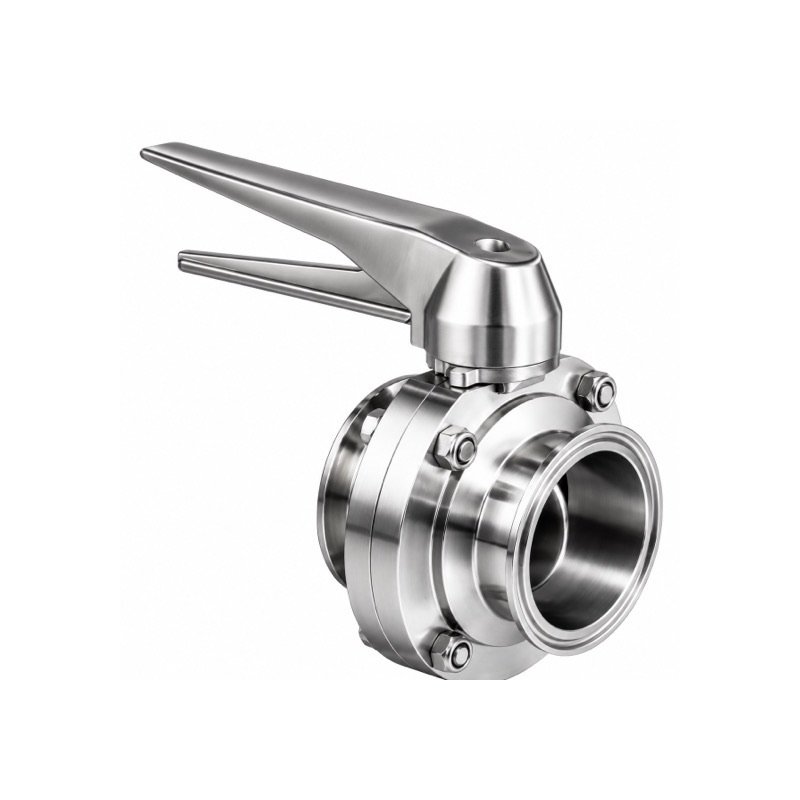
Tri-clamp butterfly valves are the most widely used sanitary butterfly valves in food, beverage, dairy, and pharmaceutical applications.
I frequently recommend tri-clamp connections because they allow rapid installation and removal. Maintenance personnel can quickly disassemble the valve for cleaning, inspection, or seal replacement.
The clamp-and-gasket design creates a reliable sanitary seal while minimizing maintenance time.
Typical applications include:
- Food processing
- Beverage production
- Dairy manufacturing
- Pharmaceutical systems
Weld End Butterfly Valve
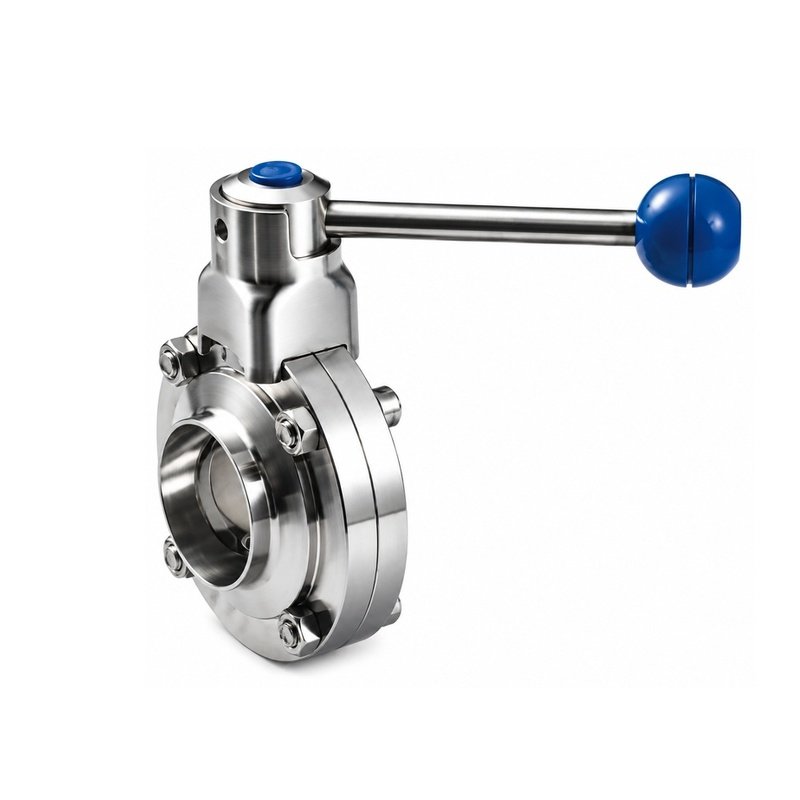
Weld end butterfly valves are permanently welded into the process pipeline.
This connection provides a smooth internal flow path and eliminates removable joints. The result is excellent sanitary performance and reduced leak points.
However, maintenance is less convenient because valve removal requires cutting and rewelding the piping system.
I usually recommend weld end valves for:
- Permanent production lines
- High-volume manufacturing facilities
- Systems requiring maximum structural integrity
Threaded Butterfly Valve
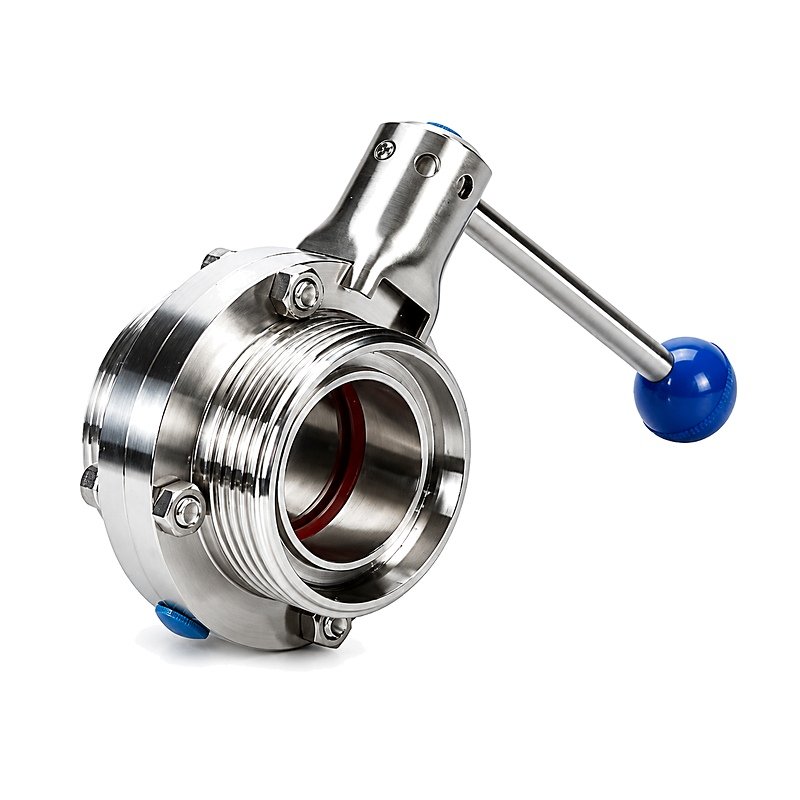
Threaded butterfly valves are generally used in smaller sanitary systems.
They offer simple installation and relatively low initial costs. However, threaded areas may require additional cleaning attention and are less common in highly sanitary applications.
For strict hygienic environments, I normally recommend tri-clamp or weld end designs instead.
By Operation Type
Manual Butterfly Valve
Manual butterfly valves use hand-operated handles or trigger mechanisms.
They remain the most economical solution and are ideal for applications where valve operation frequency is relatively low.
Benefits include:
- Low cost
- Simple operation
- Minimal maintenance
- No external power source required
Pneumatic Butterfly Valve
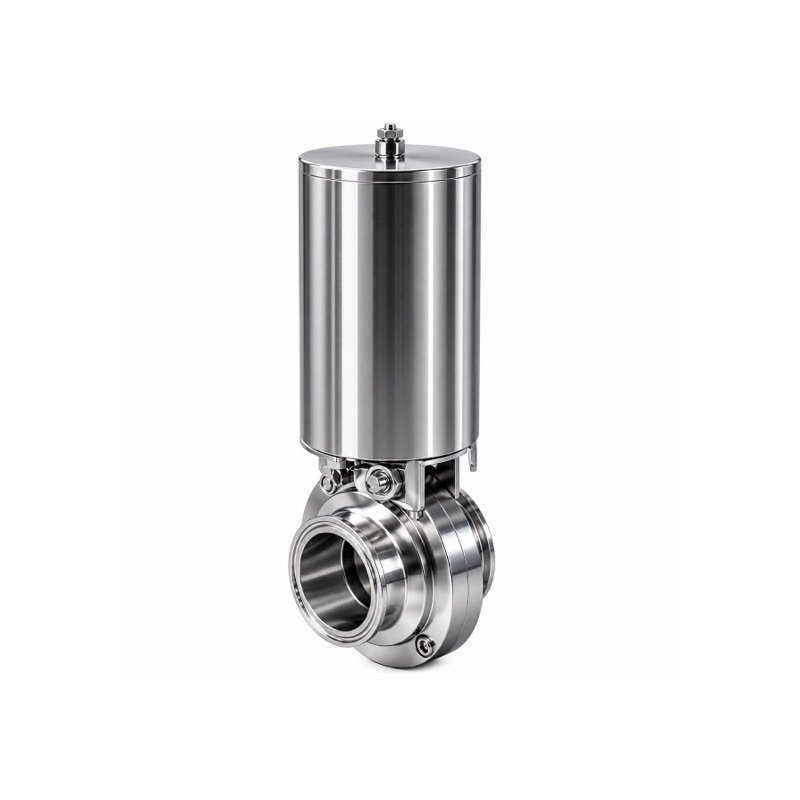
Pneumatic butterfly valves use compressed air actuators to automate valve operation.
In modern manufacturing facilities, pneumatic valves are often the preferred solution because they integrate easily with automated production systems.
I frequently see pneumatic butterfly valves used in:
- Automated filling lines
- CIP systems
- Continuous production facilities
- Pharmaceutical processing equipment
Advantages include:
| Feature | Benefit |
|---|---|
| Fast Response | Improves production efficiency |
| Automation Compatible | Integrates with PLC systems |
| Reliable Cycling | Consistent operation |
| Remote Control | Supports smart manufacturing |
Pneumatic valves are generally preferred for automated production lines because they deliver fast and reliable performance.
Electric Butterfly Valve

Electric butterfly valves use electric actuators rather than compressed air.
They are commonly selected when compressed air is unavailable or when more advanced positioning control is required.
Advantages include:
- Remote operation
- Flexible control options
- Suitable for isolated installations
- Easy integration with control systems
Selection should consider power supply availability, environmental conditions, and actuator specifications.
By Design
Standard Butterfly Valve
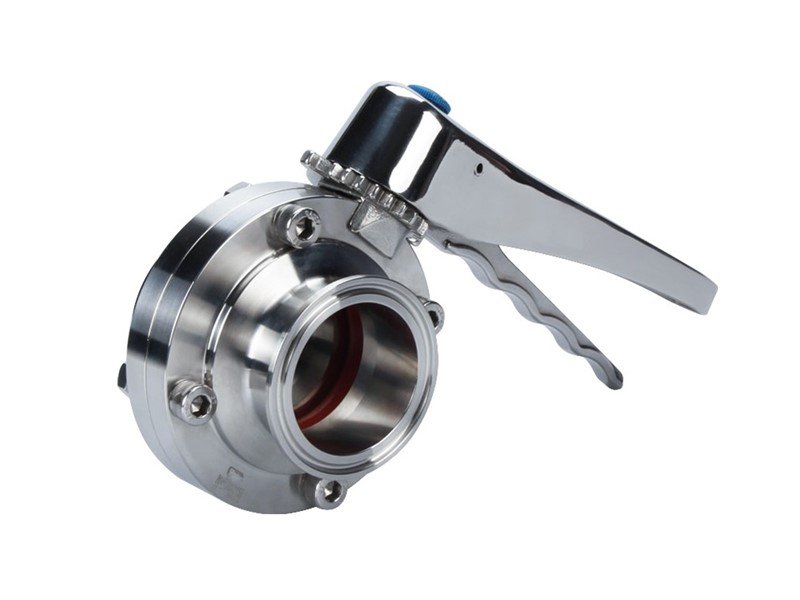
Standard sanitary butterfly valves are designed primarily for liquid processing applications.
They are commonly used for:
- Water
- Milk
- Juice
- Beer
- Liquid food products
The standard design represents the majority of sanitary butterfly valve installations worldwide.
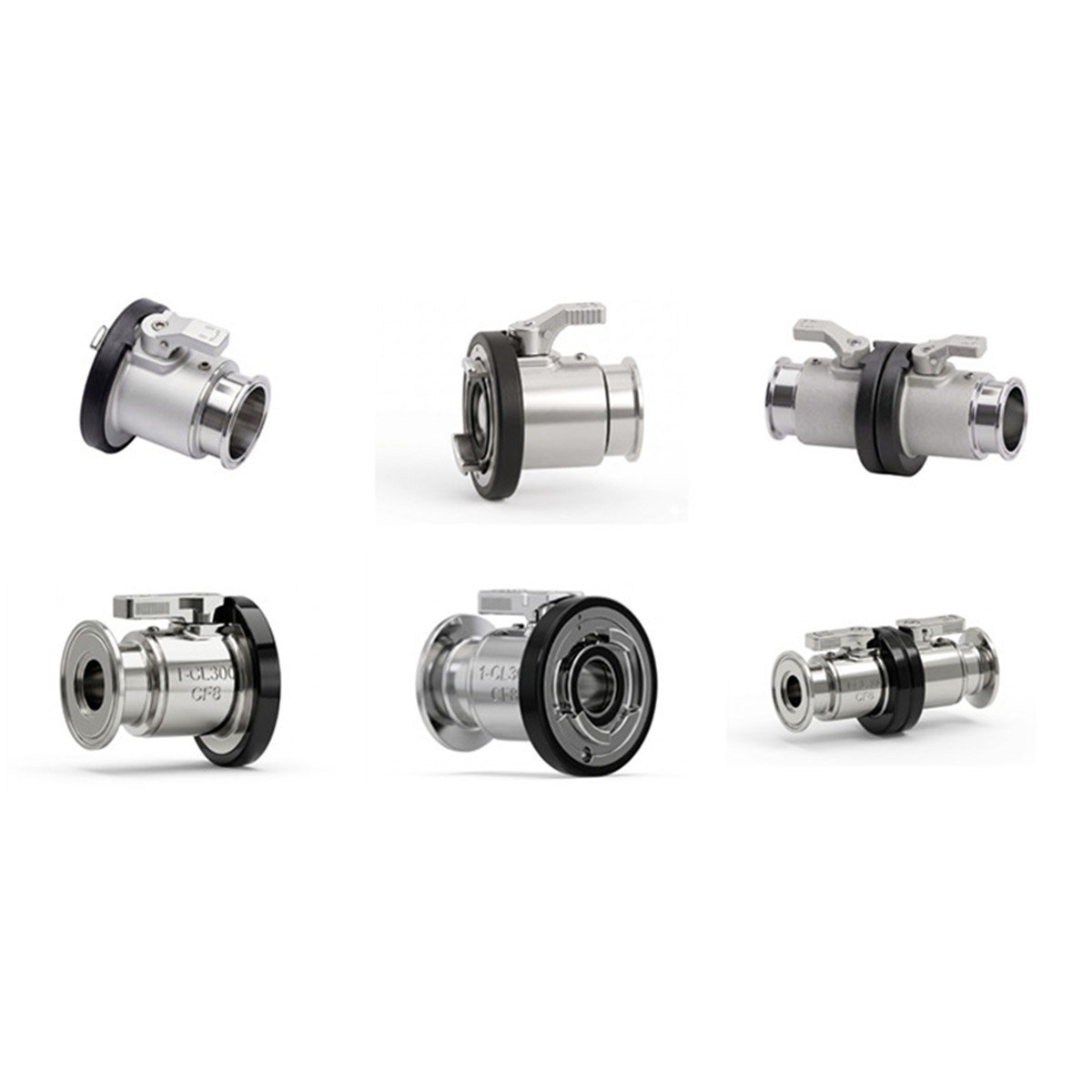
Split Butterfly Valve
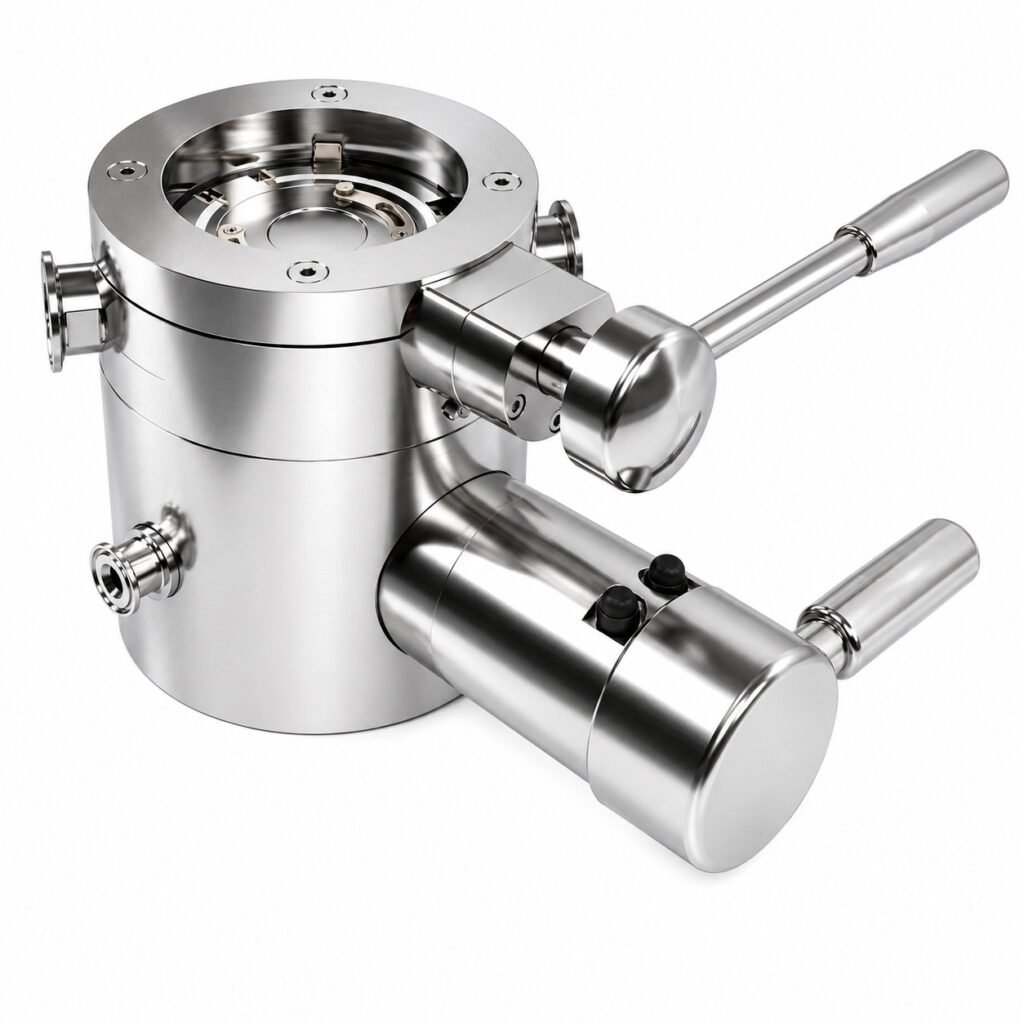
Split butterfly valves are specialized products designed for powder handling applications.
I often recommend split butterfly valves when contamination control is critical. They help isolate product transfer operations and reduce the risk of dust release or cross-contamination.
Key benefits include:
- Improved containment
- Reduced contamination risk
- Better powder transfer control
- Enhanced operator safety
Although they cost more than standard butterfly valves, they provide significant value in pharmaceutical and powder-processing environments.
Split butterfly valves are commonly used for powder handling and contamination control where hygienic transfer is essential.
How to Choose the Right Sanitary Butterfly Valve?
Many buyers compare valve types without evaluating actual process conditions. This often leads to poor long-term performance.
The best sanitary butterfly valve depends on process media, cleaning requirements, material selection, seal compatibility, and automation needs.
Application
I always begin the selection process by understanding the application.
Different industries prioritize different requirements.
| Industry | Primary Concern |
|---|---|
| Food & Beverage | Hygiene and cleaning |
| Dairy | Residue control |
| Pharmaceutical | Contamination prevention |
| Chemical Processing | Corrosion resistance |
The process media often determines the appropriate valve material, seal material, and connection method.
Material (304 vs 316L)
Material selection plays a major role in valve longevity and process reliability.
304 Stainless Steel
304 stainless steel offers:
- Good corrosion resistance
- Lower cost
- Excellent suitability for many food applications
It is commonly used in general food and beverage processing.
316L Stainless Steel
316L stainless steel provides:
- Improved corrosion resistance
- Better chemical resistance
- Superior cleanability
- Enhanced pharmaceutical compatibility
I generally recommend 316L stainless steel for pharmaceutical production, aggressive cleaning environments, and applications involving corrosive media.
| Material | Typical Applications |
|---|---|
| 304 | General food and beverage processing |
| 316L | Dairy, pharmaceutical, and corrosive applications |
316L stainless steel is generally preferred for higher-corrosion or pharmaceutical applications.
Seal Material
Seal material selection significantly affects valve performance.
Common sanitary seal materials include:
- EPDM
- Silicone
- FKM
- PTFE
Each material provides different levels of resistance to:
- Temperature
- Cleaning chemicals
- Product media
- Mechanical wear
I always recommend selecting seal materials based on actual process conditions rather than standard assumptions.
Automation Requirements
Automation requirements frequently determine the final actuator selection.
Important considerations include:
- Remote operation needs
- PLC integration
- Available compressed air
- Valve cycling frequency
- Process control requirements
A manual valve may be suitable for basic systems, while pneumatic or electric actuators are often preferred for automated production environments.
Selection should consider process media, cleaning requirements, and automation needs—not just valve type.
Common Applications?
Different industries use sanitary butterfly valves for different reasons. Understanding these applications helps ensure proper valve selection.
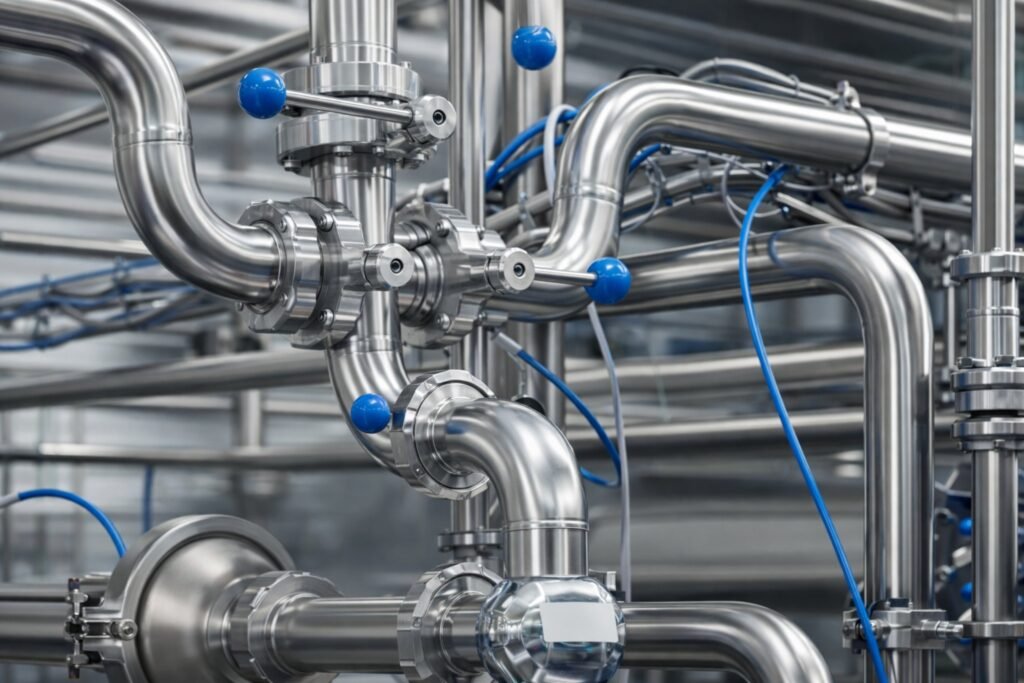
Sanitary butterfly valves are widely used in food, beverage, dairy, and pharmaceutical industries because they provide hygienic flow control and easy maintenance.
Food & Beverage
Food and beverage processing represents one of the largest markets for sanitary butterfly valves.
Common applications include:
- Brewing systems
- Beverage production
- Water treatment
- Juice processing
- Sauce manufacturing
Tri-clamp butterfly valves are especially popular because they simplify cleaning and maintenance.
Dairy
Dairy applications require strict hygiene standards.
Milk products can leave residue inside process equipment, making effective cleaning extremely important.
For dairy systems, I frequently recommend:
- Tri-clamp connections
- 316L stainless steel
- High-quality sanitary seals
These features help maintain product quality while supporting frequent cleaning cycles.
Pharmaceutical
Pharmaceutical production often has the most demanding sanitary requirements.
Facilities typically require:
- 316L stainless steel construction
- High-quality surface finishes
- Material traceability
- Certified documentation
The objective is to minimize contamination risks while supporting validation and regulatory compliance requirements.
FAQs?
Many customers ask similar questions when selecting sanitary butterfly valves. Understanding these answers helps simplify purchasing decisions.
The most common questions involve connection methods, automation, materials, seals, and contamination control.
Which Connection Type Is Best?
The answer depends on the application.
I generally recommend:
- Tri-clamp for easy maintenance
- Weld end for permanent installations
- Threaded for simple systems with lower sanitary requirements
Connection type directly affects maintenance and cleaning efficiency.
Why Are Pneumatic Butterfly Valves So Popular?
Pneumatic butterfly valves provide reliable automation and integrate easily into modern production environments.
Benefits include:
- Fast response times
- Consistent operation
- Remote control capability
- Reduced labor requirements
Is 316L Always Better Than 304?
Not necessarily.
304 stainless steel performs very well in many food and beverage applications.
However, I usually recommend 316L when:
- Corrosion resistance is critical
- Aggressive cleaning chemicals are used
- Pharmaceutical standards apply
What Seal Material Should I Choose?
Seal selection depends on:
- Product media
- Operating temperature
- Cleaning chemicals
- Regulatory requirements
Choosing the correct seal material improves reliability and extends service life.
When Should I Use a Split Butterfly Valve?
Split butterfly valves are most commonly used in powder handling and contamination-sensitive applications.
They help reduce product loss and improve containment during material transfer.
For standard liquid processing systems, conventional sanitary butterfly valves are usually sufficient.
What Should I Consider Before Purchasing?
I recommend evaluating:
- Valve size
- Connection type
- Material grade
- Seal material
- Automation requirements
- Cleaning procedures
- Certification requirements
A proper evaluation helps ensure long-term performance and reduces operational risks.
Conclusion
The right sanitary butterfly valve depends on application requirements, cleaning methods, material selection, seal compatibility, and automation needs. Careful selection improves hygiene, reliability, and long-term operating efficiency.